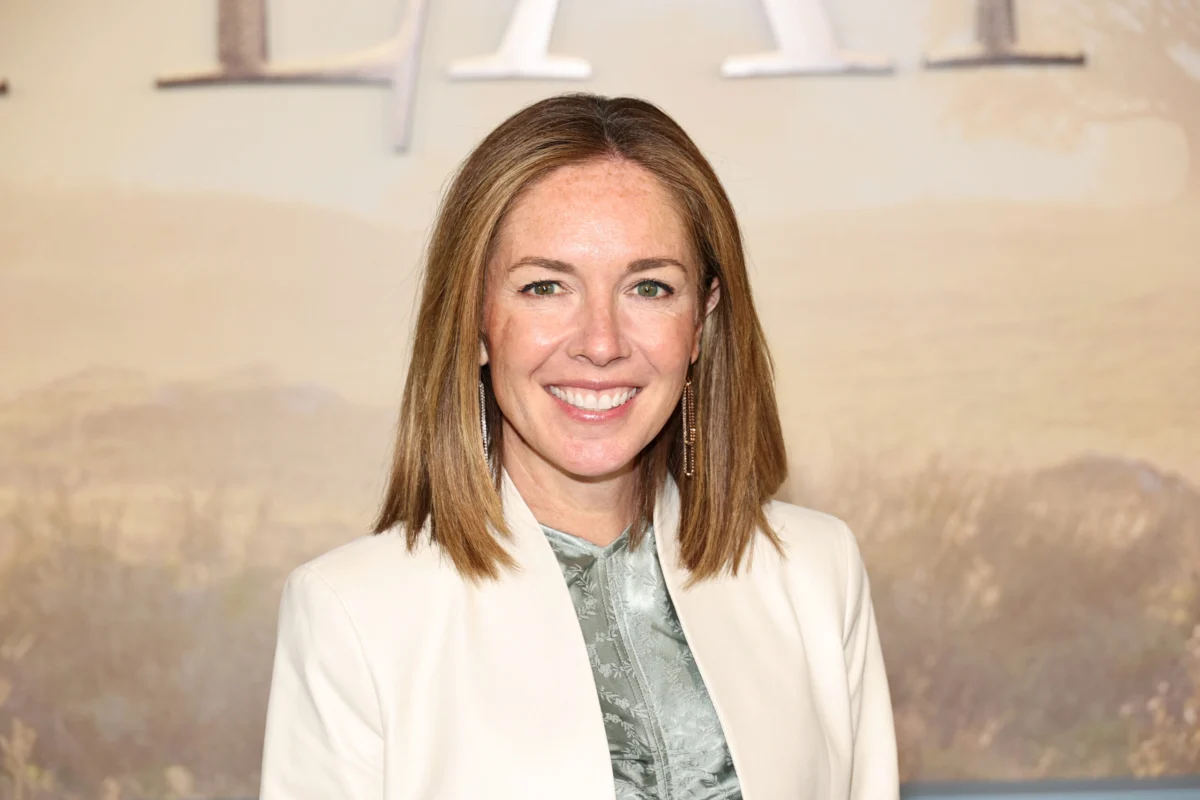
Starz Networks President Alison Hoffman has officially solidified her leadership tenure with the premium entertainment company, signing a substantial contract extension that secures her position through the end of the decade. According to an official regulatory filing submitted by parent company Starz Entertainment to the U.S. Securities and Exchange Commission (SEC), Hoffman’s new employment agreement took effect on August 6 and runs continuously through December 31, 2029. Under the terms of the renewed pact, Hoffman will maintain her direct reporting line to Starz Chief Executive Officer Jeff Hirsch, pulling an annual base salary of $1.485 million alongside lucrative performance-based bonus structures and equity awards.
The contract renewal underscores the confidence of executive leadership and the board of directors in Hoffman’s strategic vision as Starz navigates a critical inflection point in its corporate lifecycle. Having successfully transitioned from a traditional premium cable network to a fiercely competitive, standalone publicly traded streaming programmer, Starz is relying heavily on veteran executive talent to sustain momentum in an increasingly saturated digital media landscape.
A Proven Executive Track Record in Prestige Television
Alison Hoffman’s journey within the executive ranks of modern television is deeply intertwined with the golden age of prestige cable programming. Prior to her arrival at Starz in 2012, Hoffman served as a vice president at AMC during an era that fundamentally redefined the television landscape, coinciding with the cultural and critical juggernauts of Mad Men, Breaking Bad, and The Walking Dead. Her tenure at AMC provided her with a masterclass in building high-engagement fandoms, executing sophisticated marketing campaigns, and nurturing writer-driven series that resonated globally.
Upon joining Starz, Hoffman initially brought her marketing acumen to bear, eventually climbing the corporate ladder to the role of Chief Marketing Officer. In that capacity, she spearheaded comprehensive subscriber acquisition and retention campaigns for hit properties such as Outlander, Power, and American Gods. Her ability to translate complex audience data into targeted digital marketing initiatives made her an invaluable asset to the network’s executive team.
In April 2020, amidst a broader corporate restructuring and the acceleration of streaming adoption during the global pandemic, Hoffman was promoted to President of Domestic Networks. In this expanded portfolio, she assumed overarching operational oversight for the network’s domestic linear and digital platforms, positioning herself as a central architect of the brand’s pivot toward a direct-to-consumer streaming model.
The Corporate Evolution: Breaking Away From Lionsgate
Hoffman’s contract extension arrives during a period of monumental structural change for Starz as a corporate entity. Following a protracted and highly strategic corporate review process, Starz officially separated from its longtime parent studio, Lionsgate, in 2025. The spin-off severed the decades-long ties between the studio production apparatus and the network, establishing Starz as an independent, publicly traded entity capable of charting its own financial and operational course.
The independence has forced Starz to aggressively redefine its market positioning. No longer insulated or subsidized by a major Hollywood studio’s theatrical and television production balance sheets, the standalone company has had to prove its financial viability to Wall Street investors. Thus far, the market response has been remarkably positive. Starz shares have experienced a meteoric rise, more than doubling in value over the course of 2026.
This financial health was further underscored during the company’s second-quarter earnings report last month. In an operational triumph that defied broader macroeconomic trends in the media sector, Starz reported an increase in overall subscriber levels despite implementing strategic price increases. CEO Jeff Hirsch characterized this dual achievement as a rare feat in the contemporary streaming ecosystem, where platform churn and consumer price sensitivity have historically forced companies to choose between subscriber growth and average revenue per user (ARPU).
Navigating the Content Slate and the Streaming Era
As Starz accelerates into its future as a standalone streaming programmer, Hoffman’s leadership remains vital to curating and monetizing a robust content pipeline. The network’s programming strategy currently balances legacy intellectual property with targeted new originals designed to capture niche, highly loyal demographics.
Among the cornerstone assets driving the platform’s engagement is the expansive Power franchise, which continues to yield high viewership metrics across various spin-offs. Furthermore, the network continues to expand its fantasy and drama offerings, notably with Outlander: Blood of My Blood, a prequel series designed to capture the devoted global fanbase of the flagship Outlander series. Alongside new original offerings such as Fightland, Starz is preparing for the highly anticipated premiere of the third and final season of P-Valley later this year, a series that has received widespread critical acclaim for its distinct cultural voice and authentic storytelling.
Monetizing Intellectual Property Through Global Licensing Deals
A pivotal element of Starz’s modern business model involves strategic content licensing—a departure from the rigid exclusivity walls that defined the early days of the streaming wars. In July 2026, Starz struck a landmark distribution agreement with Netflix, licensing the first four series of the sprawling Power franchise from Lionsgate Television.
The deal generated considerable discussion among media analysts regarding the balance between platform exclusivity and revenue maximization. During a subsequent conference call with Wall Street analysts, Hoffman defended the strategic logic of the Netflix partnership, emphasizing that it serves as a powerful funnel rather than a dilution of the brand.
"It creates an opportunity for us," Hoffman explained to analysts during the call. "It’s a way for us to introduce the franchise to new audiences, new viewers, and really reinvigorate it."
By utilizing a global platform like Netflix as a top-of-funnel marketing engine, Starz aims to introduce millions of international viewers to the Power universe, ultimately converting a fraction of those new eyeballs into direct subscribers on the standalone Starz streaming application or through domestic digital channels.
Implications of Leadership Continuity Through 2029
The decision by Starz Entertainment to lock in Alison Hoffman through December 31, 2029, signals a commitment to operational stability and strategic continuity. In an industry notoriously plagued by executive turnover and sudden shifts in corporate strategy, having a seasoned leader at the helm of domestic networks through the end of the decade provides institutional knowledge and steady guidance.
As streaming services continue to consolidate, grapple with profitability metrics, and experiment with hybrid monetization models—including FAST channels, ad-supported tiers, and third-party licensing deals—Starz must remain nimble. Hoffman’s background bridging the traditional prestige cable era with modern data-driven digital marketing equips her to navigate these structural industry headwinds.
With her compensation package tied directly to both base salary thresholds and performance-oriented equity awards, Hoffman’s financial incentives are fully aligned with the continued appreciation of Starz stock and the sustained growth of its subscriber base. As the company prepares for the final season of P-Valley, the expansion of the Power and Outlander universes, and the continued optimization of its standalone corporate structure, Hoffman’s leadership will remain central to the network’s ambitions in the fiercely competitive entertainment landscape.