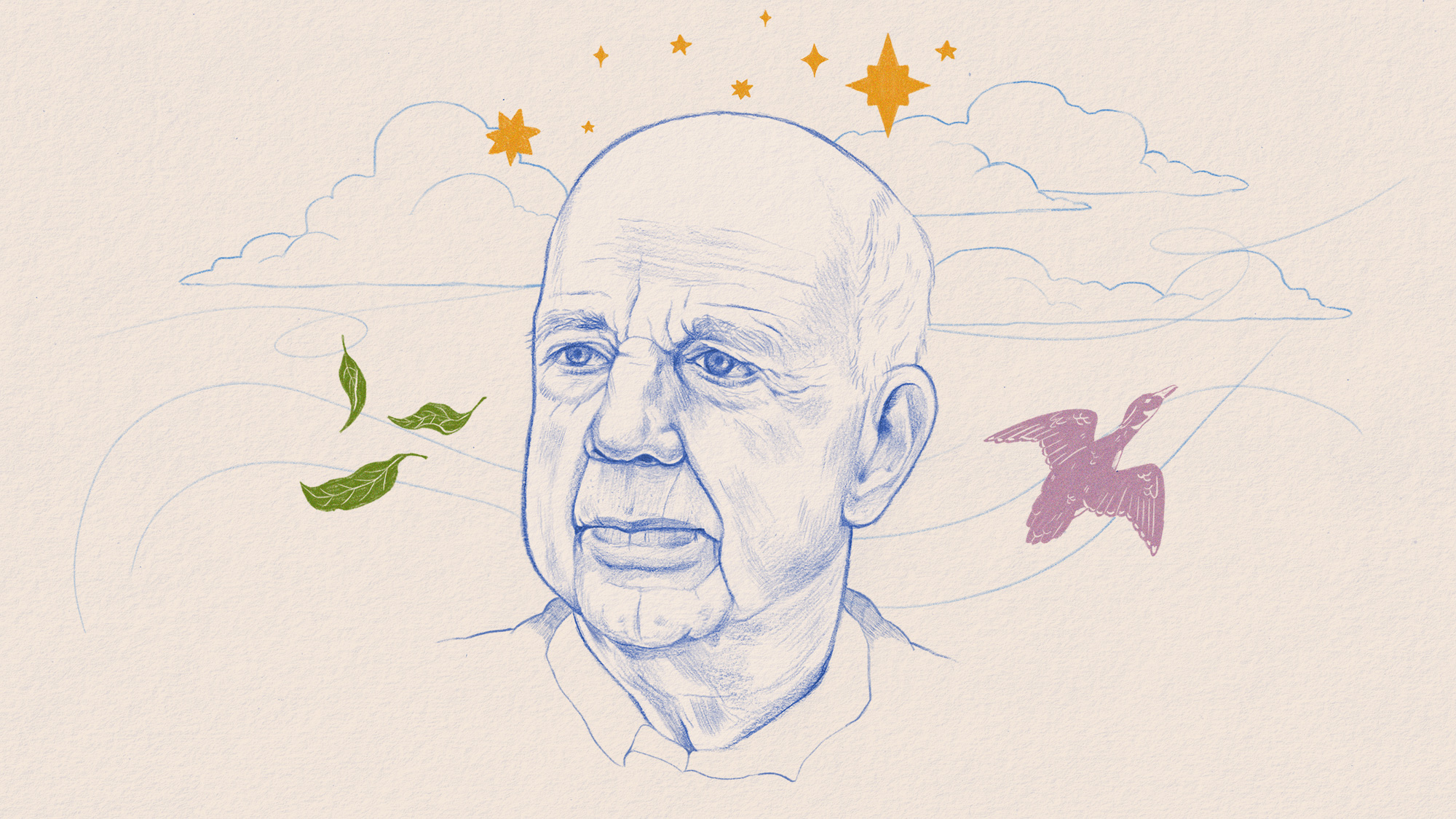
The passing of Wendell Berry at the age of 92 marks the quiet close of a monumental chapter in American letters, agrarian philosophy, and environmental thought. Over a career spanning more than seven decades, Berry established himself as a singular voice of dissent against the encroaching tides of industrialization, technological alienation, and ecological degradation. Writing primarily by hand with a pencil at his farmhouse in Henry County, Kentucky, Berry produced more than 50 books of poetry, fiction, and essays. His body of work defied simple categorization, bridging the gaps between environmental activism, agrarian economics, philosophy, and spiritual ecology.
Berry’s contributions extended far beyond the literary world. He inspired generations of farmers, writers, conservationists, and citizens to rethink their relationship with the natural world. By refusing to adopt modern conveniences like computers and smartphones, Berry practiced what he preached, demonstrating a rare consistency between his worldview and his daily life. As the world confronts intensifying climate crises, ecological collapse, and digital saturation, Berry’s philosophy of starting small, honoring local communities, and respecting the cyclical rhythms of the Earth offers an enduring roadmap for navigating modernity.
Main Facts and the Agrarian Ethos
Wendell Berry was born in 1934 in Henry County, Kentucky, where his family had farmed for generations. After earning degrees from the University of Kentucky and spending time teaching and traveling—including a fellowship at Stanford University and a stint teaching at New York University—Berry returned home in 1964. He bought a hillside farm and dedicated the rest of his life to tending the soil, raising livestock, and writing.
Berry’s core thesis was deceptively simple: the environmental crisis is fundamentally a crisis of character and culture. He argued that modern humanity has become alienated from the land that sustains it, viewing nature merely as a resource to be exploited rather than a living community to which humans belong.
In his seminal 1972 essay, Think Little, Berry pushed back against the abstract nature of mainstream environmentalism, which often focused heavily on national politics and lobbying while ignoring the daily habits of individuals. "There is no public crisis that is not also private," he wrote. For Berry, saving the planet could not be achieved through political rhetoric alone; it required fundamental changes in how people lived, consumed, and related to their immediate surroundings.
This philosophy was immortalized in his poetry, most notably in Manifesto: Mad Farmer Liberation Front, where he advised readers to "Invest in the millennium. Plant sequoias. / Say that your main crop is the forest / that you did not plant." Rather than operating on the linear, goal-oriented timeline of industrial capitalism—which prioritizes immediate quarterly profits or catastrophic doomsday scenarios—Berry urged a return to nature’s cyclical time, defined by birth, growth, death, and renewal.
Chronology of Activism and Civil Disobedience
While Berry often expressed skepticism regarding traditional political activism, viewing it as too frequently detached from local realities, he was never a passive observer. When corporate and governmental policies threatened his community, Kentucky’s landscape, or the broader environment, Berry stepped forward, frequently utilizing civil disobedience to make his convictions known.
- 1979: Berry was arrested for participating in a protest against a nuclear power plant in Indiana, marking one of his earliest high-profile acts of public dissent.
- 1987: He published the landmark essay Why I am not Going to Buy a Computer in Harper’s Magazine, cementing his reputation as a modern critic of uncritical technological adoption.
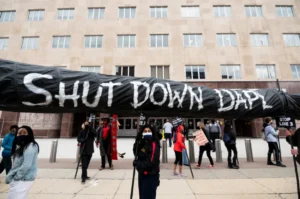
- 2011: At age 77, Berry was arrested during a sit-in inside the Kentucky state government offices to protest mountaintop removal coal mining, a destructive extraction practice that was leveling Appalachian ecosystems.
- 2010s: Berry remained actively engaged in anti-coal campaigns throughout the decade. He participated in demonstrations blocking the gates of a coal-fired power plant in Washington, D.C.
- 2015: In a dramatic protest against institutional complicity with the fossil fuel industry, Berry pulled his literary papers from the University of Kentucky after the institution accepted a $7 million donation from Alliance Coal.
These actions demonstrated that Berry’s resistance to industrial capitalism was not merely academic. He was willing to put his freedom and his legacy on the line to defend the land he loved.
Supporting Data and Intellectual Context
Berry’s skepticism toward technology frequently drew criticism from commentators who labeled him a Luddite or an impractical curmudgeon. However, historians and literary scholars note that Berry’s stance was deeply rooted in the historical tradition of the early 19th-century Luddites—not anti-technology for its own sake, but rather a principled defense of human dignity against machinery that de-skilled workers and severed their connection to their labor.
Jeffrey Bilbro, an English professor at Grove City College in Pennsylvania and the author of several books on Berry, notes that the writer understood the inherent compromises of living in a modern, industrialized society.
"For an uncompromising person or a person of convictions, I think he recognized the need in a fallen world," Bilbro said. "Our hands are all dirty, and we’re making these compromises, and it’s better to be honest about the necessity to do so and try to do what we can to live right, even if we can’t attain the purity that we might wish."
Berry’s work consistently resisted ideological pigeonholing. He valued traditional institutions like marriage and family for their ability to strengthen community resilience, yet he distrusted government overreach into personal lives. Economically, he was deeply critical of corporate capitalism and unchecked industrial growth, advocating instead for local economies, agrarian cooperatives, and land stewardship. Spiritually, he identified as a Christian, though he wryly referred to himself as a "bad weather church-goer," preferring to spend pleasant Sunday mornings walking through the woods and reading the landscape as an extension of sacred text.
Broader Impact and Implications
In an era defined by political polarization, hyper-connectivity, and climate anxiety, Wendell Berry’s appeal has only broadened. His writings resonate across traditional political divides, attracting readers from the agrarian left, the traditionalist right, and everyone in between who senses that modern life has grown dangerously unmoored from reality.
Berry’s legacy challenges contemporary society to reexamine fundamental assumptions about progress. As artificial intelligence, automation, and industrial agriculture continue to accelerate, Berry’s warnings about technological alienation ring prophetic. His life’s work suggests that true sustainability cannot be downloaded, digitized, or solved exclusively through corporate greenwashing and high-tech geoengineering.
Instead, Berry argued that healing the planet requires mundane, physical, and often unglamorous labor: planting trees whose shade we will never sit under, cleaning up local watersheds, supporting regional food networks, and learning the names of the plants and animals that inhabit our immediate neighborhoods.
As Berry wrote in his poem A Discipline, the task of the modern era is "the time’s discipline to think / of the death of all living, and yet live." By confronting ecological catastrophe not with paralyzing despair, but with active, localized stewardship, Berry showed that even the smallest acts of care leave an indelible mark on the Earth. Long after his passing, the seeds he planted—both in the rich soil of Henry County and in the minds of readers worldwide—will continue to grow.