Trump Newsome Arrest LA Protests ICE: A Deep Dive into Political Tensions and Immigration Enforcement
The intersection of high-profile political figures, controversial law enforcement actions, and widespread public dissent creates a potent cocktail of news, and the events surrounding a hypothetical or actual arrest of Donald Trump or Gavin Newsom, coupled with protests against Immigration and Customs Enforcement (ICE) in Los Angeles, would undoubtedly ignite significant public discourse and media attention. This article will explore the multifaceted implications of such a scenario, examining the potential motivations behind any arrest, the dynamics of Los Angeles-based immigration protests, the role of ICE, and the broader political landscape that these events would highlight.
The prospect of a Donald Trump arrest, regardless of the specific charges, carries immense political weight. Trump’s presidency was marked by a combative relationship with the media, political opponents, and established institutions, including the justice system. Any legal action against him would be interpreted through the lens of partisan politics, with his supporters likely viewing it as a politically motivated persecution and his detractors seeing it as a long-overdue reckoning for alleged wrongdoing. The nature of the charges would be paramount. If related to his business dealings, his post-presidency activities, or his rhetoric surrounding events like January 6th, the legal and public reaction would vary significantly. The legal proceedings themselves would become a global spectacle, drawing intense scrutiny from legal experts, political commentators, and the public. The logistical and security challenges of arresting and detaining a former president are unprecedented, requiring extensive planning and coordination among various law enforcement agencies.
Conversely, a hypothetical arrest of Gavin Newsom, the current Governor of California, would present a different set of political considerations. Newsom, a prominent Democrat and a potential contender for future national office, has cultivated an image as a progressive leader. His arrest would likely be framed by his supporters as an attack on progressive governance or a desperate attempt by opponents to derail his political career. The charges would again be critical. If they pertained to alleged ethical lapses in his gubernatorial duties, campaign finance violations, or personal misconduct, the fallout would be substantial. His position as the chief executive of a large and influential state would mean any legal action against him would have immediate implications for California’s governance, potentially leading to calls for his resignation or impeachment, and creating a leadership vacuum that could be exploited by political rivals. The political ramifications for the Democratic Party, particularly in a state that serves as a bellwether for national trends, would be significant.
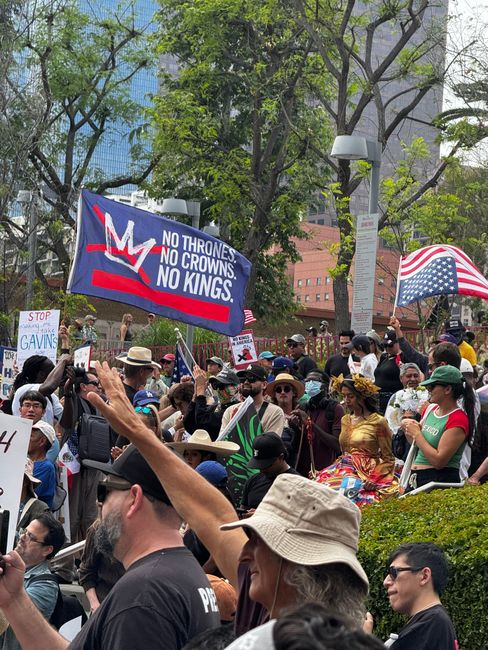
Los Angeles, with its diverse population and history of activism, is a natural focal point for protests, especially those concerning immigration. The city has a substantial immigrant population, and its proximity to the border and its role as a major metropolitan hub make it a site where federal immigration policies are keenly felt. Protests against ICE are common in LA, often organized by immigrant rights groups, community organizations, and advocacy networks. These protests typically center on issues such as family separations, deportations, the conditions in detention centers, and the broader impact of immigration enforcement on communities. The motivations for such protests are rooted in humanitarian concerns, a belief in due process, and a commitment to social justice. They often employ tactics such as marches, rallies, civil disobedience, and public awareness campaigns. The scale and intensity of these protests can be influenced by current events, specific ICE actions in the region, and broader national immigration debates.
Immigration and Customs Enforcement (ICE) is a federal agency responsible for enforcing U.S. immigration laws. Its activities include identifying and apprehending undocumented immigrants, detaining them, and facilitating their removal from the United States. ICE also plays a role in investigating immigration-related crimes, such as human smuggling and document fraud. The agency’s operations have been a subject of intense debate and criticism, particularly since the Trump administration’s more aggressive enforcement policies. Critics accuse ICE of excessive force, racial profiling, and separating families. Supporters of ICE argue that the agency is simply carrying out its legal mandate to protect national security and uphold immigration laws. The agency’s presence and actions in a city like Los Angeles, with its large immigrant population, often become flashpoints for protest and activism. Any news of a heightened ICE presence, increased arrests, or controversial raids would almost certainly galvanize protest movements.
The confluence of a Trump or Newsom arrest with ICE protests in Los Angeles would create a highly charged political environment. Imagine a scenario where the arrest of one of these prominent figures occurs concurrently with a significant ICE operation in LA that sparks large-scale demonstrations. The media narrative would likely be complex, attempting to weave together these disparate but potentially connected events. For instance, if Trump were arrested, his supporters might attempt to link this to a broader narrative of government overreach, potentially drawing parallels to perceived overreach by agencies like ICE. Conversely, if Newsom were arrested, opponents might seek to connect this to his administration’s immigration policies or lack thereof, or perhaps argue that he is out of touch with the realities of immigration enforcement and its impact on communities, which could then be juxtaposed with the very real protests happening on the ground.
The protests themselves would gain additional visibility due to the presence of such prominent national news. Activists might leverage the attention generated by the arrest of a major political figure to amplify their message and demand greater scrutiny of ICE policies. They might seek to draw connections between the alleged actions of the arrested politician and the broader issues of justice, accountability, and human rights that underpin their fight against current immigration enforcement practices. The media, eager to cover a multi-layered story, would likely dedicate significant resources to reporting on both the legal proceedings and the street-level activism.
From a legal and constitutional perspective, the arrest of any individual, regardless of their political stature, is subject to due process and established legal procedures. The allegations would need to be substantiated with evidence, and the individual would have the right to legal representation and a fair trial. However, the political ramifications of arresting a former president or a sitting governor would undoubtedly extend beyond the courtroom. The public perception of the justice system, the balance of power between different branches of government, and the very fabric of democratic discourse would be tested.
For ICE, such a scenario could bring increased public scrutiny and pressure. If protests against the agency were already active, the heightened media attention would likely amplify their demands for reform or defunding. Lawmakers might be compelled to address issues related to immigration enforcement more directly, especially if the protests were perceived as being fueled by specific agency actions. Conversely, law enforcement advocates might use the situation to underscore the importance of their work and the challenges they face in enforcing immigration laws in a complex and politically charged environment.
The role of social media in such a scenario cannot be overstated. Platforms like Twitter, Facebook, and Instagram would become crucial tools for disseminating information, organizing protests, and shaping public opinion. Hashtags related to the arrest, the protests, and ICE would likely trend globally, driving discussions and influencing the narrative. The speed at which information, and misinformation, can spread would create a dynamic and often unpredictable media environment. Echo chambers could form, reinforcing existing political biases and making it challenging to foster constructive dialogue.
The economic implications of such events could also be significant. Protests, especially if they involve disruptions to traffic or business, can have an impact on local economies. The legal proceedings themselves could be costly, involving extensive legal fees and security measures. Furthermore, the uncertainty generated by major political events can affect market confidence and investment.
The broader political landscape would be profoundly affected. The events would likely intensify existing political polarization, with different factions interpreting the situation through their partisan lenses. Debates over the rule of law, the integrity of the justice system, and the future of immigration policy would become even more heated. The potential for these events to influence upcoming elections, both at the state and national levels, would be a major consideration for political strategists and candidates.
In conclusion, a hypothetical scenario involving the arrest of Donald Trump or Gavin Newsom, coupled with significant protests against ICE in Los Angeles, represents a confluence of potent political, legal, and social forces. Such events would not only capture national and international attention but would also serve as a critical barometer for the state of American democracy, the effectiveness of its legal institutions, and the ongoing, often contentious, debate surrounding immigration. The interplay between high-stakes political drama, grassroots activism, and the complex realities of immigration enforcement would undoubtedly create a narrative of profound significance, shaping public opinion and potentially influencing the trajectory of American politics for years to come.
