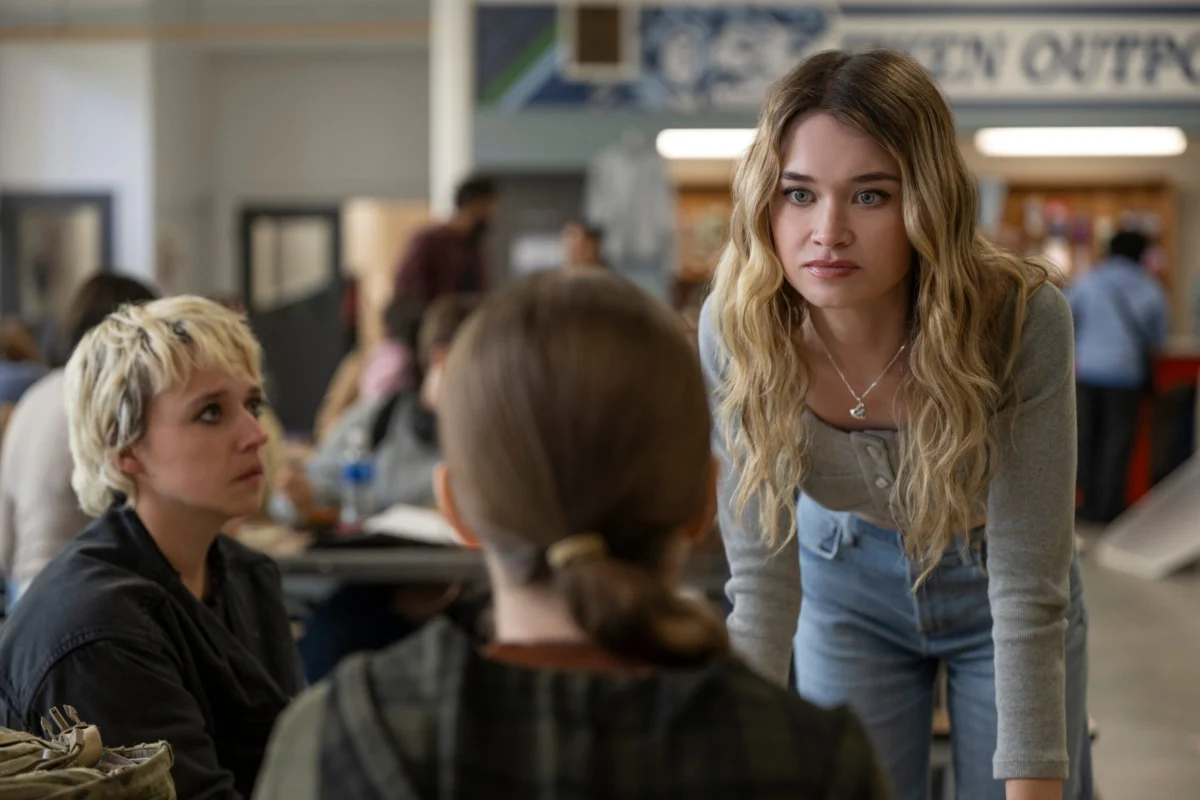
The literary and cinematic legacy of Stephen King is set for a profound transformation this fall as showrunner Mike Flanagan prepares to unveil his eight-episode television adaptation of the author’s 1974 debut novel, Carrie. Scheduled for a global premiere on Prime Video on October 7, the series marks a significant departure from the established visual language associated with the story, moving away from the isolated settings of the 1970s and 1980s to address the pervasive, inescapable nature of modern social media. By casting Summer H. Howell as the titular character and featuring Samantha Sloyan as her volatile mother, Margaret White, the production seeks to ground the supernatural narrative in the contemporary realities of cyberbullying, digital surveillance, and the erosion of privacy in the high school ecosystem.
A Historical Retrospective: From Novel to Screen
Stephen King’s Carrie was originally published on April 5, 1974, by Doubleday. It was King’s first published novel and served as the catalyst for a career that would redefine the horror genre. The story of a telekinetic social outcast pushed to the brink by religious trauma and sadistic peer victimization resonated deeply with a generation of readers grappling with the anxieties of the post-Vietnam era.
The story has seen multiple high-profile iterations, most notably Brian De Palma’s 1976 feature film starring Sissy Spacek, which remains a landmark of psychological horror. Subsequent versions—including a 1999 sequel, a 2002 television movie, and Kimberly Peirce’s 2013 cinematic remake—have attempted to modernize the tale with varying degrees of success. However, Mike Flanagan’s approach distinguishes itself by focusing on the mechanics of social media as a primary engine of tragedy. Unlike previous adaptations that treated the bullying as localized, interpersonal cruelty, the Prime Video series posits that in the modern era, the trauma inflicted upon a victim is recorded, archived, and disseminated, making it impossible for the protagonist to escape her environment.
The Narrative Shift: From Isolation to Viral Exposure
In the upcoming Prime Video adaptation, the fundamental catalyst for the conflict remains consistent with King’s original text, yet the environmental variables have shifted. Carrie White, having lived a life of extreme religious seclusion under the authoritarian guidance of her mother, is thrust into the public school system following the sudden death of her father. This transition serves as the inciting incident that forces a collision between her sheltered existence and the hyper-connected, volatile social landscape of a modern high school.
The series utilizes the concept of the "viral scandal" to propel the plot. As showcased in the official trailer released on September 9, the humiliation Carrie faces in the locker room—triggered by a misunderstanding of puberty—is not confined to the witnesses in the room. Instead, it is captured on mobile devices, uploaded to social platforms, and codified into an Instagram page dedicated to her mockery. This creates a feedback loop of harassment that follows her home, effectively eroding the sanctity of her private sphere. This narrative choice highlights the evolution of the "bully" from a physical threat to a digital one, providing a contemporary framework for the character’s burgeoning telekinetic abilities.
Production and Casting: A Collaborative Endeavor
The production of the series was an extensive process, characterized by a rigorous casting search. Mike Flanagan, known for his work on Netflix’s The Haunting of Hill House and Midnight Mass, reportedly oversaw the auditioning of over 1,000 actresses for the role of Carrie White. The selection of Summer H. Howell reflects a desire to capture the nuanced, quiet intensity required for the role, moving away from the more overtly manic portrayals seen in previous iterations.
Supporting the narrative is Samantha Sloyan, who portrays the complex and multifaceted Margaret White. The dynamic between mother and daughter in this version is framed through the lens of a "protective" upbringing that masks deep-seated psychological control. The ensemble cast, while still being finalized in terms of full character rosters, has been selected to represent the diverse, yet often exclusionary, social hierarchies of modern secondary education.
The Creative Philosophy of Mike Flanagan
Mike Flanagan has been vocal about his reluctance to simply "remake" the classic films. In interviews with entertainment media, he emphasized that the objective of this adaptation is to synthesize the "ingredients" of King’s prose to create a new, distinct entity.
"The only way to approach it was to build something new out of the ingredients of Carrie," Flanagan stated. "Otherwise, there’s really no purpose in trying to retread ground that’s been so beautifully walked before."
This creative philosophy is applied directly to the series’ most iconic sequence: the prom. Flanagan has confirmed that while the prom is a requisite element of the source material, the trajectory leading to the event and the climactic sequence itself have been significantly altered. By subverting the audience’s expectations, the showrunner intends to force viewers to re-evaluate the moral complexity of the events that culminate in the school’s destruction.
Data and Trends: The Relevance of Bullying in Digital Spaces
The decision to lean into the social media aspect of the story is supported by current sociological data regarding adolescent development. According to research from the Pew Research Center, nearly 46% of U.S. teens report having experienced some form of cyberbullying. The "persistence" factor—the idea that online harassment is permanent and accessible at any time—is a primary driver of adolescent anxiety. By embedding these real-world statistics into the horror format, Flanagan is utilizing the supernatural as a metaphor for the very real psychological burden placed upon modern youth.
The transition of the story into an eight-episode format also allows for a slower, more deliberate character study. Where previous films were forced to compress the development of Carrie’s powers and her social descent into a 90-to-120-minute runtime, the episodic structure provides the breathing room to explore the perspectives of the supporting cast, including the guidance counselors and the classmates who oscillate between complicity and guilt.
Chronology of Development
The development of the series has been a multi-stage project aimed at aligning with contemporary television distribution models:
- Initial Development: The project was announced following intense negotiations for the rights to the intellectual property, with Flanagan attached as the lead creative force.
- Casting Phase: An extensive search for the lead role occurred throughout the preceding year, concluding with the selection of Summer H. Howell.
- Teaser Release (July 25): The first look at the production was released, focusing on the auditory and visual environment of the school, emphasizing the "rattling" of lockers and the ubiquity of cameras.
- Full Trailer Release (September 9): A comprehensive look at the plot was provided, delineating the escalation from the locker room incident to the creation of the Instagram harassment campaign.
- Scheduled Premiere (October 7): The series is set to debut on Prime Video, strategically timed for the Halloween season.
Broader Implications and Cultural Impact
The adaptation of Carrie poses an interesting challenge for the horror genre: can a story that is fundamentally rooted in 1970s religious extremism remain relevant when translated into a secular, tech-dominated world? The series appears to answer this by suggesting that the "religious" fervor has been replaced by "social" fervor. The high school social hierarchy acts as a religion, with its own set of dogmas, punishments, and public sacrifices.
Furthermore, the involvement of Mike Flanagan serves as a significant indicator of the current industry trend of prestige horror television. As streaming platforms continue to compete for subscriber retention, the acquisition of well-known intellectual properties (IP) like Carrie, when paired with established, auteur-driven showrunners, represents a strategy to balance brand recognition with critical acclaim.
Conclusion
As the October 7 premiere approaches, the industry expectation is that this version of Carrie will serve as a definitive case study in how to adapt classic horror for a modern, digitally native audience. By focusing on the intersection of human cruelty and the amplification provided by modern technology, the series moves the conversation from the supernatural to the societal. Whether this approach successfully honors the legacy of Stephen King while standing as a compelling piece of modern television remains to be seen; however, the level of attention to detail and the deliberate subversion of the "source material" suggest that Prime Video is positioning the show as a cornerstone of its fall programming slate.
The story of Carrie White has always been about the consequences of being an outsider in a society that demands conformity. By bringing this struggle into the era of the smartphone, the screen, and the viral post, this new series promises to explore the horror of being watched, judged, and ultimately, destroyed by one’s peers.