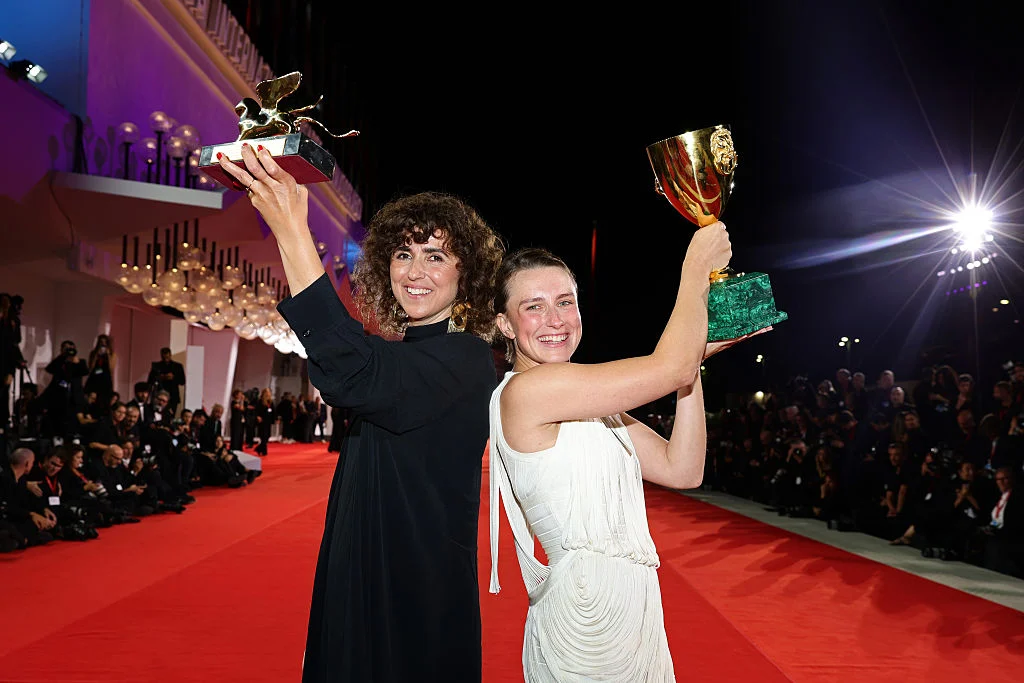
The 83rd Venice International Film Festival concluded its prestigious run with a landmark victory for Danish filmmaker May El-Toukhy, whose tense historical drama Woman Unknown captured the coveted Golden Lion. Yet, the triumph immediately sparked a broader industry conversation regarding systemic gender bias, as El-Toukhy addressed the persistent undervaluation of female directors within the global cinema landscape. The festival, which unspooled over ten days of high-profile premieres, intense competition, and geopolitical discourse, also celebrated standout performances, recognized courageous international filmmaking, and paused to mourn the loss of a towering figure in independent cinema.
A Historic Golden Lion Victory and the Shadow of Systemic Bias
For May El-Toukhy, stepping up to accept the top prize at the Venice Film Festival was both a professional pinnacle and a validation of perseverance. Woman Unknown, a critically acclaimed drama-thriller exploring the toxic intersections of sexual shame and political paranoia in postwar Denmark, resonated deeply with the international jury. Led by jury president and acclaimed actor-director Maggie Gyllenhaal, the panel was unanimous in its praise, with Gyllenhaal describing the film during the closing press conference as “a brilliantly made movie that felt like a laser beam.”
However, the victory caught many industry pundits off guard—a fact that did not escape the director. When asked by reporters about her win being labeled a surprise by various media outlets, El-Toukhy offered a candid and piercing critique of the film industry’s underlying architecture.
“It doesn’t surprise me that some people would say ‘Oh, did she get it?’ Because that’s part of everyday life as a woman in this industry,” El-Toukhy remarked. She revealed that prior to the festival’s lineup screening and prediction cycles, industry prognosticators had routinely placed her at the very bottom of their forecast lists, often ranking her 39th or 40th out of roughly 40 anticipated contenders.
“By now I’m pretty used to that. That’s a systemic issue,” she continued. “When I look to those lists, we would be four women, and I would feel that I had to compete with those four women and not my male peers… How can we make it easier for women to be part of this industry? I don’t have the feeling that my male colleagues aren’t interested in having women in the industry, but still, there are structures in place that we haven’t found a way to solve.”
The triumph of Woman Unknown extended beyond the Golden Lion. Danish actress Mathilde Arcel secured the festival’s Volpi Cup for Best Actress for her gripping portrayal of a woman harboring dangerous secrets while desperately attempting to evade violent mob justice in postwar Denmark. While Venice juries historically separate top-tier feature awards from acting accolades, Gyllenhaal clarified that the dual victory was made possible by a rare, unanimous jury vote recognizing Arcel’s performance as the vital anchor of the film’s success.
Geopolitical Friction: The Debate Surrounding Special Jury Prize Winner Naza
While cinematic craft dominated much of the conversation, the Lido also became a venue for urgent political discourse. The Special Jury Prize was awarded to Naza, a hard-hitting documentary feature focusing on the Israel Defense Forces’ (IDF) military actions and killings of Palestinians in Gaza. The film’s victory immediately thrust its creators into the center of international headlines, particularly following official statements from the IDF criticizing the project.
Co-director Yuval Abraham addressed the controversy and the film’s reception during the post-ceremony press briefing, emphasizing the critical need for internal reflection within Israeli society.
“It’s definitely important to show it [the film] to Israelis in as wide a way as possible. I hope we will be able to,” Abraham stated. “It’s important as Israelis that we recognize what our government has done in Gaza… In terms of the IDF comments, our reporting in the film is rigorous. It’s being done in partnership with The Guardian… To me, it seems like an attempt to not face reality. In just these 10 days of the festival, Israel, our country, has killed multiple Palestinian children in Gaza. This is the reality described by Palestinian journalists from the very start. And I think it’s important we talk about it.”
The inclusion and recognition of Naza underscored Venice’s ongoing tradition of providing a platform for politically volatile, urgent non-fiction storytelling that challenges state narratives and demands global accountability.
Orizzonti Section Honors and a Tearful Farewell to Jeremy Thomas
In the festival’s Orizzonti sidebar—dedicated to showcasing fresh, experimental, and diverse aesthetic trends in world cinema—the accolades highlighted narratives of personal and political resilience.
Italian star Riccardo Scamarcio was awarded the Orizzonti Best Actor prize for his intense performance in The House of the Monkey. However, Scamarcio’s victory was deeply overshadowed by grief following the sudden death of legendary British independent producer Jeremy Thomas, who passed away the night before the closing ceremony.
Visibly emotional and struggling to hold back tears, Scamarcio used his moment in the spotlight to pay tribute to a man who shaped modern independent cinema. Describing Thomas as a "pirate" and a champion of artistic freedom, the actor offered a poignant remembrance.
“He was a free man, a great man of cinema. He made movies that are part of the history of cinema, and he behaved like an independent producer, like the father of the movie he produces, protecting directors and creators,” Scamarcio shared. “But he did so protecting the freedom of the artists to express themselves. When I heard the news this morning, I was glad to come to Venice to get my award, but I cried for Jeremy.”
Meanwhile, the Orizzonti Best Actress prize went to Iranian actress Laleh Marzban for her commanding work in Falling House. The film has drawn international attention for its courageous critique of state authority and deeply entrenched patriarchal structures within Iran.
Asked by journalists how she anticipated the film would be received upon its release in her homeland, Marzban offered a measured meditation on incremental resistance and collective bravery.
“This question is very important for me as an actress, and as all other women in Iran, whether they be doctors, artists, whatever profession women can perform, we can only make one step at the time, one step towards our objective,” Marzban said. “If we give our small contribution, maybe we will reach our objective. I have made my small part. I have given my contribution. I really hope many other people can make small steps towards our common objective.”
Broader Implications for the International Circuit
As the 83rd Venice International Film Festival draws its curtains, the event leaves behind a complex legacy. From May El-Toukhy’s vital call to dismantle systemic barriers facing female directors to the heated debates sparked by geopolitical documentaries like Naza, the festival has reinforced its status as a primary cultural barometer.
The dual success of Woman Unknown signals a growing appetite among elite juries for historically grounded psychological thrillers that interrogate national identities and moral complicity. At the same time, the poignant farewells to cinematic pioneers like Jeremy Thomas remind the global community of the fragile, essential human networks required to sustain independent art against political and economic headwinds. With the awards distributed and the red carpet rolled up, the films honored on the Lido are poised to enter the broader global distribution landscape, carrying these urgent conversations forward into the upcoming awards season.