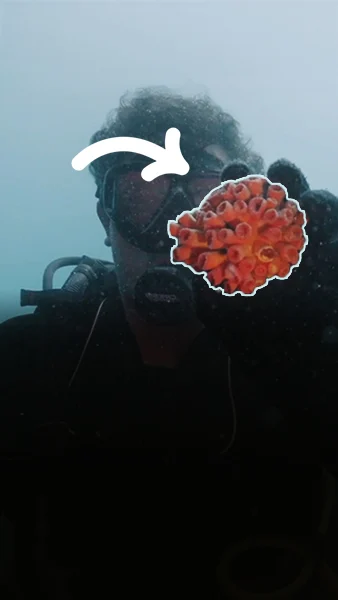
The mission is as paradoxical as it is critical: to preserve the fragile biodiversity of the Atlantic coast, marine experts are forced to systematically destroy an invasive organism that has taken root on the artificial reefs provided by offshore oil infrastructure. Led by biologist Adriana Gomes, the team of divers is conducting a manual eradication project targeting the orange sun coral (Tubastraea coccinea), a prolific invader that has fundamentally altered the underwater landscape near Rio de Janeiro.
The Origins of an Invasive Threat
The presence of Tubastraea coccinea in Brazilian waters is not a recent phenomenon, but rather the culmination of four decades of ecological encroachment. Native to the Indo-Pacific, the sun coral was first documented in Brazilian coastal waters in the early 1980s. Scientists believe the species was introduced primarily through biofouling—the accumulation of microorganisms, plants, and small animals on the hulls of commercial ships and the structures of offshore oil and gas rigs.
Once introduced, the sun coral found a near-perfect environment in the Western Atlantic. Unlike native coral species, which often require specific water temperatures and light conditions, the sun coral is a hardy, non-photosynthetic organism that thrives in a variety of depths and conditions. Furthermore, it lacks natural predators in the Atlantic. Without a biological check on its growth, the species has proliferated rapidly, effectively "colonizing" artificial and natural substrates alike.
The Ecological Mechanism of Destruction
The threat posed by Tubastraea coccinea is rooted in its aggressive competitive behavior. As an invasive colonial organism, it does not merely share space with native species; it outcompetes them for surface area and food. By spreading rapidly over rocky bottoms and existing reef structures, the sun coral effectively smothers local marine life.
When the coral establishes a foothold on a reef, it physically occupies the space that native sponges, mollusks, and indigenous corals require to grow. Because the sun coral is highly efficient at capturing nutrients from the water column, it can lead to a localized collapse of biodiversity. In a protected marine area—such as the waters near Ipanema, which are essential for regional marine health—this represents an existential threat to the local ecosystem’s structural integrity.
Chronology of the Eradication Efforts
The fight against sun coral has shifted from academic monitoring to active intervention over the past decade.
- 1980s: Initial detection of Tubastraea coccinea in Brazilian ports, likely via ballast water or hull attachment.
- 1990s–2000s: Rapid expansion across the Southeast coast of Brazil. The coral began appearing on oil platforms and maritime infrastructure.
- 2010s: Formal recognition by the Brazilian Institute of the Environment and Renewable Natural Resources (IBAMA) of the sun coral as a significant threat to national marine biodiversity.
- 2020–Present: Increased public-private partnerships, such as the initiative led by Adriana Gomes, focusing on manual removal from high-risk infrastructure to prevent further larval dispersal into protected habitats.
The Methodology of Manual Removal
The strategy employed by Gomes and her team is deceptively simple: manual mechanical removal. Using specialized tools, divers scale the submerged sections of oil platforms and coastal infrastructure to scrape away the coral colonies.
"The process is labor-intensive and must be done with extreme precision," explains a marine biology consultant familiar with the project. "If a diver fails to remove the entire colony or leaves behind small fragments, the coral has the ability to regenerate. It is a war of attrition against an organism that is biologically programmed to survive."
The divers must work under challenging conditions, often in strong currents near industrial structures. The removed coral is collected in bags to prevent fragments from drifting and re-settling elsewhere, a process known as "fragmentation-based dispersal," which would only worsen the infestation.

Supporting Data and Environmental Impact
Data collected by environmental agencies indicates that the sun coral has now spread along thousands of kilometers of the Brazilian coastline, from the state of Santa Catarina in the south to the northeastern regions.
Ecological surveys conducted in areas of high infestation show a measurable decline in native species richness. In some surveyed patches where sun coral coverage exceeded 50%, the abundance of native benthic organisms—the bottom-dwelling creatures that form the base of the reef food chain—dropped by as much as 40%. The economic impact is equally concerning; the degradation of coastal ecosystems threatens local artisanal fisheries and the tourism industry, both of which rely on the health of the marine protected areas surrounding Rio de Janeiro.
Official Responses and Regulatory Challenges
The Brazilian government, through IBAMA and the Chico Mendes Institute for Biodiversity Conservation (ICMBio), has faced significant hurdles in managing the spread. The sheer scale of the coastline makes comprehensive eradication impossible. Consequently, policy has shifted toward "containment and suppression" in priority areas.
Oil and gas companies operating in the region have been increasingly pressured to implement rigorous cleaning protocols for their rigs. However, critics argue that the regulations are inconsistently applied. A spokesperson for a local environmental watchdog noted, "While volunteer efforts like those led by Adriana Gomes are heroic, they are a drop in the ocean. We need systemic change in how industrial infrastructure is maintained to ensure that the platforms themselves do not continue to act as ‘stepping stones’ for the coral to move further down the coast."
Broader Implications for Marine Management
The case of the sun coral in Brazil serves as a textbook example of the challenges posed by invasive species in an era of globalization. The movement of ships and the construction of offshore infrastructure have effectively rewired the connectivity of marine ecosystems, allowing non-native species to leapfrog geographic barriers that would have naturally stopped them.
The implications are clear: without active human intervention, the composition of the Atlantic marine landscape will be permanently altered. The loss of native coral diversity is not just an aesthetic or scientific issue; it represents a loss of resilience. Diverse ecosystems are better equipped to handle climate change, ocean acidification, and pollution. By replacing native species with a monoculture of invasive sun coral, the resilience of the Brazilian coast is being systematically eroded.
Future Outlook
As the volunteer team continues their work beneath the surface near Ipanema, the broader scientific community is looking for more sustainable, long-term solutions. Research into biological controls—such as identifying natural predators or pathogens that might exist in the sun coral’s native range—is ongoing, though scientists warn that the introduction of a second non-native species to combat the first is fraught with ecological risk.
For now, the manual labor of divers remains the most effective, albeit limited, defense. The project highlights the critical role that citizen science and dedicated environmental professionals play in filling the gaps where government resources and industrial responsibility fall short. Whether this approach can be scaled to protect the entire length of the affected coast remains the central question for the future of Brazil’s marine conservation efforts.
The survival of the protected areas near Rio de Janeiro depends on the persistence of these divers. Every colony removed is a small victory for native biodiversity, providing the space for indigenous species to reclaim their territory. However, until the vector of introduction is fully controlled and the existing infrastructure is purged of the invader, the sun coral will remain a persistent, silent, and suffocating presence in the deep waters of the South Atlantic.