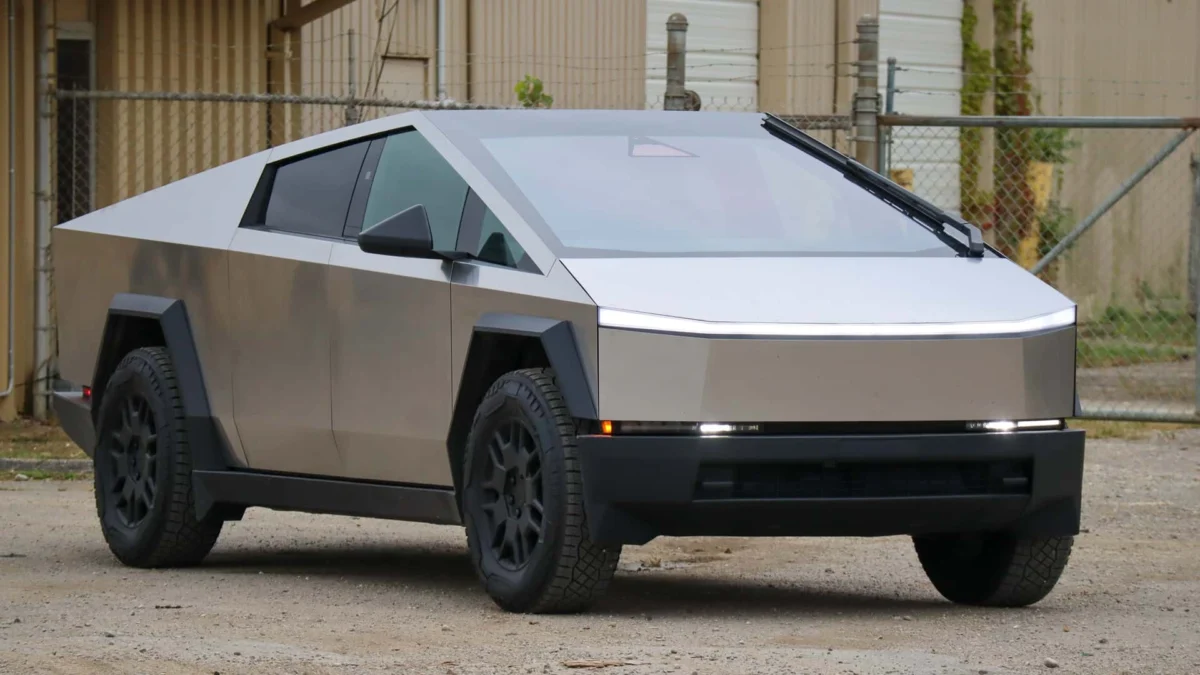
The controversial Tesla Cybertruck, an electric pickup truck that redefined automotive aesthetics upon its debut, is slated for retirement by mid-2027, according to an official announcement from CEO Elon Musk via the X platform. This decision marks the end of a tumultuous production cycle for the angular, unpainted stainless steel vehicle, which launched in late 2023. As Tesla prepares to phase out the Cybertruck at its Gigafactory Texas facility, the company is pivoting its manufacturing resources toward the production of its upcoming Cybercab—an autonomous, two-seater vehicle central to Tesla’s long-term vision for a robotaxi network.
A Chronology of the Cybertruck Era
The journey of the Cybertruck has been defined by extreme delays and high-concept engineering. First unveiled as a concept in November 2019, the vehicle promised to disrupt the traditional truck market with its exoskeleton design and unmatched performance specifications. The initial reveal famously featured a demonstration where the truck’s "armor glass" shattered during a durability test, setting the tone for a development cycle fraught with engineering hurdles.
After multiple delays, production finally commenced in late 2023. The truck arrived with polarizing reception; while its proponents lauded its bold design and technical innovations, such as steer-by-wire technology and a 48-volt electrical architecture, critics questioned its practicality, safety profile, and build quality. Despite the initial fervor, which saw hundreds of thousands of pre-orders, the vehicle struggled to maintain sales momentum as the novelty faded and production costs remained elevated.
Sales Performance and Market Data
Market data from the third quarter of 2025 indicates that the Cybertruck has failed to achieve the mass-market penetration enjoyed by its siblings, the Model 3 and Model Y. During the third quarter, Tesla recorded 4,323 sales of the Cybertruck. From January through September, total volume reached 11,586 units. Industry analysts estimate total deliveries since the inception of the production line to be approximately 70,000 units.
When compared to the high-volume output of Tesla’s mainstream fleet, these figures demonstrate a niche product rather than a market-shifting force. This performance mirrors the struggles of other major automakers in the electric pickup segment. Ford Motor Company, for instance, previously halted production of the F-150 Lightning after experiencing waning demand and the compounding costs of scaling battery-electric truck production. The market for expensive, high-performance electric trucks appears to have hit a saturation point, leaving manufacturers to reassess their portfolios in light of shifting consumer preferences and the high price of entry.
Shift in Manufacturing Strategy
The decommissioning of the Cybertruck assembly line at the Texas Gigafactory is not merely a cancellation; it is a strategic reallocation of industrial capacity. Tesla is under significant pressure to scale its autonomous vehicle infrastructure. By repurposing the floor space currently dedicated to the Cybertruck, Tesla intends to accelerate the rollout of the Cybercab.
This transition reflects a broader pivot within the company’s leadership. The focus has moved away from traditional consumer-owned vehicles toward "transportation as a service." The Cybercab is expected to be a lower-cost, purpose-built vehicle, devoid of traditional controls like steering wheels and pedals, designed exclusively for autonomous ride-hailing services. The decision to cease Cybertruck production signals that the company views the robotaxi opportunity as a more viable path for long-term revenue growth than the continued production of a high-cost, low-volume pickup.
Pricing Adjustments and Model Trims
In the lead-up to the production wind-down, Tesla has significantly streamlined the Cybertruck ordering process. The automaker has officially stopped accepting new orders for the entry-level Dual-Motor All-Wheel Drive variant. Customers are currently restricted to the Premium and Cyberbeast trims, effectively pushing the barrier to entry significantly higher.
Coupled with this reduction in variety, the price of the remaining configurations has seen a notable increase. The Premium AWD model has risen in price to $92,490, up from its previous price point of $89,990. Meanwhile, the high-performance Cyberbeast variant now commands a starting price of $102,490, up from $99,990. These price hikes, following a similar round of increases in August, suggest that Tesla is moving to maximize margins on the final batches of the truck while managing a diminishing order backlog.
Technological Legacy and Industry Impact
While the Cybertruck’s commercial success may be viewed as limited, its influence on automotive engineering remains a point of contention and interest. Tesla’s implementation of steer-by-wire technology—where there is no physical connection between the steering wheel and the front wheels—represents a significant departure from conventional automotive design. Additionally, the adoption of a 48-volt electrical architecture allows for simplified wiring harnesses and reduced vehicle weight, a move that many industry observers believe will eventually become the standard for modern vehicle manufacturing.
However, the "fridge-like" aesthetic and the inherent challenges of manufacturing with thick, cold-rolled stainless steel have been significant detractors. The complexity of the manufacturing process likely contributed to the high cost of goods sold, making it difficult for Tesla to achieve the scale necessary for profitability at lower price points.
Implications for the EV Market
The exit of the Cybertruck from the market serves as a bellwether for the broader electric vehicle industry. It underscores the challenges of introducing unconventional designs into a conservative truck market, where utility, towing capacity, and cost-to-own remain the primary drivers of purchase decisions. Furthermore, the reliance on high-end luxury pricing to sustain the model suggests that electric pickups have yet to achieve the cost parity required to compete with traditional internal combustion engine trucks for the average consumer.
For Tesla, the move represents a return to its core focus: autonomous driving and mass-market vehicle efficiency. By removing a complex, low-volume product from its production mix, Tesla hopes to simplify its operations at the Texas Gigafactory and concentrate its engineering talent on the software-driven future of its vehicle lineup.
Conclusion
As 2027 approaches, the Cybertruck will likely be remembered as one of the most polarizing experiments in modern automotive history. While it succeeded in generating unprecedented brand awareness and demonstrating advanced electrical architectures, it ultimately fell short of the volume targets required to sustain a long-term production run. For stakeholders, the shift toward the Cybercab represents the next phase in Tesla’s evolution—a transition from a manufacturer of diverse, experimental vehicles to a focused provider of autonomous mobility solutions. The legacy of the Cybertruck will remain embedded in the technological advancements it introduced, even as the physical trucks themselves eventually fade from the roads.