The automotive landscape of 2026 presents a significant challenge for the average consumer, as the median price for a new vehicle has surged to nearly $50,000, representing a historic peak in the cost of personal transportation. This pricing surge, driven by a decade of inflation, supply chain recalibrations, and a pivot by manufacturers toward high-margin electric vehicles and luxury trucks, has left a vacuum in the entry-level market. However, for families and individuals seeking utility without the burden of a $700 monthly payment, a select group of subcompact and compact crossovers remains available for under $30,000. These vehicles, including the Chevrolet Trax, Nissan Kicks, Toyota Corolla Cross, Mazda CX-30, and Kia Niro Hybrid, serve as the final bastions of affordability in a market increasingly dominated by premium offerings.
The Economic Context of the $30,000 Threshold
The "affordable" car segment has undergone a radical transformation since 2020. Traditionally, budget-conscious buyers looked toward sedans like the Ford Focus or Chevrolet Cruze, but as domestic manufacturers have largely abandoned the passenger car segment in favor of more profitable SUVs, the entry point for brand loyalty has shifted to the subcompact crossover. Industry data suggests that while the $50,000 average new car price is skewed by expensive heavy-duty trucks and luxury EVs, the actual availability of vehicles under $25,000 has plummeted by nearly 80% over the last five years.
For many buyers, even the $30,000 price point is becoming a financial "bridge too far," leading to a robust secondary market. Used vehicle prices, while stabilizing after the volatility of 2021-2023, remain elevated, making the selection of a pre-owned alternative a matter of technical scrutiny and reliability research. By comparing the latest 2026 models with vetted used alternatives under $20,000, consumers can navigate a market that currently favors sellers over buyers.
The Entry-Level Standard: 2026 Chevrolet Trax and the 2015 Mazda CX-5
The 2026 Chevrolet Trax, priced at a competitive $23,495 including destination charges, stands as a testament to General Motors’ strategy to capture the "value-seeker" demographic. Following a total redesign for the 2024 model year, the Trax evolved from a sub-par subcompact into a stylish, elongated crossover that rivals larger vehicles in interior volume. Its success is evident in the sales figures; in 2025, it became Chevrolet’s second-best-selling non-truck model, surpassing 200,000 units.
The Trax utilizes a 1.2-liter turbocharged three-cylinder engine. While this powerplant is efficient, it produces a distinct engine note that some critics describe as unrefined compared to four-cylinder rivals. Furthermore, the Trax remains strictly front-wheel drive (FWD), a cost-saving measure that allows Chevrolet to keep the MSRP low but may deter buyers in snow-belt regions.
For those requiring more mechanical sophistication or all-wheel drive (AWD) at a lower price point, the 2015 Mazda CX-5 emerges as a premier used alternative. Valued at approximately $11,000 to $14,000 on the secondary market, a well-maintained 2015 CX-5 offers a superior driving experience. Consumer Reports has historically awarded the 2015 model year an above-average reliability score, particularly for models equipped with the 184-horsepower 2.5-liter engine. This used option provides a more robust powertrain and a more premium interior feel for nearly half the price of a new Trax.
Redefining Value: 2026 Nissan Kicks and the 2020 Toyota C-HR
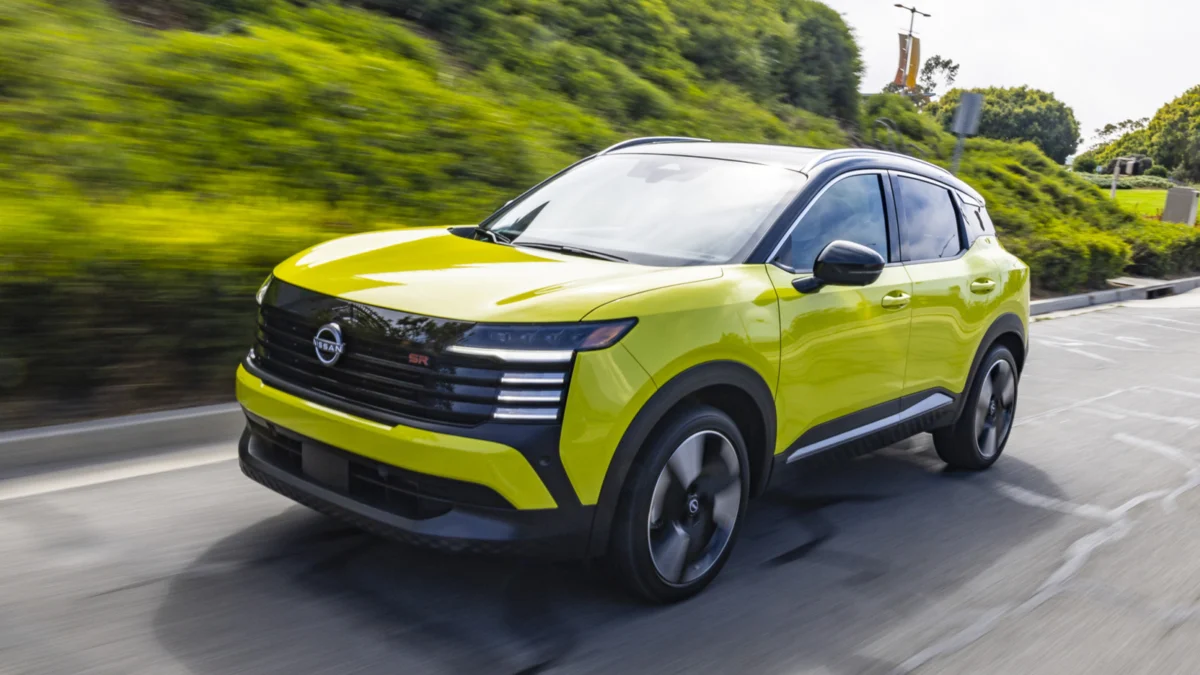
The Nissan Kicks has historically been one of the least expensive vehicles in North America, but the 2026 model, starting at $24,275, brings a new level of maturity to the nameplate. The most significant update in the recent redesign is the availability of AWD—a feature previously missing from the Kicks lineup. For $25,775, the Kicks AWD holds the title of the most affordable all-wheel-drive vehicle on the market.
However, the Kicks makes concessions in performance. Its 2.0-liter engine produces a modest 141 horsepower, resulting in a 0-to-60 mph time of roughly nine seconds. This sluggishness is a trade-off for its high fuel efficiency and modern tech suite.
In contrast, the 2020 Toyota C-HR offers a used alternative for roughly $16,000 to $19,000. While the C-HR is also limited to FWD and has a somewhat cramped rear seat due to its aggressive styling, it carries the Toyota hallmark of reliability. The 2020 model year is particularly attractive because it includes a standard suite of driver-assistance technologies, such as adaptive cruise control and lane-keep assist, which were often optional on other vehicles of that era. For buyers prioritizing long-term durability over the latest infotainment screen, the C-HR remains a logical financial choice.
Reliability and Retention: 2026 Toyota Corolla Cross and the 2017 Honda HR-V
The 2026 Toyota Corolla Cross, starting at $26,610, is positioned as the practical, "no-nonsense" choice. It utilizes a 2.0-liter four-cylinder engine paired with a "Direct Shift" CVT, which includes a physical first gear to eliminate the "rubber-band" feel common in traditional CVTs. Beyond its mechanical reliability, the Corolla Cross is a leader in value retention; CarEdge data indicates a low five-year depreciation rate of just 30%, making it a safer investment for those who plan to trade in their vehicle in the future.
For buyers who cannot justify the $26,000 sticker price, the 2017 Honda HR-V offers a unique utility proposition for approximately $13,000 to $15,000. The standout feature of the second-generation HR-V is the "Magic Seat" system, which allows the rear seat cushions to flip up or the seatbacks to fold completely flat, creating a cargo-carrying capacity that punches far above its weight class. While its 141-horsepower engine is not powerful, its reliability and clever packaging make it a favorite for urban dwellers and students.
Performance and Capability: 2026 Mazda CX-30 and the 2019 Subaru Crosstrek
The 2026 Mazda CX-30 is widely regarded as the most "premium" vehicle in the sub-$30,000 bracket. Priced at $27,870, it comes standard with AWD and a 186-horsepower engine that provides a more engaging driving experience than the Nissan or Chevrolet offerings. The interior of the CX-30 utilizes high-quality materials that mimic luxury brands like Lexus or Audi, a factor that led Jalopnik readers to name it one of the best "bang-for-your-buck" vehicles currently in production.
Conversely, the 2019 Subaru Crosstrek is the quintessential choice for those seeking a rugged, used alternative. Priced around $15,000, the 2019 Crosstrek features 8.7 inches of ground clearance and a permanent AWD system that is more capable in off-road or deep-snow conditions than the slip-and-grip systems found in many rivals. Consumer Reports highlights the 2019 model for its above-average reliability, making it a staple for outdoor enthusiasts on a budget.
The Hybrid Frontier: 2026 Kia Niro Hybrid and the 2017 Toyota RAV4 Hybrid
As fuel prices remain a primary concern for American households, the 2026 Kia Niro Hybrid offers a compelling efficiency argument. At $28,885, it is the most affordable hybrid SUV in the 2026 market, boasting a combined EPA rating of 53 mpg. Despite its subcompact exterior, the Niro’s cabin is surprisingly spacious, offering 39.8 inches of rear legroom, which rivals many mid-sized sedans.
However, the Niro is FWD-only. For buyers seeking hybrid efficiency with the added security of AWD, the 2017 Toyota RAV4 Hybrid is a formidable used contender. Retailing for approximately $17,000 to $18,000, the 2017 RAV4 Hybrid delivers 32 mpg combined and significantly more cargo space than the Niro. As 2017 was the second year of the RAV4 Hybrid’s production, it benefited from the resolution of early "first-year" mechanical issues, earning high marks for long-term dependability.
Market Implications and Industry Outlook
The continued existence of these sub-$30,000 models is not guaranteed. Industry analysts point to a "K-shaped" automotive recovery where manufacturers are prioritizing high-income buyers. Ford, for instance, has essentially vacated the sub-$30,000 SUV space, focusing instead on the Bronco and Explorer lines. This shift places a heavier burden on brands like Nissan, Kia, and Chevrolet to maintain the entry-level market.
Furthermore, the rise of interest rates has made the "true cost" of a $30,000 car significantly higher than it was five years ago. A buyer with a 7% interest rate on a 60-month loan will pay thousands more in interest than a buyer in 2019. This reality has fueled the surge in the used market, as consumers realize that a ten-year-old Mazda or a seven-year-old Honda may offer 90% of the utility of a new car for 40% of the price.
Conclusion for the Modern Consumer
The 2026 model year demonstrates that while the "cheap car" is a disappearing breed, it is not yet extinct. Vehicles like the Chevrolet Trax and Nissan Kicks provide modern safety features and factory warranties for those who can stretch their budget to $25,000. However, for the millions of Americans whose budgets are capped at $15,000 or $20,000, the used market remains the only viable path. By focusing on models with proven reliability records—such as the 2015 Mazda CX-5 or the 2017 Toyota RAV4 Hybrid—shoppers can secure dependable transportation without succumbing to the predatory pricing of the modern new-car market. The key to navigating this landscape is a balance of patience, mechanical research, and a realistic assessment of one’s driving needs versus the allure of the showroom floor.