The Hashemite Kingdom of Jordan stands as a vital pillar of health security, humanitarian resilience, and regional stability in the Middle East, a reality underscored as the Director-General of the World Health Organization (WHO), Dr. Tedros Adhanom Ghebreyesus, concluded the opening day of a high-level two-day State visit to Amman. The official itinerary is designed to spotlight Jordan’s exemplary leadership in advancing universal health coverage (UHC), integrating mental health into routine primary care, and sustaining expansive humanitarian efforts for millions of displaced individuals.
Dr. Tedros’s mission comes at a critical juncture for global health diplomacy, marked by compounding crises in the region that have tested the limits of healthcare infrastructure. Throughout the opening day of engagements, the WHO chief met with high-ranking government officials, international donors, frontline medical professionals, and vulnerable patients, while being joined by prominent global health advocates Prince Harry, Duke of Sussex, and Meghan, Duchess of Sussex, founders of Archewell Philanthropies.
High-Level Dialogue with King Abdullah II on Regional Health Security
The focal point of the first day was an official audience with His Majesty King Abdullah II of Jordan. The high-level discussions centered on reinforcing health systems, expanding equitable access to care, and maintaining robust international support for emergency health responses across the Middle East. Particular attention was devoted to the plight of the Palestinian people, critically ill and injured patients evacuated from the Gaza Strip into Jordan for specialized treatment, and the extensive populations of refugees hosted by the Kingdom.
During the meeting, Dr. Tedros formally expressed his profound appreciation to King Abdullah II for his unwavering personal commitment to advancing universal health coverage. The WHO Director-General commended Jordan’s enduring solidarity and generosity in providing comprehensive health services to more than three million refugees primarily originating from Syria and Gaza.
"Jordan continues to show the world what it truly means to put health and humanity first," Dr. Tedros stated, specifically lauding the Kingdom’s broader humanitarian leadership. He highlighted His Majesty’s pioneering Medical Corridor initiative, a lifeline operation that successfully delivers critical care and advanced medical interventions to ill and injured children evacuated from active conflict zones in Gaza.
On-the-Frontlines: Witnessing the Medical Evacuation Corridor
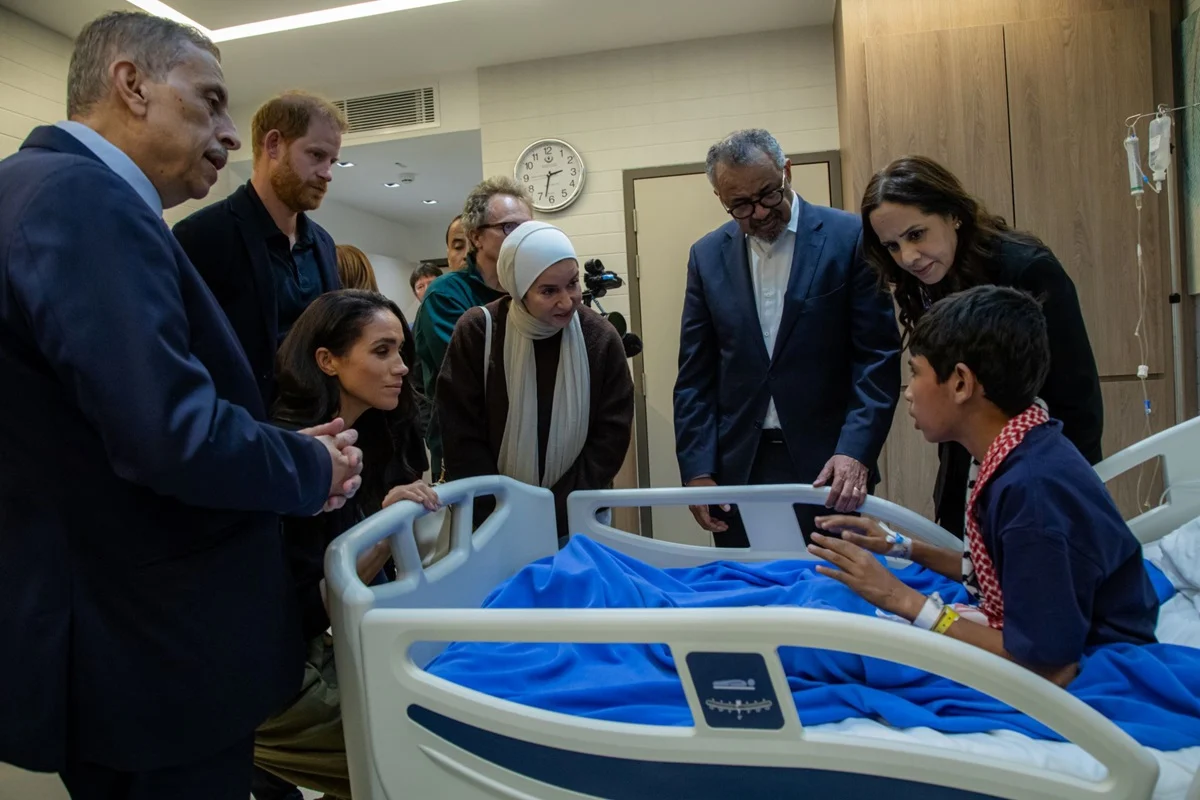
Following the royal audience, Dr. Tedros transitioned from diplomatic halls to the frontlines of clinical care, visiting a specialized, WHO-supported hospital facility dedicated to treating pediatric patients evacuated from Gaza. Accompanied by health sector officials, the WHO Director-General walked the wards to meet with young patients, their families, and the multidisciplinary teams of doctors, nurses, and specialists delivering life-saving treatments for severe injuries, pediatric cancers, and other complex medical conditions.
The site visit served to powerfully illustrate the indispensability of the Jordan medical evacuation corridor. Healthcare experts note that the destruction of medical infrastructure in Gaza has made specialized interventions nearly impossible locally, rendering external conduits like the Jordanian corridor an absolute necessity for survival. Dr. Tedros emphasized the urgent need for sustained, predictable international financial and logistical support to ensure that children and other critically vulnerable individuals can continue to access essential, life-saving care without administrative or financial interruption.
Mobilizing Global Resources: High-Level Partner and Donor Roundtable
Recognizing that Jordan’s outsized humanitarian footprint places immense fiscal and operational pressures on its domestic infrastructure, Dr. Tedros convened a high-level strategic meeting later in the day. The gathering brought together key health partners, donor governments, United Nations agencies, and major philanthropic organizations to deliberate on sustainable financing priorities.
Discussions at the roundtable focused squarely on fortifying Jordan’s long-term health system resilience and funding ongoing humanitarian health actions. Key agenda items included scaling up specialized mental health services and ensuring equitable burden-sharing for nations hosting massive refugee demographics. Dr. Tedros welcomed the robust collaboration demonstrated by international partners, urging them to view investments in Jordan’s healthcare sector not merely as short-term humanitarian aid, but as a strategic investment in regional and global health security.
Bilateral Consultations on Primary Healthcare and Mental Health Integration
In addition to multilateral engagements, Dr. Tedros held focused bilateral talks with Jordan’s Minister of Health. The dialogue concentrated on structural reforms within Jordan’s domestic health architecture and strategies for accelerating the full realization of universal health coverage nationwide.
Jordan has progressively earned global recognition for its primary healthcare approach, which serves as the foundational bedrock for achieving UHC. Notably, the Kingdom has made remarkable strides in integrating mental health services directly into routine primary healthcare clinics. This integration ensures that citizens and residents alike can access psychological support seamlessly alongside physical health services, reducing stigma and broadening reach. This progressive domestic policy is closely aligned with and continually supported by the WHO Director-General’s Special Initiative for Mental Health, which aims to expand quality mental healthcare in underserved and crisis-affected regions globally.
Archewell Philanthropies and the Global Advocacy for Mental Health
Adding an influential advocacy dimension to the state visit, Dr. Tedros was accompanied during several key engagements by Prince Harry, Duke of Sussex, and Meghan, Duchess of Sussex. Operating in their capacities as founders of Archewell Philanthropies and long-standing strategic partners of the WHO, the Duke and Duchess brought international visibility to the mission.
Archewell Philanthropies has a demonstrated history of supporting critical WHO-led initiatives, ranging from advocating for equitable global distribution of COVID-19 vaccines to supporting targeted medical evacuation operations and community mental health programs. Throughout the day’s events, Prince Harry participated actively as an outspoken ally of the WHO’s mental health mandates. He underscored the absolute necessity of investing in psychological resilience across communities and emergency settings, drawing special attention to the unique mental health vulnerabilities faced by men, young people, and children caught in the crosshairs of conflict.
Reflecting on the collaboration, Dr. Tedros remarked, "I want to thank our partners, including Prince Harry, Duke of Sussex, and Meghan, Duchess of Sussex, whose commitment to mental health and humanitarian action has helped bring visibility, resources, and hope to some of the world’s most vulnerable communities. Their collaboration is helping to advance WHO’s mission to ensure health for all."
Offering his perspective on the ground in Amman, Prince Harry shared a powerful statement regarding the imperative of psychological care in crisis zones:
"It is an honour to join the Director-General of the World Health Organization in Jordan, a country that is leading by example in compassion, resilience, and innovation. Through our work with Archewell Philanthropies, my wife and I have seen first-hand the impact of WHO’s efforts to support mental health and deliver life-saving care in emergencies. We remain deeply committed to advancing awareness, reducing stigma, and expanding access to mental health support for all those affected by conflict and crisis. Mental health is fundamental to recovery, dignity, and long-term peace, and we are proud to stand with WHO and partners around the world to make it a global priority."
Broader Implications and Context of Jordan’s Health Leadership
Public health analysts and international observers view Dr. Tedros’s state visit to Jordan as a timely affirmation of a nation that consistently punches above its weight in humanitarian governance. Despite facing persistent economic headwinds, regional geopolitical instability, and scarce natural resources—particularly water—Jordan has historically maintained an open-door policy for refugees.
According to United Nations High Commissioner for Refugees (UNHCR) and national data, Jordan hosts one of the largest populations of refugees per capita globally. The integration of these populations into the national public health infrastructure—including providing equitable access to COVID-19 vaccinations, routine immunizations, maternity care, and chronic disease management—has required extraordinary resource mobilization. The international community’s failure to adequately fund host nations risks straining these public systems, making high-level advocacy visits by global health leaders essential for securing recurring donor contributions.
Furthermore, Jordan’s strategic geographic position has transformed the country into an indispensable logistics and medical hub. The medical evacuation corridors operating through Jordan have served as a vital lifeline for patients from neighboring conflict zones, most notably the Gaza Strip, where systemic devastation has collapsed secondary and tertiary healthcare delivery. By spotlighting these corridors, the WHO aims to galvanize broader diplomatic and logistical protections to ensure these pathways remain open, funded, and secure amid volatile security landscapes.
Preview of Day Two: Rehabilitation, Community Resilience, and Advanced Oncology
As the high-profile state visit moves into its second and final day, Dr. Tedros’s itinerary will maintain its focus on specialized care, community empowerment, and institutional excellence within Jordan’s health sector.
The WHO Director-General is scheduled to visit Jordan’s National Center for Rehabilitation of Addicts. Supported extensively by the WHO, the center provides holistic, integrated medical, psychological, and social services aimed at addressing substance use disorders through a compassionate, health-centered lens rather than a punitive one.
Additionally, Dr. Tedros will engage directly with grassroots community leaders and women’s advocacy organizations, including the Jordanian Hashemite Fund for Human Development (JOHUD), which plays a pioneering role in grassroots community empowerment, poverty alleviation, and public health education across rural and urban Jordanian communities.
The state visit will culminate with a high-profile tour of the internationally renowned King Hussein Cancer Center (KHCC). Discussions at KHCC are slated to explore cutting-edge advancements in regional cancer care, pediatric oncology protocols, and cross-border research collaborations. The visit will officially conclude with final consultations involving key operational partners supporting humanitarian logistics, cementing Jordan’s enduring reputation as a cornerstone of regional medical resilience and humane governance.
Media Contacts:
Paul Garwood
Communications Officer
World Health Organization (WHO)
WHO Media Team
World Health Organization (WHO)