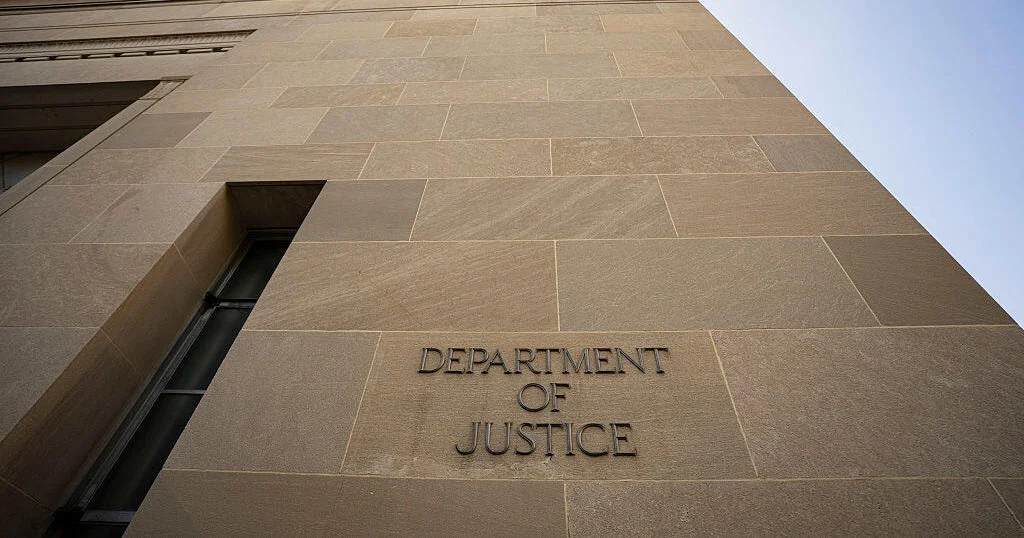
Kurt Olsen, a high-profile attorney and vocal proponent of unproven claims regarding the 2020 presidential election, has officially stepped down from his post within the United States Department of Justice, according to multiple individuals familiar with the matter. Olsen’s departure marks yet another high-level exit from a specialized prosecutorial team that has faced intense scrutiny, internal friction, and accusations of partisan overreach since its inception.
Before his resignation, Olsen was stationed within the U.S. Attorney’s Office for the Southern District of Florida. There, he played a central role in a sprawling, high-stakes inquiry colloquially referred to as the "grand conspiracy" investigation. This probe was designed to scrutinize various officials and policy decisions spanning both the Barack Obama and Joe Biden administrations. Despite months of aggressive investigative activity, the wide-ranging inquiry has yet to yield any formal criminal charges against targeted individuals, though it has generated significant political controversy and profound institutional anxiety within the federal law enforcement community.
Olsen’s exit underscores ongoing turbulence within the Justice Department under Attorney General Todd Blanche. Last month, veteran prosecutor Joe diGenova—who had been specifically tapped by Blanche to spearhead key aspects of these sensitive administrative inquiries—simultaneously tendered his resignation. DiGenova’s departure came on the heels of mounting friction with senior department leadership over the operational pace, management style, and strategic direction of the ongoing investigations. Sources indicate that Olsen is merely the latest in a string of prosecutors to walk away from the grand conspiracy team in recent days, though some internal defenders have noted that certain out-of-state attorneys attached to the unit were serving on predetermined temporary assignments that naturally reached their expiration dates.
A Complex Chronology: From 2020 Litigant to Federal Appointee
Olsen’s trajectory into the upper echelons of the federal justice system is deeply intertwined with the chaotic aftermath of the November 2020 presidential election. During the final months of that turbulent year, Olsen operated as an external attorney closely aligned with conservative legal efforts to challenge certified vote tallies. Notably, he collaborated with Texas Attorney General Ken Paxton on a long-shot, high-profile lawsuit filed directly with the Supreme Court of the United States. That legal maneuver sought to invalidate election outcomes in several crucial battleground states that had been won by Joe Biden, an effort the Supreme Court swiftly and decisively rejected.
Following the transition of power and subsequent political realignments, Olsen’s footprint within government circles expanded. Prior to his posting in Florida, he operated out of the White House holding the title of Presidentially appointed Director of Election Security and Integrity, according to Federal Bureau of Investigation records.
His past actions also drew the direct attention of the legislative branch. In 2022, Olsen was formally subpoenaed by the now-defunct House Select Committee to Investigate the January 6th Attack on the United States Capitol. According to the congressional subpoena document, investigators gathered evidence indicating that Olsen had repeatedly contacted high-level officials inside the Department of Justice at the explicit direction of then-President Donald Trump to press for formal challenges to the certification of the electoral votes. Furthermore, the committee’s records highlighted that Olsen engaged in multiple direct communications with Mr. Trump on January 6, 2021, as the events at the Capitol unfolded.
Escalating Controversies and the Fulton County Referral
Olsen’s tenure at the Justice Department was marked not only by his historical advocacy but also by concrete investigative maneuvers that triggered alarm among career civil servants and legal ethics experts. According to sources with direct knowledge of the internal operations, Olsen was personally responsible for initiating a formal criminal referral to the FBI regarding election administration practices in Fulton County, Georgia.
That specific referral set off a chain reaction resulting in federal law enforcement agents executing a high-profile search warrant earlier this year. During those operations, agents seized dozens of boxes containing physical ballots and associated administrative materials stemming from the 2020 election cycle, details that were subsequently laid bare in a publicly released FBI affidavit. In addition to the Fulton County action, sources confirm that Olsen originated several other 2020 election-related referrals intended to prompt federal criminal reviews.
These actions catalyzed a broader, simmering institutional crisis. For months, law enforcement veterans, former prosecutors, and retired intelligence officials have voiced deep-seated concerns regarding the direction of the Justice Department. Critics have repeatedly argued that the criminal inquiries initiated under the current administration—particularly those targeting high-profile figures such as former CIA Director John Brennan and other Obama- and Biden-era veterans—are being systematically staffed with politically motivated personnel. These critics contend that the composition of these investigative teams reflects an intent to secure politically expedient, partisan indictments rather than objective adjudications based on established legal thresholds.
Official Responses and Silence from Key Stakeholders
As news of Olsen’s departure reverberated through legal and political circles, formal requests for comment submitted by mainstream news organizations to the Department of Justice and to Olsen himself went unanswered. The department has maintained a guarded posture regarding the staffing shifts within the Southern District of Florida, declining to elaborate on the specific reasons behind the sudden departures of Olsen and diGenova or to detail the future operational roadmap for the grand conspiracy task force.
The silence from federal authorities contrasts sharply with the vocal commentary emanating from political analysts and legal watchdogs, who view the ongoing turnover as a barometer of institutional strain. The intersection of political ideology and prosecutorial discretion has historically been a sensitive fault line within the American federal judiciary, and the high-profile nature of the targets in these investigations has magnified every administrative change.
Broader Impact and Institutional Implications
The departure of Kurt Olsen carries significant implications for the future trajectory of the Justice Department’s controversial review of past administrative actions and election administration processes. As the specialized prosecutorial unit loses key architects of its initial case filings, the viability, pace, and ultimate credibility of the grand conspiracy investigation face heightened uncertainty.
From an institutional perspective, the churn within the Southern District of Florida highlights the ongoing cultural and operational friction between political appointees and career civil servants. The legacy of the 2020 election continues to cast a long shadow over federal institutions, demonstrating how past political alignments can profoundly influence contemporary administrative priorities. Whether the Justice Department will recalibrate its investigative approach in the wake of these resignations remains an open question, but the departures of figures like Olsen and diGenova signal that the internal battles over the scope and integrity of these probes are far from resolved.