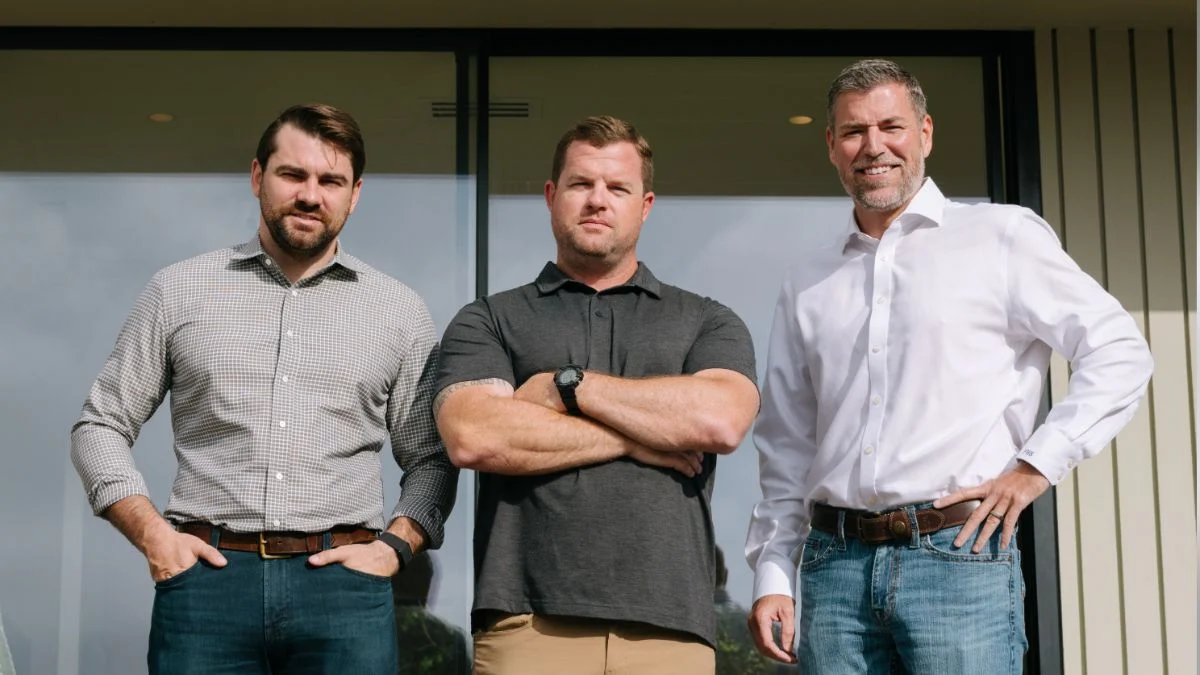
The American Housing Corporation has officially launched its flagship homebuilding division in Austin, Texas, marking a significant strategic entry into the state’s high-demand housing market. The company is deploying an innovative infill-focused, prefabricated rowhome platform designed to tackle the chronic shortage of attainable urban housing. Alongside the regional market entry, the company has announced a robust leadership team comprising seasoned industry veterans from prominent national builders, alongside sweeping updates to its corporate real estate operations, including the departure of co-founder Bobby Fijan.
Austin serves as the inaugural launch market for the company’s ambitious infill strategy. The operational model centers entirely on the comprehensive design, precision off-site manufacturing, and rapid on-site assembly of urban rowhomes. This strategic pivot arrives at a critical juncture for the residential construction sector, as builders across the United States urgently seek viable methods to deliver missing-middle housing within supply-constrained, high-cost metropolitan areas without depending exclusively on expensive and distant traditional greenfield development.
Executive Leadership and Industry Expertise
To spearhead the newly established Austin division, American Housing Corporation has recruited three high-profile industry veterans to steer its development, construction, and land acquisition pipelines. Parker Scott has been appointed as the general manager of the Austin division, bringing more than two decades of extensive homebuilding sales and operational management experience to the company. Prior to joining American Housing Corporation, Scott served as a division president at LGI Homes, where he developed deep expertise in scaling regional housing operations and driving profitability across competitive markets.
Joining Scott on the executive team is Daniel Green, who assumes the role of director of construction operations. Green brings a wealth of specialized construction experience to the firm, having previously held senior construction management positions at Homebound, ATCO Structures, and Perry Homes. Throughout his career, Green has concentrated on refining building operations, establishing rigorous execution systems, and streamlining field efficiency.
Rounding out the executive trio is Luke Allen, who has been named director of land. Allen will oversee all facets of land acquisition, financial underwriting, and pipeline development throughout the greater Austin metropolitan area. His prior background includes critical land acquisition and strategic planning roles at national homebuilding giants Lennar and Ashton Woods, positioning him to identify and secure prime infill parcels that align with the company’s dense rowhome prototype.
The Evolution of the Prototype and Manufacturing Infrastructure
The launch of the Austin division builds upon years
of technical development and product refinement. In October 2026, American Housing Corporation achieved a major engineering milestone by successfully completing its “Demo 2” prototype. This advanced residential model was constructed utilizing a proprietary componentized, prefabricated building system designed specifically to optimize structural integrity, minimize material waste, and accelerate assembly timelines.
Moving rapidly from prototyping to full-scale commercial production, the company is currently developing a massive 250,000-square-foot manufacturing plant located in Southeast Austin. Once fully operational, this state-of-the-art facility is engineered to produce up to 1,200 homes annually. By shifting a significant portion of the homebuilding process into a controlled factory environment, the company aims to insulate its operations from common industry bottlenecks, such as severe weather delays, localized labor shortages, and unpredictable fluctuations in raw material costs.
Broader Housing Market Context in Central Texas
Austin has experienced unprecedented population growth over the past decade, driven by an influx of major technology corporations, corporate headquarters, and a vibrant regional economy. However, this remarkable economic expansion has precipitated a profound affordability crisis. Traditional single-family home construction has largely pushed development further into the suburban periphery, resulting in grueling commutes and significant strain on regional infrastructure.
At the same time, municipal zoning codes and high land acquisition costs within the urban core have historically made traditional detached single-family homebuilding economically unviable for the average buyer. This supply imbalance has concentrated demand on the missing-middle housing sector—properties such as townhomes, rowhomes, and duplexes that bridge the gap between high-rise apartments and sprawling suburban estates.
By targeting underutilized infill parcels within established urban neighborhoods, American Housing Corporation aims to deliver family-sized housing options closer to employment centers, transit corridors, and established commercial districts. This approach aligns closely with municipal planning goals in Austin, which have increasingly emphasized compact and connected growth patterns to mitigate urban sprawl and reduce regional carbon footprints.
Implications for Real Estate Investors, Lenders, and Municipalities
The convergence of an urban infill land strategy with an off-site, factory-scale construction model introduces notable structural shifts for real estate finance and municipal engagement. Traditionally, residential construction underwriting has been burdened by extended cycle times, vulnerability to meteorological disruptions, and high exposure to on-site labor inefficiencies.
By standardizing production within a dedicated 250,000-square-foot facility, American Housing Corporation intends to provide capital providers and financial institutions with a higher degree of cost certainty and significantly compressed construction timelines. Controlled off-site manufacturing fundamentally alters conventional risk assessments, potentially lowering the cost of capital for urban infill projects and accelerating the velocity at which invested capital can be returned.
Furthermore, municipal authorities and urban planners are closely monitoring the scalability of prefab housing platforms. Municipalities grappling with housing deficits frequently encounter friction between the need for rapid housing delivery and community concerns regarding construction noise, traffic disruption, and protracted project timelines. Prefabricated rowhomes, which arrive on-site substantially pre-assembled and require shorter localized installation windows, offer a compelling alternative that minimizes neighborhood disruption while rapidly expanding the local housing stock.
Corporate Restructuring and Evolution
In tandem with the formal launch of the Austin division and the expansion of its manufacturing footprint, American Housing Corporation has enacted a broader corporate restructuring of its real estate operations. As part of this strategic realignment, the firm parted ways with co-founder Bobby Fijan.
Company leadership formally acknowledged Fijan’s foundational contributions during the formative stages of the enterprise, crediting him with helping establish the firm’s early real estate footprint and advocating passionately for urban, family-sized housing typologies. The departure reflects an ongoing corporate transition as American Housing Corporation shifts its primary organizational focus from early-stage research and conceptual design toward large-scale industrial manufacturing, regional market execution, and commercial scaling.
Outlook and Future Expansion
The launch of the Austin division and the construction of the Southeast Austin manufacturing plant represent a critical proving ground for American Housing Corporation’s long-term business model. If the factory-scale prefab platform successfully achieves its projected output of 1,200 homes annually, the operational framework could serve as a replicable blueprint for expansion into other high-cost, supply-constrained metropolitan areas across the United States.
As the Central Texas division begins deploying its leadership team, acquiring urban infill parcels, and integrating the componentized building system into active developments, industry observers and housing advocates will be closely watching the results. The success of this initiative could offer a powerful empirical test of whether large-scale industrial prefabrication can successfully bridge the gap between urban affordability demands and modern construction economics.