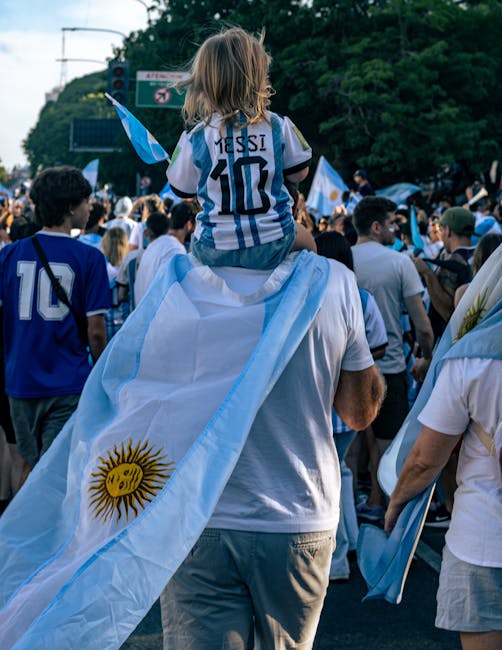
Argentina Not Overly Reliant on Messi, Says Scaloni
The perennial debate surrounding the reliance of the Argentine national football team on Lionel Messi has once again taken center stage, particularly in the wake of their triumphant 2022 FIFA World Cup campaign. While Messi’s unparalleled talent and match-winning ability are undeniable, head coach Lionel Scaloni has consistently pushed back against the narrative that La Albiceleste is a one-man show. His strategic approach, coupled with the emergence of a robust supporting cast, suggests a more balanced and resilient team than often credited. This article will delve into Scaloni’s philosophy, the tactical evolution of the squad, and the specific contributions of other key players that demonstrate Argentina’s diminished, though not entirely absent, dependence on their iconic captain.
Scaloni’s tactical blueprint is fundamentally built on pragmatism and adaptability. Unlike some predecessors who seemed to revolve their entire system around maximizing Messi’s individual brilliance, Scaloni has strived to create a cohesive unit where Messi is a pivotal, but not the sole, offensive engine. This involves a strategic distribution of responsibilities and a clear understanding of each player’s role within the collective. The coach has often emphasized the importance of teamwork, defensive solidity, and intelligent transitions, creating an environment where the team can function effectively even if Messi isn’t having his most dominant game. This shift in focus is not a dismissal of Messi’s importance but rather a sophisticated understanding of how to integrate his genius into a sustainable and formidable team structure. He has fostered a sense of collective responsibility, ensuring that the burden of creation and execution is shared, thus mitigating the risk of over-reliance. This tactical maturity has been crucial in navigating challenging matches and tournaments where the opposition is specifically geared to neutralize Messi.
The 2022 World Cup served as a powerful testament to this evolving team dynamic. While Messi undoubtedly delivered moments of magic that propelled Argentina forward, the contributions of other players were equally vital. The midfield, marshaled by the tireless Enzo Fernández and the experienced Rodrigo De Paul, provided both defensive cover and creative impetus. Fernández, in particular, emerged as a revelation, dictating the tempo of the game, breaking up opposition attacks, and contributing crucial goals. His ability to seamlessly link defense and attack allowed Messi to operate in more advanced and influential positions, free from the immediate defensive duties. De Paul, the workhorse of the midfield, offers unwavering energy, defensive tenacity, and intelligent distribution, acting as a vital link between the defense and the attacking third. His leadership qualities and his willingness to perform the less glamorous but essential tasks have been invaluable in providing a stable platform for the team.
Furthermore, the defensive unit has undergone a significant transformation under Scaloni. Goalkeeper Emiliano Martínez has established himself as a national hero, renowned for his crucial saves, penalty shootout heroics, and commanding presence. His bravery and decisive interventions have often prevented opposition teams from gaining momentum or capitalizing on crucial moments. The central defensive partnership, typically featuring Nicolás Otamendi and Cristian Romero, has displayed a commendable blend of experience and aggression. Otamendi, a veteran leader, provides stability and positional awareness, while Romero’s athleticism and ball-playing abilities offer a more dynamic defensive approach. The full-backs, such as Nahuel Molina and Marcos Acuña, have also been instrumental, providing width in attack and diligent defensive support, ensuring that the team maintains its shape and defensive integrity. This strong defensive foundation allows the midfield and attack to operate with more freedom and confidence.
The offensive output beyond Messi has also become more diversified. Julián Álvarez has emerged as a dynamic and versatile forward, capable of playing centrally or on the wing. His relentless pressing, intelligent movement, and clinical finishing have provided a potent secondary scoring threat. Álvarez’s ability to occupy defenders and create space for others, including Messi, has been a significant asset. Lautaro Martínez, though at times inconsistent, offers a different profile of forward play – a more direct and physical presence capable of holding up the ball and creating chances through his own determination. His partnership with Álvarez, sometimes dubbed "Lajoya y el Toro" (The Jewel and the Bull), offers a tantalizing glimpse of Argentina’s future attacking prowess, capable of providing a consistent threat even without Messi’s direct involvement in every attack.
Scaloni’s tactical flexibility is another key factor in reducing Argentina’s perceived reliance on Messi. He has demonstrated an ability to adapt formations and strategies based on the opponent and the flow of the game. Against teams that sit deep and invite pressure, Argentina can employ a more possession-based approach, utilizing the midfield’s creativity. Against more expansive teams, they can adopt a counter-attacking stance, leveraging the speed and directness of players like Álvarez and Ángel Di María. This adaptability means that the team is not rigidly tied to a single style of play that is solely dependent on Messi’s ability to unlock defenses. The coach’s willingness to experiment with different attacking configurations and to empower other players to take on more responsibility has been crucial in developing this well-rounded squad. This proactive approach to tactical planning ensures that Argentina is not predictable and can find ways to win even when facing formidable opposition.
The mental fortitude and collective spirit cultivated by Scaloni cannot be overstated. The 2022 World Cup journey was not without its challenges, including early setbacks and intense pressure. However, the team consistently displayed resilience, drawing strength from each other. This unity and unwavering belief in their collective ability have allowed them to overcome adversity without solely relying on Messi to inspire them through sheer individual brilliance. The emergence of strong leadership figures beyond Messi, such as Otamendi and De Paul, has also contributed to this robust team ethic. They act as crucial intermediaries on the field, relaying Scaloni’s instructions and ensuring that the team remains disciplined and focused. This shared leadership empowers every player to feel responsible for the team’s success, fostering a deeper sense of ownership and commitment.
The impact of Ángel Di María, when fit, cannot be understated. His experience, vision, and ability to produce moments of individual brilliance in crucial matches have been a consistent source of inspiration and decisive action. Di María often provides a different creative spark, capable of orchestrating plays from deeper positions or delivering decisive passes and goals in key moments. His presence on the field, even in a supporting role, allows Messi to have more freedom and less pressure to be the sole architect of every offensive move. His ability to score crucial goals in major finals, as seen in both the Copa América and the World Cup, demonstrates his enduring importance and his capacity to step up when needed.
Looking ahead, Argentina’s future appears bright, not just because of Messi’s continued presence, but because of the solid foundation Scaloni has built. The integration of young talent, such as Enzo Fernández and Julián Álvarez, into the senior squad has been seamless. These players have not only brought energy and dynamism but have also demonstrated the tactical intelligence and technical ability to thrive in an international environment. Scaloni’s continued emphasis on developing a deep squad, with reliable backups in every position, further solidifies the team’s resilience. This ensures that even if key players are unavailable, the team can maintain its performance level and continue to compete at the highest level. The development of a strong pipeline of talent, nurtured through the Argentine football system and integrated effectively by Scaloni, is a testament to the long-term vision of the national team’s leadership.
In conclusion, while Lionel Messi remains an extraordinary talent and a central figure for the Argentine national team, the notion that Argentina is "overly reliant" on him is increasingly becoming an outdated perception. Lionel Scaloni’s tactical acumen, the emergence of a talented and diverse supporting cast, the improved defensive solidity, and the fostered collective spirit have all contributed to a more balanced and self-sufficient La Albiceleste. The 2022 World Cup served as a powerful demonstration of this evolution, showcasing a team capable of winning not just through individual brilliance, but through coordinated effort, tactical intelligence, and unwavering team spirit. The future of Argentine football, while still illuminated by Messi’s brilliance, is being shaped by a generation of players who can share the burden of success and ensure the team’s continued competitiveness for years to come, a testament to Scaloni’s enduring vision. The pragmatic approach to team building and the focus on collective strengths have undoubtedly diminished the absolute dependence on any single player, making Argentina a formidable force in global football for the foreseeable future.
