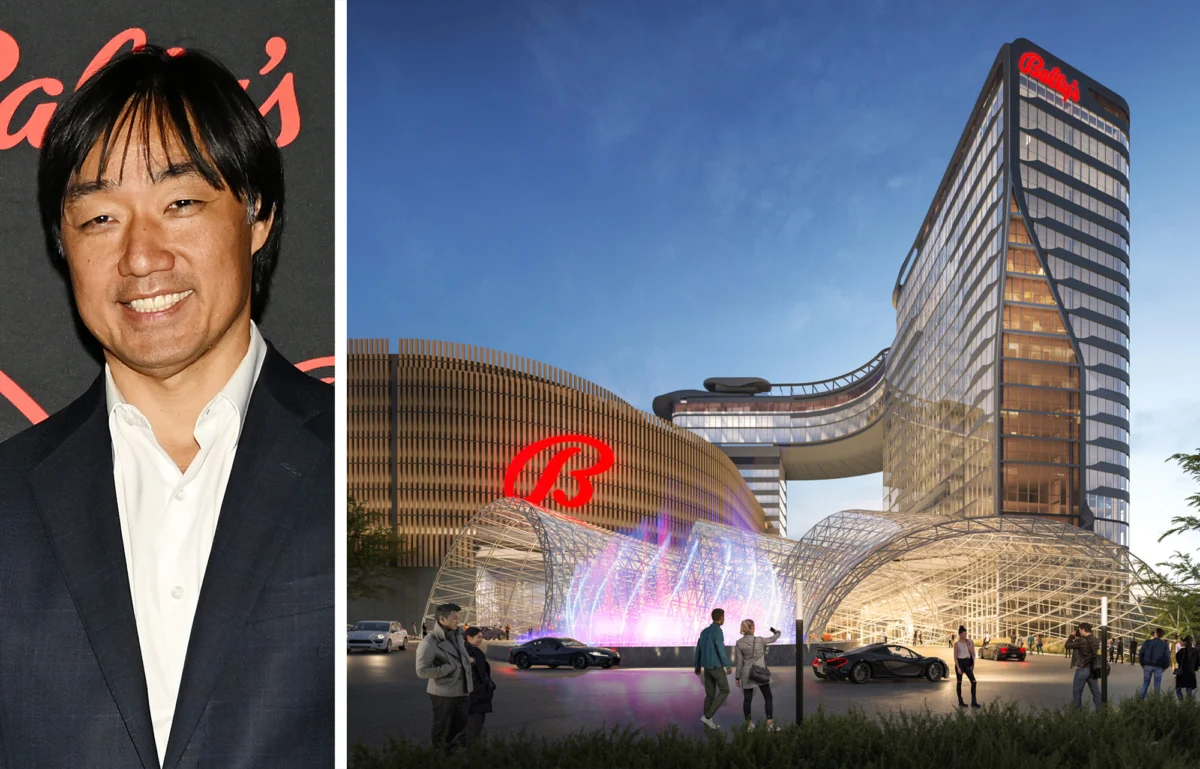
Bally’s Corporation has officially secured a significant $560 million debt package from private credit investment manager WhiteHawk Capital Partners, marking a pivotal step in the development of its ambitious casino project in the Bronx. This financing arrangement, announced Monday, provides the capital necessary for Bally’s to move forward with the pre-construction phase of its massive 3-million-square-foot resort complex at the site of the former Trump Golf Links at Ferry Point. The deal, which is expected to close in the third quarter of this year, signals a transition from the regulatory approval phase to the logistical and financial heavy lifting required to transform the Bronx waterfront.
The financing package is structured in two distinct tranches: a $400 million front-loaded term loan and an additional $160 million in delayed-draw term debt. This structure provides Bally’s with immediate liquidity to address preliminary development expenditures while offering the flexibility to tap into further funds as the project hits specific milestones.
Chronology of the Bronx Development
The path to the current financing milestone began in earnest following a series of high-stakes regulatory decisions in New York State. The state’s gaming expansion effort, aimed at revitalizing the local economy and capturing revenue lost to neighboring jurisdictions, reached a climax in December 2025. At that time, the New York State Gaming Location Board officially greenlit the Bally’s Bronx proposal, located at 450 Hutchinson River Parkway, as one of three preferred projects to receive a coveted commercial casino license.
The site itself holds a complex history. Previously operated as a public golf course under a lease held by the Trump Organization, the property was the subject of significant negotiation before Bally’s acquired it from the City of New York for $156.6 million in February 2026. This acquisition was a prerequisite for the project’s advancement, allowing Bally’s to transition the land use from recreational space to a high-density gaming and entertainment destination.
The Scope of the Bally’s Bronx Project
The proposed development is not merely a gaming floor; it is designed as a comprehensive hospitality and entertainment hub. Plans for the site, which spans a significant portion of the Bronx waterfront, include a 3-million-square-foot facility anchored by a 500-room luxury hotel. Additionally, the complex will feature a 2,000-person event center, aimed at attracting conferences, concerts, and regional gatherings that have historically bypassed the borough.
By integrating hotel capacity with event space, Bally’s intends to create a "destination resort" model that encourages longer stays and higher secondary spending, rather than the "churn-and-burn" model often associated with standalone gaming facilities. This strategy aligns with the broader goals of New York City’s economic development plan, which seeks to stimulate tourism outside of the Manhattan core.
Official Perspectives on the Financial Milestone
The infusion of capital from WhiteHawk Capital Partners is seen as a vote of confidence in the project’s viability within a challenging high-interest-rate environment. Soo Kim, the chairman of the board at Bally’s, emphasized that the financing is a critical bridge to long-term stability.
"This important financing allows us to progress the pre-construction planning process so that we are ready to complete the remainder of the capital raise and remain on schedule," Kim stated. "Furthermore, the additional liquidity provides us greater flexibility for other capital opportunities."
Bob Louzan, managing partner at WhiteHawk Capital Partners, echoed this sentiment, framing the move as a strategic partnership that addresses the immediate needs of the project. "This financing will support the project’s pre-construction work as Bally’s advances its broader financing plan," Louzan noted. The involvement of a specialized private credit firm highlights the current reliance on non-traditional lending sources for large-scale infrastructure and real estate developments, as traditional bank lending remains constrained.
The Competitive Landscape of New York Gaming
Bally’s project does not exist in a vacuum. It is part of a broader tri-fold expansion of the New York City gaming market, a competitive landscape that has seen intense lobbying and high-profile partnerships. The other two successful bidders selected alongside Bally’s are:
- Resorts World New York City: Located at the former Aqueduct Raceway in Jamaica, Queens, this site is already an established "racino" (a venue offering video lottery terminals). Its expansion into a full-scale commercial casino is expected to be a relatively seamless transition given the existing infrastructure.
- Hard Rock’s Metropolitan Park: Situated adjacent to Citi Field in Flushing, Queens, this project is a partnership between Hard Rock International and New York Mets owner Steve Cohen. The proposal, which involves significant upgrades to the surrounding public space, has been touted for its potential to transform the Willets Point area into a year-round entertainment district.
The competition between these three projects is not just for market share, but for local political support. Each operator must navigate complex community board reviews, environmental impact studies, and local zoning hurdles. The ability of Bally’s to secure $560 million in financing serves as a clear indicator to local stakeholders that they possess the necessary "financial muscle" to follow through on their commitments.
Economic Implications and Market Analysis
The development of the Bronx casino carries profound implications for the local economy. Beyond the construction jobs created during the build-out phase, the project is expected to create thousands of permanent positions in hospitality, security, facility management, and gaming operations.
However, the project also faces scrutiny regarding the impact on local traffic, social services, and the potential for increased gambling addiction in the surrounding neighborhoods. Economists point out that while the state will benefit from significant tax revenues—essential for funding public programs—the "cannibalization" of existing entertainment spending remains a concern. The success of the project will largely depend on the operator’s ability to draw tourists and visitors from outside the immediate Bronx area rather than simply shifting existing local spending into the casino.
Furthermore, the scale of the debt package underscores the high cost of entry for the New York market. With capital costs elevated, developers are under pressure to ensure that their designs are not only functional but also highly efficient. The use of a "delayed-draw" term debt facility indicates that Bally’s is managing its interest obligations carefully, ensuring that they only pay for the capital as they need to deploy it for specific construction phases.
Future Outlook and Challenges
As Bally’s moves into the next phase of the project, the focus will shift toward environmental remediation of the waterfront site and the finalization of architectural blueprints. Regulatory compliance will remain the primary hurdle, as the New York State Gaming Commission continues to oversee the implementation of the license conditions.
The upcoming months will likely see increased activity on-site as early site preparation begins. Observers will also be watching the progress of the other two competitors, as all three projects are essentially racing to establish their brands within the newly liberalized New York market. For Bally’s, the $560 million from WhiteHawk is not just a loan; it is a declaration of intent. By locking in this funding, the company has effectively mitigated the risk of a "financing gap," a common pitfall that has doomed similar large-scale urban developments in the past.
The project at 450 Hutchinson River Parkway represents a major shift in the Bronx’s economic profile. As the city evolves, the integration of high-end entertainment, hospitality, and gaming will be tested against the backdrop of changing urban development priorities. For now, with the financing in place, the focus for Bally’s remains on execution, meeting deadlines, and delivering on the promises made to both the city and the state of New York. The road ahead remains long, but the securing of this capital is a foundational accomplishment that clears the way for the transformation of the former golf course into a cornerstone of New York’s gaming future.