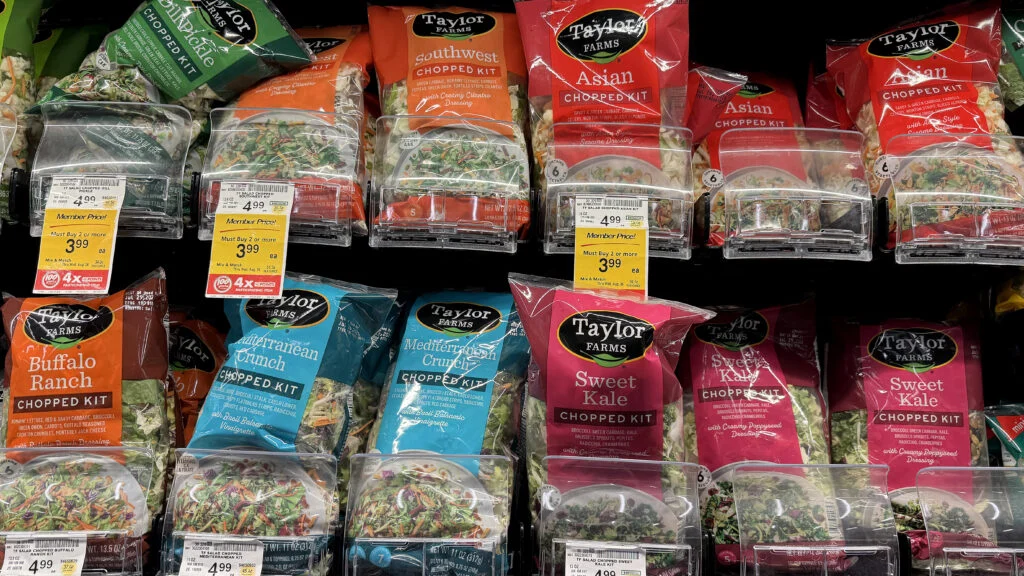
Federal health officials have reaffirmed their concentrated efforts on identifying lettuce from Taylor Farms as the likely source of a multistate outbreak of Cyclospora, a parasitic infection causing debilitating gastrointestinal illness, despite a temporary setback involving an inaccurate laboratory test result that was briefly and subsequently retracted by the government over the weekend. The U.S. Food and Drug Administration (FDA) acknowledged on Monday that a laboratory had mistakenly reported a positive finding for Cyclospora on a sample of lettuce originating from Taylor Farms. This initial finding was disseminated on the FDA’s public website on Saturday, only to be corrected on Sunday with the confirmation that the result was a false positive.
The ongoing investigation, a collaborative effort between federal and state authorities, has been meticulously tracking a concerning increase in Cyclospora infections across five states. Early indications of the outbreak pointed towards lettuce served at various Taco Bell locations as a potential vehicle for transmission. In response to these developing concerns, Taylor Farms, a prominent produce supplier, announced on Saturday a voluntary recall of 25 shredded lettuce and salad mix products. These products, sold under eight distinct brand codes, are widely distributed and utilized by numerous U.S. food service chains and other suppliers, amplifying the potential reach of the contamination.
Persistent Traceback Points to Central Mexico Lettuce
Despite the temporary confusion caused by the erroneous test result, federal health officials remain steadfast in their assessment of the outbreak’s origin. Donald Prater, the acting food chief for the FDA, stated unequivocally to reporters on Monday, "FDA’s traceback investigation and the outbreak data continue to converge on shredded iceberg lettuce from Taylor Farms’ locations in central Mexico." This assertion highlights the methodical approach being employed, which involves not only scrutinizing the supply chain of implicated produce but also initiating direct testing of agricultural products entering the United States at border crossings.
The False Positive: A Brief but Clarified Interruption
The erroneous laboratory result stemmed from the use of a rapid screening test designed to detect the presence of Cyclospora. The sample that initially triggered the positive alert was indeed from Taylor Farms, but it was crucial to note that this particular sample was not part of the broader recall initiated by the company. FDA officials explained their decision to publicize the initial finding by stating they felt a responsibility to inform the public promptly about any potential food safety alert. However, a subsequent, more rigorous quality control examination revealed the initial positive finding to be an error. Taylor Farms was officially informed of this correction on Sunday.
The company, in a move that generated some public attention, took to social media to announce the updated test results, stating that the FDA had "apologized to us." Agency officials, however, clarified that no formal apology had been issued. This incident underscores the inherent complexities and potential for minor missteps in the high-stakes environment of foodborne illness investigations, where swift public communication is balanced against the absolute need for accuracy.
Understanding Cyclospora: A Microscopic Menace
Cyclospora is a microscopic, single-celled parasite that poses a significant public health threat. Its transmission typically occurs through the ingestion of food or water that has been contaminated with human feces. Produce, particularly items that are consumed raw, is especially vulnerable. Contamination often happens when fruits and vegetables are irrigated or washed with water sources that have been compromised by sewage or improperly treated wastewater. Once ingested, the parasite invades the small intestine, leading to an illness characterized by severe gastrointestinal distress. According to the Centers for Disease Control and Prevention (CDC), common symptoms include "frequent and sometimes explosive bowel movements," along with potential nausea, vomiting, fatigue, and abdominal cramping. The incubation period can range from a few days to over a week, and symptoms can persist for weeks or even months if left untreated.
A Growing National Concern: Outbreaks and Impact
The current Cyclospora outbreak is not an isolated event. In 2023 alone, according to data compiled by the FDA and CDC, Cyclospora has been linked to at least 1,645 reported illnesses across the United States, with 141 individuals requiring hospitalization. Health agencies are actively investigating five distinct clusters of Cyclospora infections, with the current situation involving Taylor Farms’ lettuce being one of the most prominent.
The persistence of new cases, even as investigations progress, emphasizes the urgency of the situation. Kyle Diamantas, the acting commissioner of the FDA, highlighted this ongoing concern, noting that health officials have continued to observe new illnesses associated with the latest outbreak, with some cases reported as recently as the past week. "Which means it’s imperative for us to take action to ensure that contaminated product is not making its way to the market," Diamantas stated, underscoring the critical need for swift and decisive regulatory action to safeguard public health.
Economic Repercussions: Foot Traffic Declines at Fast-Casual Restaurants
The public health alerts and subsequent investigations have not been without their economic consequences for the food industry. Data compiled by Placer.ai, a company that tracks consumer movements through cellphone usage analysis, reveals a noticeable decline in foot traffic at several prominent dining chains following the federal health officials’ naming of Taco Bell in their investigation.
Between January 1 and July 6, the period preceding the latest public advisories, Placer.ai observed average daily foot traffic. However, in the days following the initial outbreak disclosures, a downward trend emerged. Taco Bell experienced the most significant dip, with an 18.9% decrease in customer visits. Other fast-casual restaurants also reported declines: Chopt saw a 14.3% drop in foot traffic, while both Chipotle and Panera Bread experienced close to a 7% reduction. Cava, a Mediterranean fast-casual chain, reported a more modest decline of 4.2%. These figures illustrate the palpable impact that food safety concerns can have on consumer behavior and the financial health of the restaurant sector.
The Challenges of Foodborne Illness Investigation
Investigating foodborne illness outbreaks, particularly those caused by microscopic parasites like Cyclospora, presents unique challenges for food safety experts. Establishing a direct, biological link between a specific batch of recalled produce and an outbreak can be exceptionally difficult. Unlike some bacterial pathogens, certain tests used for routine food poisoning checks are not adequately designed to detect Cyclospora. Furthermore, the parasite cannot be easily cultivated in laboratory settings, which hinders the ability of investigators to generate definitive, direct evidence from contaminated food samples.
Consequently, health authorities often rely on a combination of epidemiological data and circumstantial evidence to pinpoint the source of an outbreak. This approach involves meticulously gathering information from affected individuals about their dietary habits, analyzing the geographic proximity and temporal patterns of reported illnesses, and identifying commonalities in the food items consumed. The process requires extensive detective work, piecing together a complex puzzle from patient interviews, traceback investigations, and traceback data to build a compelling case for the source of contamination.
A Look Ahead: Continued Vigilance and Mitigation Efforts
The ongoing investigation into the Cyclospora outbreak highlights the critical importance of robust food safety protocols throughout the entire supply chain, from farm to fork. The FDA and its partner agencies are committed to a thorough and transparent investigation, aiming to not only identify the definitive source of the current outbreak but also to implement measures that will prevent future occurrences. This includes continued scrutiny of imported produce, enhancements to rapid testing methodologies, and closer collaboration with international food producers to ensure adherence to stringent safety standards. The public health implications of such outbreaks underscore the interconnectedness of global food systems and the vital role of regulatory bodies in safeguarding the nation’s food supply. The coming weeks and months will be crucial in determining the full extent of the outbreak and the effectiveness of the measures being implemented to protect consumers.
Matthew Perrone, AP Business Writer Anne D’Innocenzio contributed from New York.