The promise of physical AI, a future where engineers can program physical agents with the same agility and efficiency as digital ones, remains a potent vision for the robotics industry. However, realizing this future has been significantly hampered by a fundamental constraint: the profound paucity of usable data from physical environments. Robotics companies currently face immense challenges, often forced to construct elaborate mock-up warehouses or deploy extensive surveillance systems on factory floors and gig workers, all to generate the necessary real-world data for training deep learning models to operate robots effectively. This labor-intensive and capital-intensive approach limits scalability and innovation across the sector.
Recognizing this critical bottleneck, a viable alternative has emerged: high-fidelity simulation. Detailed virtual replicas of real-world environments offer a compelling solution, capable of providing the vast quantities of data and versatile workspaces that roboticists desperately need to advance their work in a scalable and cost-efficient manner. At the forefront of this burgeoning field is Antioch, a New York-based startup dedicated to building sophisticated simulation tools for robot developers. The company’s core mission is to decisively close what the industry terms the "sim-to-real gap"—the formidable challenge of ensuring virtual environments are so realistic that robots trained within them can transition seamlessly and operate reliably in the unpredictable physical world.
“How can we do the best possible job reducing that gap, to make simulation feel just like the real world from the perspective of your autonomous system?” asked Harry Mellsop, Antioch CEO and co-founder, underscoring the company’s ambitious technical objective.
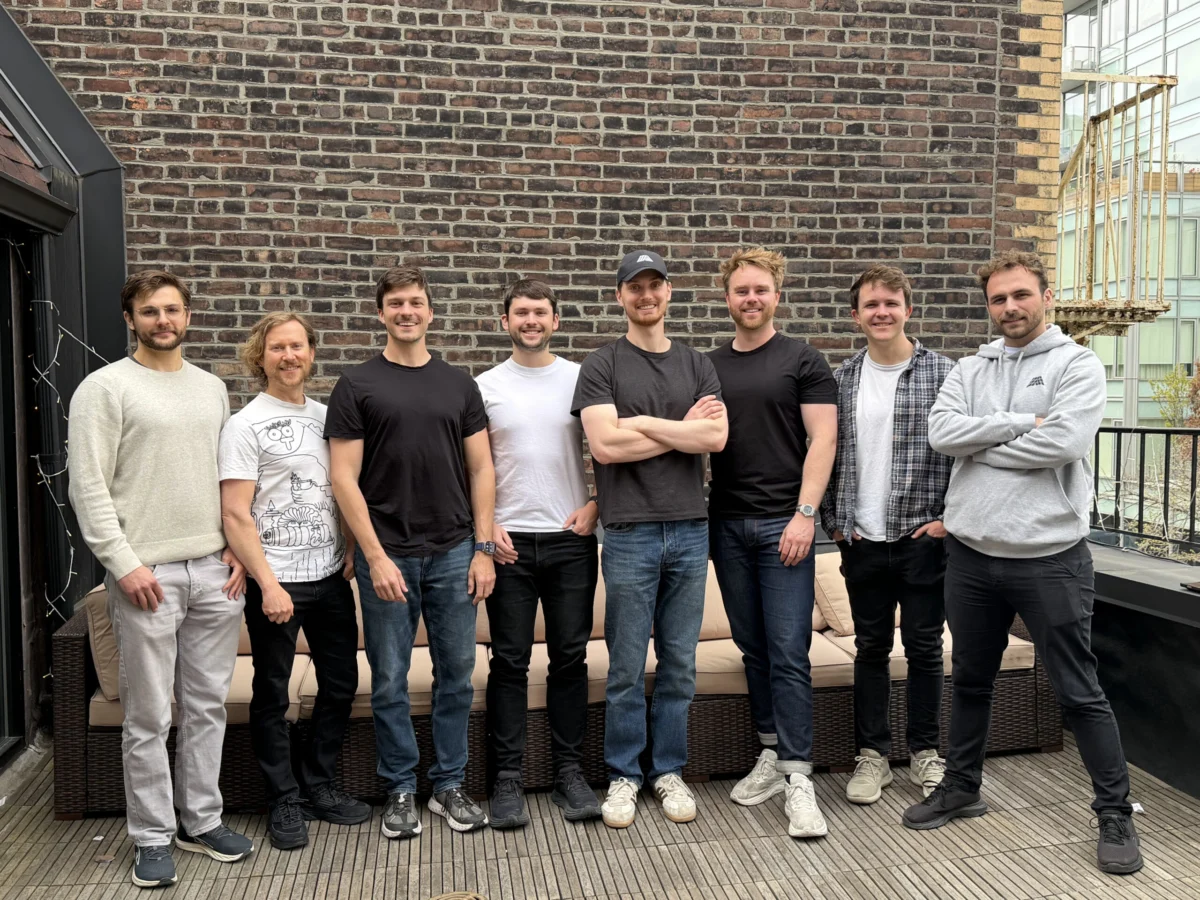
To accelerate its efforts in addressing this crucial industry challenge, Antioch today announced it has successfully raised an $8.5 million seed round. This significant investment values the nascent company at an impressive $60 million. The funding round was co-led by prominent venture firms A* and Category Ventures, with additional substantial participation from MaC Venture Capital, Abstract, Box Group, and Icehouse Ventures. This strong endorsement from a diverse group of investors highlights the perceived urgency and market potential of Antioch’s solution within the rapidly evolving landscape of physical AI.
The Imperative for Simulation: Overcoming Robotics’ Data Deficit
The current state of physical AI development is characterized by a stark contrast to its digital counterpart. In the digital realm, data is often abundant, easily generated, and relatively inexpensive to acquire. Developers can iterate rapidly, test hypotheses, and deploy solutions with lower immediate physical risks. For physical AI, however, every interaction with the real world is fraught with cost, time, and potential for hardware damage.
-
The Costly Reality of Physical AI Training: Training autonomous robots often necessitates millions of real-world interactions to cover the vast array of scenarios they might encounter. For instance, self-driving car companies have famously logged billions of miles in real-world driving and simulation combined to achieve current safety levels. For smaller robotics companies or those developing specialized industrial robots, replicating this scale of physical data collection is economically prohibitive. Building custom physical test arenas, procuring and maintaining fleets of sensor-equipped robots, and staffing these operations represents a massive capital outlay that only a handful of well-funded giants can afford. Moreover, the iterative process of trial and error, which is fundamental to machine learning, can lead to frequent hardware failures or operational errors in physical environments, further driving up costs and slowing down development cycles. This has created an uneven playing field, where only those with immense resources can truly push the boundaries of robotics.
-
The Promise of Virtual Testbeds: Simulation offers a compelling alternative, promising to democratize access to advanced robotics development. By creating highly detailed, physics-accurate virtual environments, developers can:
- Generate Synthetic Data at Scale: Millions of data points can be generated without ever touching a physical robot, significantly accelerating the training process. This synthetic data can be precisely labeled and diverse, addressing the data scarcity problem.
- Rapid Prototyping and Iteration: Engineers can test new algorithms, hardware designs, and control strategies in a virtual sandbox, identifying and correcting flaws without the risk or expense of physical prototypes.
- Explore Edge Cases: Rare, dangerous, or difficult-to-reproduce scenarios (e.g., unexpected obstacles, extreme weather, equipment malfunctions) can be simulated repeatedly, allowing robots to learn robust behaviors for critical situations that would be too risky or time-consuming to encounter in the real world.
- Parallel Development: Multiple teams can work on different aspects of a robot’s autonomy stack concurrently within the same simulated environment, speeding up overall project timelines.
Despite these clear advantages, the challenge of making simulations realistic enough—the aforementioned "sim-to-real gap"—has remained a significant hurdle. If a robot performs flawlessly in simulation but fails catastrophically in the real world, the value of the simulation is undermined.
Antioch’s Vision and Technological Approach: Closing the Sim-to-Real Gap
Antioch’s platform directly confronts the "sim-to-real gap" by providing a robust environment where robot builders can seamlessly spin up multiple digital instances of their hardware. These virtual robots are then connected to simulated sensors that meticulously mimic the data streams a robot’s software would receive in the physical world. This capability allows developers to rigorously test edge cases, perform sophisticated reinforcement learning, and generate high-quality, diverse training data essential for robust AI models.
-
High-Fidelity Simulation: The Core Challenge: The fidelity of the simulation is paramount. The physics engines, sensor models, and environmental rendering must closely align with reality. As Antioch CEO Harry Mellsop emphasizes, the goal is to make the simulation "feel just like the real world from the perspective of your autonomous system." Antioch achieves this by starting with foundational models developed by industry leaders like Nvidia and World Labs, and then meticulously building domain-specific libraries on top of them. This approach makes the complex simulation tools accessible and easy to use for developers, who might not have the specialized expertise to build such intricate virtual worlds from scratch. By working with multiple customers across various industries, Antioch gains a breadth of context and real-world feedback that allows it to continually refine and enhance its simulations, offering a level of sophistication and realism that no single physical AI company could hope to match independently.
-
A Platform for Diverse Robotic Applications: While the ultimate aspiration for physical AI includes generalized robots capable of replicating a wide array of human tasks, Antioch’s immediate strategic focus is on sensor and perception systems. This segment currently accounts for the bulk of the demand in critical applications such as automated cars and trucks, sophisticated farm and construction machinery, and advanced aerial drones. These applications rely heavily on accurate environmental perception and require highly robust sensor data interpretation. Although Antioch’s pitch is primarily aimed at startups, its early engagements have already extended to several multinational corporations that are heavily investing in robotics, underscoring the broad applicability and immediate value of its platform across the industry spectrum.
Leadership and Investor Confidence: A Track Record of Success
Antioch’s rapid ascent and successful funding round are also a testament to the proven entrepreneurial acumen and deep technical expertise of its founding team. Harry Mellsop, alongside co-founders Alex Langshur and Michael Calvey, previously established Transpose, a security and intelligence startup that was successfully acquired by Chainalysis for an undisclosed sum. This prior success demonstrates their capability to build and scale valuable technology companies. The team is further strengthened by the inclusion of Collin Schlager, formerly of Google DeepMind, and Colton Swingle, who contributed his expertise at Meta Reality Labs. Their backgrounds bring invaluable experience from leading AI research and development institutions, ensuring a blend of entrepreneurial drive and cutting-edge technical insight.
-
Experienced Founders at the Helm: The founders’ combined experience in security, intelligence, and advanced AI research from tech giants provides Antioch with a formidable leadership structure. Their prior venture, Transpose, which developed real-time crypto data solutions, gave them firsthand experience in building complex data infrastructure and delivering mission-critical tools. This history of successfully identifying market needs, developing innovative solutions, and executing strategic exits instills significant confidence in investors regarding Antioch’s potential.
-
Investor Endorsement and Strategic Alignment: The diverse group of investors, including venture firms with a strong focus on developer tools and deep tech, highlights the strategic alignment with Antioch’s mission. Çağla Kaymaz, a partner at Category Ventures, articulated this perspective, stating, “What happened with software engineering and LLMs is just starting to happen with physical AI. We do a lot of work on dev tools, and we love that vertical, but the challenges are different. With software, you can have these bad coding tools, and the risk is generally pretty contained to the digital world. In the physical world, the stakes are much higher.” This underscores the understanding that while developer tools are crucial, the specific requirements and inherent risks in physical AI necessitate a specialized and highly robust approach, which Antioch aims to provide. The $60 million valuation reflects not only confidence in the team and technology but also the immense market potential for a platform that can genuinely accelerate physical AI development.
Industry Perspectives and the Broader Ecosystem
The critical need for enhanced simulation tools is a pervasive theme across the autonomy industry. Major players in the self-driving car sector, such as Waymo, already leverage sophisticated simulation environments. Waymo, for instance, utilizes Google DeepMind’s advanced world models to rigorously test and evaluate its driving algorithms. This technique is designed to significantly reduce the amount of real-world data collection required when deploying Waymo vehicles in new geographic areas, thereby slashing a key cost factor in scaling autonomous vehicle technology.
-
Learning from Autonomous Vehicle Leaders: While building and using these complex world models for self-driving cars requires a distinct set of skills, the underlying principle—reducing reliance on expensive physical data—is universal. Antioch aims to democratize this capability, offering a platform that allows newer companies, often lacking the vast capital of industry giants, to access state-of-the-art simulation. These smaller entities simply do not possess the financial resources to construct multi-million-dollar physical testing arenas or accumulate millions of miles of sensor-studded vehicle data. Antioch’s offering thus provides a crucial equalizer, enabling more agile and innovative startups to compete effectively. Harry Mellsop notes that "the vast majority of the industry doesn’t use simulation whatsoever, and I think we’re now just really understanding clearly that we need to move faster." This highlights a significant untapped market that Antioch is poised to address.
-
The Stakes of Physical AI: A Venture Capitalist’s View: The comparison of Antioch’s product to Cursor, a popular AI-powered software development tool, is insightful. However, as Çağla Kaymaz of Category Ventures aptly points out, the inherent risks are fundamentally different. In software development, bugs or inefficiencies generally remain contained within the digital realm. In physical AI, errors can lead to real-world accidents, property damage, or even human injury. This elevated level of risk necessitates an unparalleled degree of precision and reliability in simulation tools, making Antioch’s mission even more critical.
-
The Need for an "Off-the-Shelf" Toolchain: Adrian Macneil, a seasoned expert in the autonomous driving space and an angel investor in Antioch, brings invaluable perspective. As an executive at the self-driving startup Cruise, he was instrumental in building the company’s data infrastructure. In 2021, he founded Foxglove, a company that provides similar data pipelines to physical AI startups. Macneil’s endorsement of Antioch is significant. Speaking at the Ride.AI conference in San Francisco, he stated, "Simulation is really important when you’re trying to build a safety case or dealing with very high-accuracy tasks. It’s not possible to drive enough miles in the real world." Macneil envisions a future where physical AI development benefits from the same kind of accessible, "off-the-shelf" tools that fueled the SaaS revolution, citing platforms like GitHub, Stripe, and Twilio as exemplars. "We need a lot more of the entire toolchain to be available off the shelf," he emphasized to TechCrunch, underscoring the broader industry shift Antioch represents.
Pioneering Future Applications: LLMs and the Autonomous Feedback Loop
Beyond the immediate practical applications, Antioch’s platform is already being leveraged for groundbreaking research, hinting at the future trajectory of physical AI. David Mayo, a researcher at MIT’s Computer Science and Artificial Intelligence Laboratory (CSAIL), is utilizing Antioch’s platform to evaluate Large Language Models (LLMs) in novel ways. In one pioneering experiment, Mayo’s team employs AI models to design robots within a virtual environment. These AI-designed robots are then rigorously tested using Antioch’s simulator. The platform even allows for simulated contests, such as pitting rival bots against each other in tasks like pushing an opponent off a platform. This innovative approach of providing LLMs with a realistic, interactive sandbox could establish a new paradigm for benchmarking AI models, moving beyond purely linguistic or abstract tasks to evaluate their capabilities in complex physical problem-solving and design.
-
Benchmarking AI with Simulated Robotics: This MIT experiment exemplifies the potential of simulation to become a critical component in the evolution of AI itself. By allowing LLMs to interact with and design within a physics-accurate virtual world, researchers can gain deeper insights into their reasoning, planning, and creative capabilities, ultimately pushing the boundaries of what AI can achieve in the physical domain.
-
The Dawn of Iterative Autonomous Agents: Looking ahead, Harry Mellsop articulated a bold vision: “We genuinely all think that anyone building an autonomous system for the real world is going to do so in software primarily in two to three years. It’s the first time you can have autonomous agents iterate on a physical autonomy system, and actually close the feedback loop.” This statement points to a transformative shift where autonomous systems can continuously learn, adapt, and refine their behaviors in a rapid, self-improving cycle within the digital realm before deployment. This iterative feedback loop, enabled by high-fidelity simulation, is seen as the cornerstone for unlocking truly advanced and generalized physical AI.
The Path Forward: Unlocking Scalable Physical AI
Before the advent of a widespread ecosystem of AI engineers seamlessly programming physical agents, significant work remains to fully bridge the "sim-to-real gap." The continuous refinement of simulation fidelity, the integration of increasingly complex real-world physics, and the development of intuitive developer tools are all crucial steps. If Antioch and similar companies can successfully achieve this, they will enable the creation of the "data flywheel" that Adrian Macneil believes is central to the success of category leaders like Waymo. In such a scenario, engineers gain increasing confidence that each successive iteration of their AI model will be more capable, reliable, and safer than the last, leading to an accelerated pace of innovation.
This data flywheel—where simulation generates data, trains models, and validates improvements, which then inform further simulation—is the key to unlocking scalable physical AI. For companies aspiring to replicate the success of industry leaders and bring advanced robotics into widespread use, the choice is clear: either invest colossal resources in building these sophisticated simulation tools in-house, or strategically acquire them from specialized providers like Antioch. The recent $8.5 million seed round positions Antioch as a pivotal player in this unfolding revolution, poised to empower a new generation of physical AI developers and bring the promise of autonomous systems closer to reality. The next few years, potentially highlighted by events such as the TechCrunch event in San Francisco in October 2026, will undoubtedly showcase the rapid advancements propelled by these foundational simulation technologies.