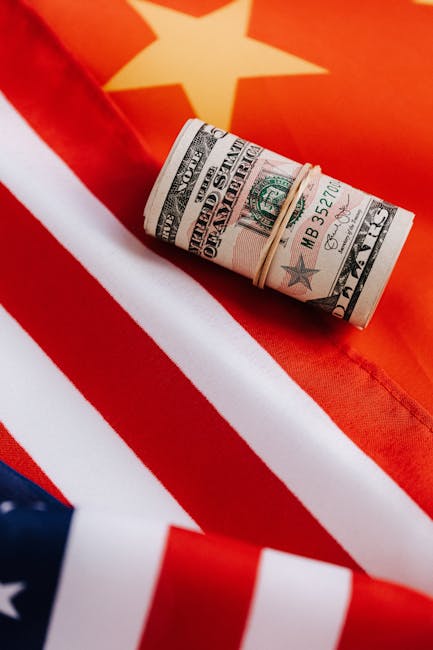
Foreign Policy: Navigating the Global Stage
Foreign policy encompasses the strategies, goals, and actions a nation undertakes in its interactions with other countries and international organizations. It is a multifaceted discipline, driven by a complex interplay of domestic interests, international norms, historical legacies, and evolving global dynamics. At its core, foreign policy seeks to protect and advance a state’s national interests, which can range from ensuring economic prosperity and national security to promoting ideological values and maintaining international stability. The tools of foreign policy are diverse, including diplomacy, economic sanctions, military alliances, foreign aid, and participation in international treaties and organizations. The effectiveness and nature of a nation’s foreign policy are constantly shaped by the prevailing geopolitical landscape, internal political structures, and the perceptions of its leaders.
The fundamental objectives of foreign policy can be broadly categorized into several key areas. National security is arguably the most paramount, involving the protection of a state’s territorial integrity, its citizens, and its vital economic and strategic assets from external threats. This often translates into maintaining robust defense capabilities, forming strategic alliances, and engaging in intelligence gathering and counter-terrorism efforts. Economic well-being is another crucial driver, with foreign policy aiming to secure access to markets, resources, and investments, foster trade relations, and promote global economic stability that benefits the nation. Beyond these tangible interests, many states pursue foreign policies rooted in promoting their values and ideologies, such as democracy, human rights, or specific religious or cultural principles, believing these to be universally beneficial or essential for global order. Finally, contributing to international peace and security, addressing transnational challenges like climate change, pandemics, and terrorism, and upholding international law are increasingly recognized as vital foreign policy goals in an interconnected world.
The conduct of foreign policy is a sophisticated and often delicate balancing act. Diplomatic engagement forms the bedrock of international relations, involving direct communication, negotiation, and representation between states. Embassies and consulates serve as crucial outposts for conveying national positions, gathering information, and fostering bilateral ties. Multilateral diplomacy, conducted within international organizations like the United Nations, provides a platform for collective problem-solving and the establishment of global norms and frameworks. Economic statecraft leverages economic tools to achieve foreign policy objectives. Sanctions, for instance, can be imposed to coerce a target state into changing its behavior, while foreign aid can be used to build goodwill, support development, and foster alliances. Military power, while often a last resort, remains a significant instrument of foreign policy, employed through deterrence, power projection, and, in extreme cases, military intervention. The strategic deployment of military forces and the formation of military alliances signal a nation’s resolve and its commitment to collective security.
Understanding the theoretical underpinnings of foreign policy is essential for comprehending its diverse manifestations. Realism, a dominant theoretical perspective, posits that states are the primary actors in international relations and are driven by a perpetual pursuit of power and security in an anarchically structured world. From this viewpoint, foreign policy is largely about maximizing national advantage and minimizing vulnerability. Liberalism, conversely, emphasizes the potential for cooperation, the role of international institutions, and the importance of shared values like democracy and human rights in shaping foreign policy. Constructivism highlights the role of ideas, norms, and identities in constructing international reality, suggesting that foreign policy is not solely driven by material interests but also by shared beliefs and social interactions. Each of these theoretical frameworks offers a distinct lens through which to analyze the motivations, strategies, and outcomes of foreign policy decisions.
The process of foreign policy formulation and implementation within a state is rarely monolithic. It typically involves a complex interplay of executive branches, legislative bodies, intelligence agencies, and various advisory groups. In presidential systems, the head of state often holds significant authority in shaping foreign policy, while legislative branches typically possess oversight powers and control over funding and treaty ratification. Parliamentary systems often see the executive branch, led by a prime minister, more directly accountable to the legislature, influencing the responsiveness and accountability of foreign policy. Public opinion and interest groups can also exert considerable influence, particularly in democratic societies, by shaping the political environment within which foreign policy is made. The bureaucratic machinery of government, with its various departments and agencies, plays a crucial role in translating policy decisions into actionable strategies and implementing them on the ground.
The contemporary global landscape presents a dynamic and ever-evolving set of challenges and opportunities that profoundly influence foreign policy. The rise of new global powers, the diffusion of technological capabilities, and the interconnectedness fostered by globalization have reshaped the international order. Non-state actors, including multinational corporations, terrorist organizations, and international non-governmental organizations, have gained increasing prominence, complicating traditional state-centric approaches to foreign policy. Transnational issues like climate change, pandemics, cyber warfare, and the proliferation of weapons of mass destruction demand coordinated international responses and require foreign policy to extend beyond traditional security concerns. The interplay between domestic politics and foreign policy is also more pronounced than ever, with national elections and internal societal shifts frequently impacting a nation’s international posture.
The tools of economic statecraft have become increasingly sophisticated and pervasive. Beyond traditional trade agreements and tariffs, countries now employ a range of instruments to influence the economic behavior of others. These include targeted sanctions aimed at specific individuals, entities, or sectors of an economy, designed to exert pressure without causing widespread collateral damage. Investment screening mechanisms are employed to protect national security and economic interests from foreign takeovers of critical infrastructure or sensitive technologies. Development assistance, once primarily a tool for humanitarian aid, is increasingly viewed as a strategic instrument for fostering stability, promoting economic interdependence, and building long-term partnerships. Currency manipulation, while controversial, can also be a tool to gain competitive economic advantages on the global stage. The interconnectedness of global financial markets means that economic policy decisions in one nation can have ripple effects across the world, necessitating a careful and nuanced approach to economic diplomacy.
The role of international law and institutions in shaping foreign policy cannot be overstated. The United Nations, with its Security Council and General Assembly, provides a framework for collective security, peacekeeping operations, and the development of international norms. The World Trade Organization (WTO) sets rules for global trade, while the International Monetary Fund (IMF) and the World Bank play critical roles in global financial stability and development. Regional organizations, such as the European Union (EU) or the Association of Southeast Asian Nations (ASEAN), foster cooperation and integration among member states. Adherence to international treaties, such as those governing arms control, environmental protection, or human rights, commits states to specific behaviors and provides mechanisms for accountability. However, the effectiveness of these institutions and laws is often contingent on the willingness of states to comply and the ability of these bodies to enforce their mandates.
The increasing prominence of cyber capabilities has introduced a new dimension to foreign policy. Cyber warfare, espionage, and the manipulation of information through digital channels pose significant threats to national security and economic stability. Foreign policy must now grapple with the development of cyber defenses, the establishment of international norms for cyberspace, and the attribution and response to cyberattacks. The digital realm has also become a battleground for influence operations, where states seek to shape public opinion in other countries through social media campaigns and the dissemination of propaganda. This necessitates a foreign policy that is not only adept at traditional diplomatic and military strategies but also understands and navigates the complexities of the information environment.
The concept of soft power, coined by Joseph Nye, has gained significant traction in contemporary foreign policy discussions. Soft power refers to the ability of a nation to persuade others to do what it wants without force or payment, through attraction and persuasion. This is often achieved through the appeal of a country’s culture, political values, and foreign policies. Countries that are perceived as legitimate, attractive, and possessing desirable values can wield considerable influence on the global stage, fostering goodwill and cooperation. This can manifest through cultural exchanges, public diplomacy initiatives, and the promotion of democratic ideals. In contrast, hard power relies on coercion, military might, and economic inducements. An effective foreign policy often seeks to integrate both hard and soft power strategies, leveraging the strengths of each to achieve its objectives.
The development of foreign policy is a continuous process of adaptation and re-evaluation. Historical events, technological advancements, and shifts in the global power balance necessitate a constant reassessment of national interests and strategic priorities. The rise of new ideological challenges, the emergence of unforeseen crises, and the evolving nature of global interconnectedness all demand a flexible and responsive approach to foreign policy. The ability of a nation’s leadership to anticipate future trends, understand complex global dynamics, and forge consensus both domestically and internationally is crucial for effective foreign policy in the 21st century. The pursuit of peace, prosperity, and security in an increasingly complex world requires a sophisticated understanding of foreign policy and a commitment to its diligent and strategic application.
