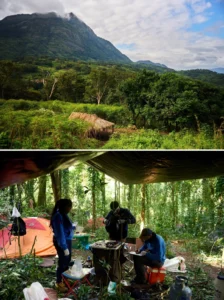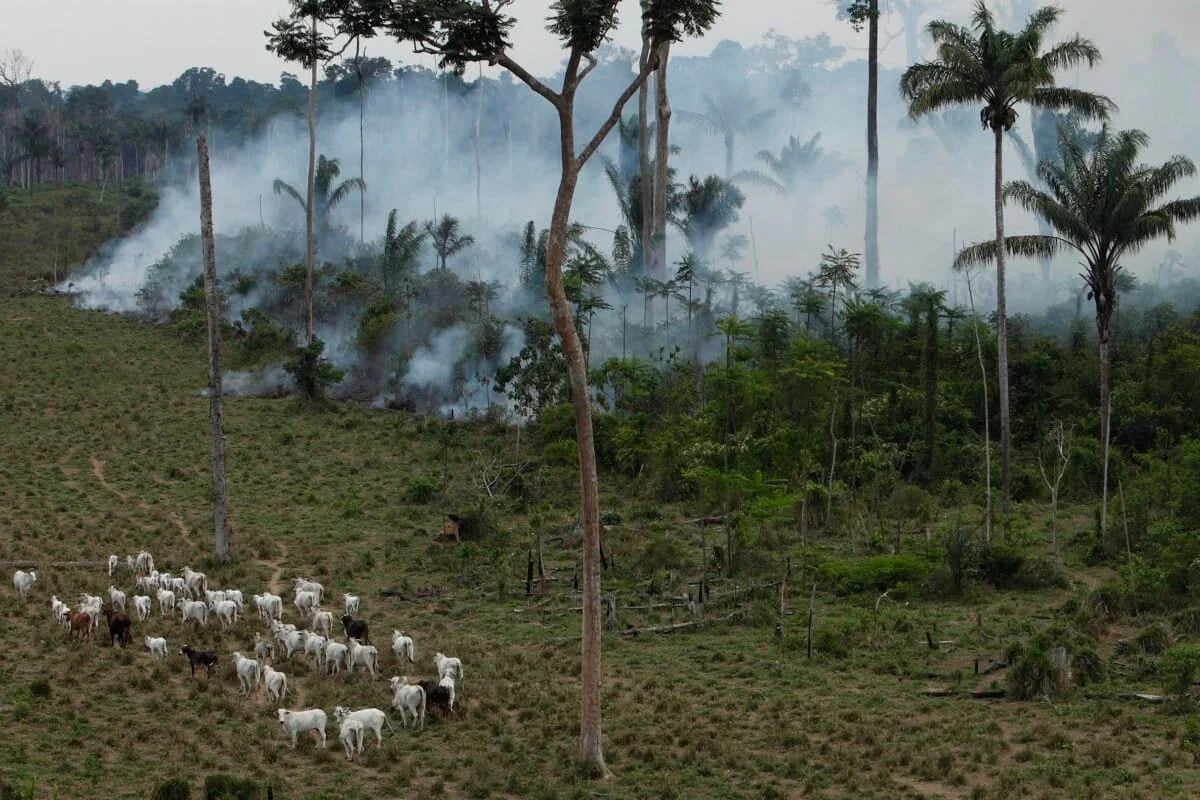
The Ituna/Itatá Indigenous Land in the Brazilian state of Pará has become the epicenter of a volatile land conflict, as more than 500 individuals have illegally stormed the territory, systematically clearing forest cover, establishing unauthorized road networks, and utilizing fire as a tool for territorial intimidation. This surge in land-grabbing activity threatens the Igarapé Ipiaçava Indigenous people, a group living in voluntary isolation who possess no immunity to external pathogens and face immediate existential risks from the encroaching development.
Despite a direct order issued by a federal court on August 26, 2026, which mandated that the Brazilian government deploy the National Public Security Force to the region within 48 hours, the area remains largely without the necessary federal presence as of mid-September. The standoff between federal, state, and illegal actors has created a power vacuum that is rapidly being filled by loggers and cattle ranchers.
A Chronology of Escalation and Legal Conflict
The current crisis represents a culmination of months of regulatory confusion and administrative negligence. The legal pretext for the invasion appears to be rooted in the creation of the Bacajá Environmental Protection Area (APA Bacajá). Under a new state law enacted in Pará, the APA allows for private land ownership, residential construction, and livestock grazing. Crucially, the boundaries of the APA Bacajá entirely overlap with the federally protected Ituna/Itatá Indigenous Land.
This geographic overlap has been weaponized by land-grabbers to manufacture a narrative of legality. By claiming they are operating within a state-sanctioned environmental protection area, invaders have attempted to shield their activities from federal enforcement. However, legal experts and the Federal Public Prosecutor’s Office (MPF) maintain that federal Indigenous land protections supersede state-level land-use designations.
The timeline of the current escalation is as follows:
- Late August 2026: Reports from aerial monitoring conducted by the National Indigenous Affairs Agency (Funai) and the Federal Police detect the sudden influx of heavy machinery, including bulldozers and chainsaws, into the Ituna/Itatá territory.
- August 26, 2026: A federal judge issues an injunction ordering the federal government to mobilize security forces to expel the invaders within 48 hours.
- August 31, 2026: The Brazilian Institute of the Environment and Renewable Natural Resources (IBAMA) conducts a localized enforcement operation, successfully destroying some of the heavy machinery and vehicles used by the invaders.
- Early September 2026: In retaliation for the IBAMA operation, organized groups of invaders begin setting deliberate fires, creating a hazardous environment for remaining monitoring teams and the isolated populations.
- September 11, 2026: Federal prosecutors, noting the continued absence of the National Public Security Force, formally request that the court impose a daily fine of 50,000 Brazilian reais (approximately $9,000) on the federal government for non-compliance.
The Weaponization of Fire and Intimidation
The situation on the ground has deteriorated into what authorities describe as an act of coordinated defiance. Evidence gathered by the MPF includes audio recordings circulating among the invaders, in which leaders call for the mobilization of 100 to 200 people to surround official government vehicles, destroy them, and force federal agents to retreat on foot.
The use of fire has become a central component of this strategy. Helena Palmquist, deputy coordinator of the Observatory of Isolated and Recently Contacted Indigenous Peoples (OPI), notes that the current climatic conditions have rendered the forest dangerously flammable. "We are experiencing an Amazonian dry season with the prospect of an El Niño event far more severe than previous ones," Palmquist stated. "This makes the forest more volatile and prone to catching fire, turning the invaders’ tactics into a potential ecological catastrophe."
The presence of state government assets—including a cargo vehicle identified in reports as belonging to the state—within the illegal settlement has further complicated the investigation, leading to questions regarding the extent of state-level complicity in the occupation of federal lands.

Institutional Deadlock and Federal Accountability
The federal government’s response to the judicial mandate has been marked by bureaucratic finger-pointing. In court filings, federal authorities argued that they required formal authorization from the government of Pará to deploy the National Public Security Force. However, the MPF has categorically rejected this premise, asserting that the federal government possesses the legal authority—and the constitutional obligation—to protect federal Indigenous lands without the need for state-level consent.
The state of Pará, meanwhile, has remained largely silent, failing to respond to repeated requests for comment from international media outlets. This administrative paralysis leaves the Igarapé Ipiaçava people in a state of extreme vulnerability. The land they occupy is currently protected by a temporary land-use restriction order, a legal mechanism designed to prevent contact until the territory can be fully demarcated and secured. Without an active security presence, this "paper protection" is proving insufficient against armed interests seeking to expand the cattle ranching frontier.
Broader Implications for the Amazon
The crisis at Ituna/Itatá serves as a bellwether for the broader challenges facing the Amazon Basin. The tension between state-level economic development policies and federal environmental/Indigenous protections is a recurring theme that often results in "legal grey zones" that benefit extractive industries.
If the federal government fails to assert its authority, the precedent set at Ituna/Itatá could embolden land-grabbers in other territories. The environmental cost is also significant. The clearing of over 30 kilometers of clandestine roads and the deliberate ignition of forest fires threaten to fragment critical habitats and release vast amounts of stored carbon into the atmosphere, directly undermining international climate commitments made by Brazil.
Furthermore, the threat to isolated Indigenous groups is absolute. Without contact with the outside world, these groups lack immunological defenses against common respiratory infections, such as influenza or COVID-19. The mere presence of hundreds of outsiders in their territory acts as a biological threat, potentially resulting in demographic collapse before any direct physical conflict even occurs.
Economic and Environmental Data
The economic drivers behind the invasion are primarily associated with the expansion of the cattle industry. The Ituna/Itatá territory sits in a region where land prices have surged as global demand for beef and agricultural products remains high. The clearing of forest for "pasture" is a standard technique used to establish claims of ownership, which are later formalized through illicit documentation and political lobbying.
Data provided by the MPF suggests that the invasion is not a spontaneous act of local subsistence farming but a highly organized, well-funded enterprise. The use of heavy machinery, the deployment of logistics networks, and the coordinated communication strategies observed in the audio recordings suggest that the land-grabbers are backed by entities with significant capital.
As of this writing, the daily fine of 50,000 reais remains a point of contention in the federal court. Whether this financial pressure will be sufficient to compel the executive branch to fulfill its duty remains to be seen. In the meantime, the forest continues to burn, the roads continue to expand, and the isolation of the Igarapé Ipiaçava people remains under threat from an encroaching world that has, thus far, failed to provide the protection it promised.
The international community continues to watch the situation closely. Human rights organizations and environmental NGOs have called for immediate federal intervention, warning that any further delay could result in irreparable harm to both the Indigenous populations and the integrity of the Amazonian ecosystem. For now, the legal battle in the courts and the physical battle in the forest continue in parallel, with the future of one of Brazil’s most important protected areas hanging in the balance.