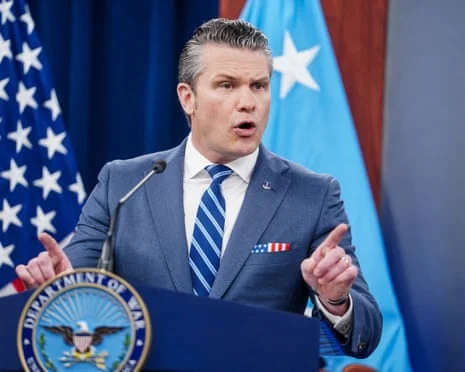
The United States has firmly declared its intention to maintain a naval blockade against Iran "for as long as it takes," as tensions in the Middle East escalate with concurrent diplomatic efforts and military actions. Pentagon Chief Pete Hegseth issued a stern warning to Tehran, stating that the U.S. is "reloading with more power than before" and offering Iran a choice between "the easy way or the hard way." This aggressive posture comes amidst tightened U.S. sanctions on Iran’s oil industry and continued Israeli military operations in southern Lebanon, which have resulted in significant infrastructure damage and civilian casualties.
U.S.-Iran Standoff Intensifies

The U.S. naval blockade, implemented earlier this week, targets vessels attempting to use Iranian ports in the Gulf. This measure is a direct counter to Iran’s near-total closure of the strategically vital Strait of Hormuz since the war’s outset. The Strait, a narrow chokepoint, is crucial for global energy markets, with approximately 20% of the world’s total petroleum consumption passing through it daily. Disruptions here have immediate and severe implications for international oil prices and global economic stability.
Joint Chiefs of Staff Chairman Dan Caine affirmed the U.S. military’s readiness to re-engage in combat "at literally a moment’s notice." He clarified that the blockade encompasses all Iranian ports and coastlines, applying universally to all ships, regardless of their flag, including "dark fleet vessels" transporting Iranian oil. Caine reported that 13 ships had already "made the wise choice to turn around," and while no vessels had been boarded as of this morning, he issued an unequivocal threat: "If you do not comply with this blockade, we will use force."
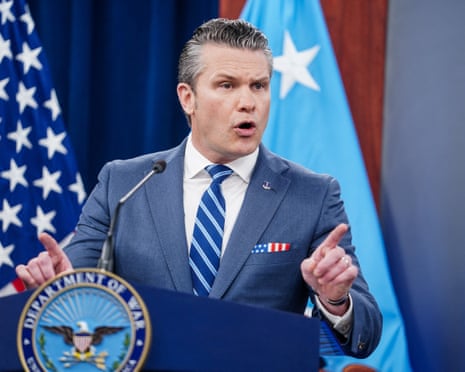
Hegseth, speaking at a Pentagon briefing alongside Caine, emphasized that Iran’s energy industry, while severely impacted, is "not destroyed yet." He condemned Iran’s threats to fire upon commercial ships as "not control, it’s piracy," underscoring the U.S. commitment to safeguarding international shipping lanes. Hegseth also controversially lashed out at what he termed the "legacy, Trump-hating press" for what he perceived as insufficient patriotism and "relentless negative coverage" of the war, likening them to the biblical Pharisees. He further utilized religious language to describe the rescue of American fighter jet crew members shot down by Iran as a "miracle."
Iran, however, remains defiant. Mohsen Rezaei, a military adviser to Iran’s Supreme Leader Mojtaba Khamenei and former commander-in-chief of the Islamic Revolutionary Guard Corps (IRGC), issued stark warnings. He threatened to sink American ships in the Strait of Hormuz if the U.S. attempts to "police" the waterway, and even to take American soldiers hostage, demanding "one billion dollars for each captive." Rezaei declared, "Our launchers are now locked onto the ships and we will sink them all," rejecting any extension of the ceasefire unless Iran’s "ten conditions in the short negotiations over a maritime blockade" are met and submitted to Iran’s security council.
Despite the heightened rhetoric, the White House has cautiously expressed optimism regarding ongoing diplomatic efforts. Press Secretary Karoline Leavitt denied reports that the U.S. had requested an extension to its ceasefire with Iran, which is set to expire next week. Instead, she described talks as "productive and ongoing" and expressed confidence in "the prospects of a deal." These indirect negotiations, reportedly mediated by Pakistan, are expected to see a second round "very likely" taking place in Islamabad. The news of potential de-escalation has already sparked a positive reaction in financial markets, with major Wall Street stock indices extending an upward climb on optimism for a U.S.-Iran agreement.
Regarding the welfare of the new Iranian Supreme Leader, Mojtaba Khamenei, Hegseth stated his status "remains the same," believed to be alive, wounded, and disfigured. Iran’s foreign ministry spokesperson, Ismail Baghaei, meanwhile, told Russia’s Ria Novosti news agency that Iran, and indeed the international community, demands accountability for the assassination of its leaders, including the former Supreme Leader Ayatollah Ali Khamenei and top national security official Ali Larijani, which Israel has claimed responsibility for.
Escalation and Humanitarian Concerns in Southern Lebanon
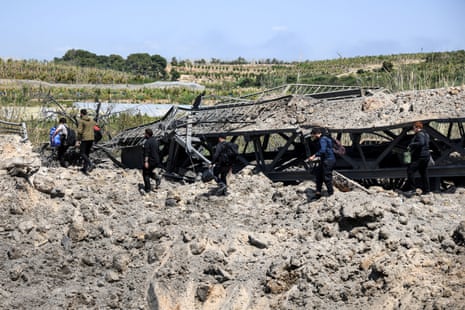
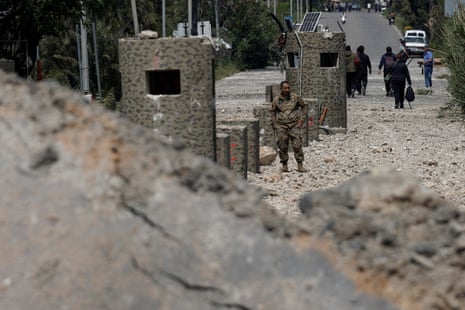
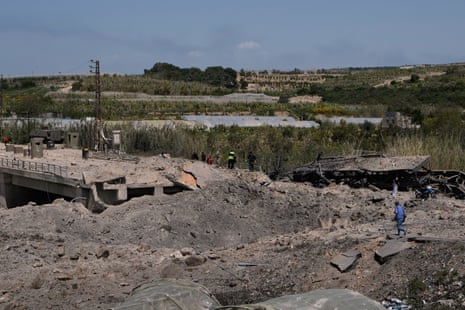
While the U.S. and Iran engage in a tense standoff, the conflict on the Israeli-Lebanese border continues to intensify. Lebanon’s official National News Agency reported that an Israeli airstrike completely destroyed the Qasmiyeh Bridge over the Litani River, the last remaining bridge connecting southern Lebanon to the rest of the country. This devastating strike severely hampers movement and aid delivery to the already embattled region. The Israel Defense Forces (IDF) had previously targeted the bridge on March 23, accusing the Iran-backed Hezbollah group of utilizing it to transport fighters and weaponry into southern Lebanon.
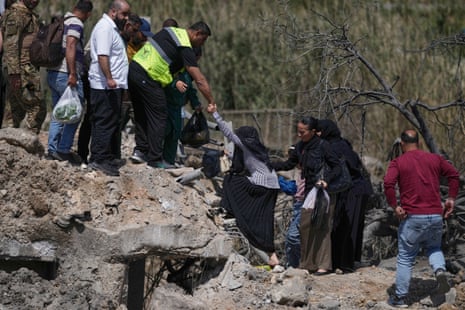
In recent weeks, the IDF has issued repeated and urgent warnings to residents in southern Lebanon to evacuate their homes and move north of the Zahrani River, approximately 10 miles north of the Litani. Avichay Adraee, the IDF Arabic language spokesperson, reiterated these warnings, stating that airstrikes are "ongoing as the IDF operates with great force in the area." These warnings underscore a clear intent to further isolate and neutralize Hezbollah’s presence in the south, but also raise grave humanitarian concerns for the civilian population trapped in the conflict zone.
The human cost of the conflict remains high. Paramilitary groups reported that four Lebanese rescue workers were tragically killed in consecutive Israeli strikes in the southern Lebanese village of Mayfadoun, with six others wounded. Israeli Prime Minister Benjamin Netanyahu has affirmed his country’s aggressive stance, vowing to "overwhelm" Bint Jbeil, a southern Lebanese town he described as a Hezbollah stronghold. Israeli Defense Minister Israel Katz issued a stark ultimatum to Iran, urging it to choose "between a bridge to the future and an abyss of isolation and destruction," and threatening "even more painful" strikes if threats persist.
Diplomatic Efforts and Cross-Border Confusion
Amidst the escalating violence, diplomatic efforts to de-escalate the Israel-Lebanon front have been fraught with confusion and conflicting reports. Lebanese TV channel Al Jadeed reported efforts to arrange a trilateral call involving Israeli Prime Minister Benjamin Netanyahu, Lebanese President Joseph Aoun, and U.S. Secretary of State Marco Rubio. Rubio had hosted the first face-to-face talks in decades between Israeli and Lebanese officials in Washington on Tuesday, signaling a potential breakthrough.
Adding to the diplomatic uncertainty, U.S. President Donald Trump prematurely announced on Truth Social that the leaders of Israel and Lebanon would speak on Thursday, claiming it had been "34 years" since such a dialogue. An Israeli security cabinet member, Galia Gamliel, corroborated this, stating that Netanyahu would indeed speak to President Aoun, hailing it as a move that would "hopefully, in the end, lead to prosperity."
However, Lebanese officials swiftly cast doubt on these claims. The Lebanese presidency stated that Joseph Aoun had held a call with US Secretary of State Marco Rubio, thanking him for Washington’s ceasefire efforts and support. Crucially, the statement made no mention of any direct talks with Netanyahu. Separately, an official source in Lebanon told AFP news agency, "We are not aware of any planned contact with the Israeli side, and we have not been informed of any through official channels." CNN further reported a Lebanese presidential spokesperson confirming they were "not aware of any call" taking place between Aoun and Netanyahu, adding that any such event would be officially announced. This discrepancy highlights the delicate and often opaque nature of these high-stakes negotiations.
Lebanese President Joseph Aoun, despite the conflicting reports, clearly articulated his country’s preconditions for peace. In a statement on social media, he stressed the "importance of a ceasefire before any direct negotiations with Israel." He affirmed that such a ceasefire would be the "natural starting point" for direct talks, emphasizing Lebanon’s commitment to "de-escalate the situation in the south and across all Lebanese regions" to end the targeting of civilians and destruction of homes. Aoun also clarified that any negotiations would be conducted "solely by the Lebanese authorities," implicitly excluding the Iran-backed Hezbollah group. He identified the withdrawal of Israeli troops from Lebanese territory as an "essential step towards consolidating the ceasefire," enabling the Lebanese army to redeploy to the shared border. Iran’s parliamentary speaker, Mohammad Bagher Ghalibaf, echoed this sentiment in a call with his Lebanese counterpart, Nabih Berri, stating, "A ceasefire in Lebanon is as important to us as a ceasefire in Iran."
International Condemnation and Global Economic Impact
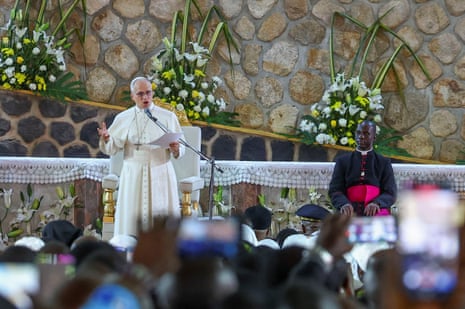
The broader international community has also weighed in on the protracted conflict. Pope Leo, currently on a four-country tour of Africa, used a speech in Cameroon to strongly denounce leaders who exploit religion to justify wars. "Woe to those who manipulate religion and the very name of God for their own military, economic and political gain, dragging that which is sacred into darkness and filth," the Pope declared. These remarks follow similar criticisms last month, widely interpreted as a veiled rebuke of U.S. Defense Secretary Pete Hegseth, who has frequently invoked religious language in advocating for military action. Pope Leo further criticized global leaders for spending "billions of dollars… on killing and devastation," while neglecting "resources needed for healing, education and restoration."
Adding to the diplomatic friction, Donald Trump publicly attacked Pope Leo on Truth Social, labeling him "weak on crime, and terrible for foreign policy." These comments drew widespread condemnation from Catholics and the international community, including Italian Prime Minister Giorgia Meloni, highlighting the deep ideological divides surrounding the conflict.
Beyond the immediate geopolitical and humanitarian crises, the Middle East war has significant economic ramifications. The finance ministers of 11 countries, including the UK and Japan, have collectively called for "coordinated emergency support" from the International Monetary Fund (IMF) and the World Bank to assist countries severely impacted by the war’s disruptions. The instability in a region vital to global energy supplies has already caused market volatility and raised concerns about broader economic slowdowns.
The complex interplay of military pressure, economic sanctions, diplomatic overtures, and international moral condemnation defines the current landscape of the Middle East crisis. With the U.S. maintaining its blockade and Iran issuing direct threats, and simultaneously, fragile peace talks attempting to bridge decades of animosity between Israel and Lebanon, the region stands at a precarious crossroads, where the outcomes of both confrontation and negotiation will shape its future.