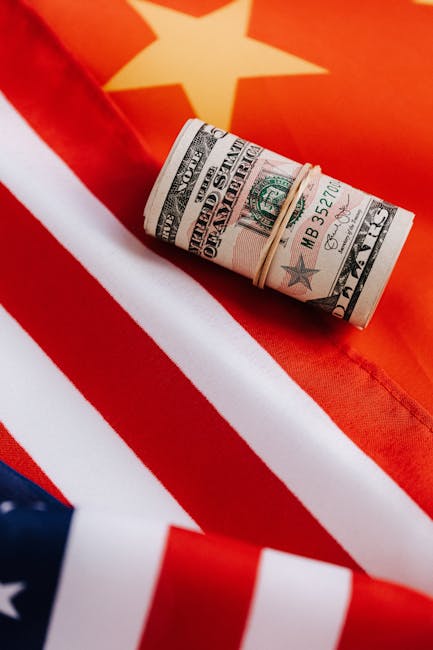
Dollar Slides Ease Trade Tensions, Fed Expectations Shift as Markets Realign
The global financial markets have recently witnessed a notable depreciation in the U.S. dollar, a phenomenon widely interpreted as a significant easing of trade tensions and a subsequent recalibration of expectations surrounding the U.S. Federal Reserve’s monetary policy. This dollar weakness, while seemingly a singular event, is in fact a complex interplay of evolving geopolitical narratives, shifting economic fundamentals, and anticipated central bank actions. Understanding the drivers behind this dollar slide is crucial for investors, policymakers, and businesses seeking to navigate the increasingly dynamic landscape of international trade and finance. The narrative of escalating trade wars, particularly between the United States and China, had previously fueled a strong demand for the dollar as a safe-haven asset. However, recent pronouncements from both sides, coupled with pragmatic policy adjustments, have begun to assuage these concerns, leading to a reduction in perceived risk and, consequently, a decrease in the dollar’s appeal as a flight-to-quality destination. This shift in sentiment is not merely superficial; it reflects a tangible reduction in the immediate threat of further disruptive tariffs and retaliatory measures, opening avenues for more stable and predictable trade flows.
The direct impact of this easing of trade tensions on the dollar is multifaceted. Firstly, the reduced geopolitical risk diminishes the impetus for investors to flock to dollar-denominated assets as a safe harbor. This implies that capital is likely to flow out of U.S. Treasury bonds and other typically safe U.S. assets and into riskier, higher-yielding investments in other regions. This outflow of capital naturally weakens the dollar as demand for it decreases. Secondly, a less confrontational trade environment fosters greater optimism about global economic growth. When trade barriers are lowered or eliminated, businesses gain more confidence in their ability to access international markets, plan for future production, and invest in expansion. This optimism can translate into increased investment in emerging markets and other economies that are more sensitive to global trade dynamics, further diverting capital away from the U.S. dollar. The perception of a more stable international economic order reduces the premium that investors place on the perceived safety of U.S. assets, thereby putting downward pressure on the dollar’s exchange rate.
Crucially, the dollar’s depreciation is also intrinsically linked to shifting expectations for the Federal Reserve’s monetary policy. For a considerable period, the Fed’s hawkish stance, characterized by a series of interest rate hikes, was a significant factor supporting dollar strength. Higher interest rates in the U.S. relative to other major economies tend to attract foreign investment seeking better returns, thus increasing demand for dollars. However, as trade tensions begin to dissipate and the immediate threat to global economic growth recedes, the narrative surrounding the Fed’s future actions is undergoing a significant transformation. Traders and economists are now anticipating a potential pause, or even a pivot towards easing, in the Fed’s monetary policy. This recalibration is driven by several factors. A less volatile trade environment suggests that inflationary pressures stemming from supply chain disruptions and import costs might be less persistent. Moreover, a slowdown in global demand due to trade disputes could also temper domestic inflation concerns within the U.S.
The possibility of a less hawkish Fed has direct implications for the dollar. If the Fed is perceived to be moving towards a more accommodative stance, or at least signaling an end to its tightening cycle, the interest rate differential between the U.S. and other developed economies may narrow or even reverse. This erosion of the interest rate advantage diminishes the attractiveness of dollar-denominated assets for yield-seeking investors, leading to a reduction in dollar demand and, consequently, a weaker dollar. Market participants are constantly scrutinizing economic data, particularly inflation figures and employment reports, for clues about the Fed’s future trajectory. Any indication of moderating inflation or a softening labor market could further solidify expectations of a less aggressive Fed, reinforcing the downward pressure on the dollar. The shift in Fed expectations is not a sudden event but rather a gradual reassessment by markets based on evolving economic signals and the perceived impact of trade policy on the broader economic outlook.
The impact of the dollar’s slide extends beyond the immediate financial markets. For U.S. exporters, a weaker dollar makes their goods and services more competitive on the international stage. This increased competitiveness can boost export volumes, contribute to a reduction in the U.S. trade deficit, and stimulate domestic economic activity. Conversely, for U.S. importers, a weaker dollar makes foreign goods and services more expensive, potentially leading to higher domestic prices for imported goods and a dampening effect on consumer spending on these items. However, the net effect on the U.S. economy is often viewed as positive, as export growth can offset the negative impact of higher import costs, especially in a global economic environment where demand is sensitive to price.
Globally, a weaker U.S. dollar can have a ripple effect. For countries that have significant dollar-denominated debt, a depreciating dollar can ease the burden of servicing that debt, as it takes fewer local currency units to acquire the necessary dollars. This can free up resources for domestic investment and consumption, fostering economic growth in those nations. Furthermore, a weaker dollar can make commodities priced in dollars, such as oil and gold, more affordable for buyers using other currencies, potentially leading to increased demand and higher commodity prices. This, in turn, can have implications for inflation rates in various economies.
The recalibration of Fed expectations is a critical component of this evolving market dynamic. The Federal Reserve operates with a dual mandate of maximizing employment and maintaining price stability. While inflation has been a primary concern, the moderating effects of easing trade tensions on supply chains and global demand are now being factored into their decision-making calculus. If the Fed perceives that inflationary pressures are subsiding due to these factors, they may be less inclined to pursue further aggressive interest rate hikes. This shift in outlook is not merely about the Fed reacting to trade news; it’s about how trade policy developments influence the broader economic environment that the Fed is tasked with managing. For instance, if a trade agreement leads to the removal of tariffs on imported goods, this directly reduces a source of inflationary pressure, allowing the Fed more flexibility in its policy decisions.
The market’s anticipation of a dovish turn from the Fed is a powerful driver of currency movements. When investors believe that interest rates will remain lower for longer, they tend to seek out higher yields elsewhere, leading to capital outflows from the currency of the country expected to keep rates low. This dynamic is currently at play with the U.S. dollar. The narrative has shifted from "how high will Fed rates go?" to "when will the Fed start cutting rates?". This anticipation itself can influence asset prices and exchange rates even before any actual policy changes are implemented. The expectation of a less hawkish Fed, fueled by the easing of trade tensions, is therefore a significant contributor to the dollar’s recent depreciation.
The ongoing interaction between trade policy, economic growth prospects, and central bank actions creates a complex and dynamic environment for currency markets. The current depreciation of the U.S. dollar, driven by a reduction in trade-related anxieties and a subsequent reevaluation of the Federal Reserve’s likely policy path, signifies a move towards a more balanced and potentially more stable global economic outlook. Investors are now more inclined to price in a future where trade friction is less of a dominant theme, and where central banks, including the Fed, may have more room to maneuver their policy tools in response to evolving economic conditions rather than being solely dictated by the imperative of combating trade-induced inflation. This realignment of expectations is likely to continue shaping currency markets as new data and policy pronouncements emerge. The dollar’s performance will remain a key barometer of global risk sentiment and the effectiveness of international cooperation in fostering economic stability. The long-term implications of this dollar slide will depend on the sustainability of the easing trade tensions and the continued ability of central banks to effectively manage inflation while supporting economic growth in this new paradigm.
