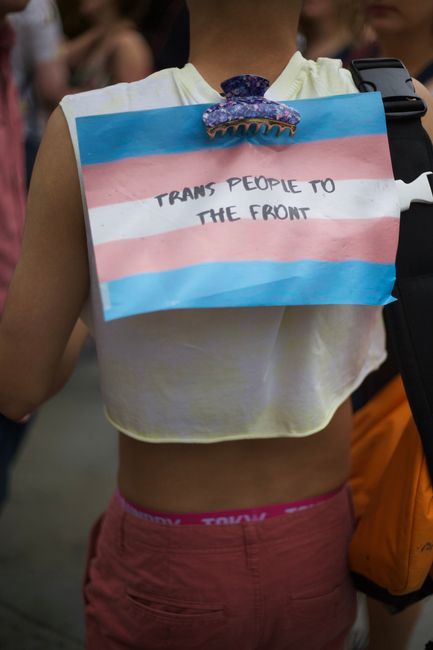
The Long War for Trans Inclusion: Decades of Fight for Transgender Service in the Military
The struggle for transgender individuals to serve openly and with full inclusion in the United States military is not a recent phenomenon; it’s a protracted, decades-long battle marked by persistent advocacy, legal challenges, and shifting policy landscapes. While recent years have seen significant, albeit contested, progress, the fight for trans military inclusion has roots stretching back well before the public discourse of the 21st century. Understanding this history is crucial to appreciating the ongoing efforts and the deep-seated resistance that has shaped the current reality for transgender service members. This comprehensive overview delves into the historical trajectory of this fight, examining key moments, pivotal figures, and the systemic obstacles that have defined the pursuit of equality within the armed forces.
From the earliest periods of U.S. military history, policies regarding gender and sexuality were largely undefined or implicitly exclusionary. While explicit prohibitions against transgender individuals serving were not codified in the same way as those against gay and lesbian service members, the military’s general approach to non-conformity and its reliance on binary gender norms effectively excluded transgender people. Early records are scarce regarding overt transgender military service, largely due to the pervasive stigma and lack of societal understanding surrounding gender identity. Individuals who identified as transgender would have likely served in their assigned gender at birth, if they served at all, facing immense personal risk of discovery and subsequent discharge or mistreatment. The very concept of gender identity as distinct from biological sex was not widely understood or accepted, meaning that individuals experiencing gender dysphoria were often categorized under mental health conditions or simply perceived as deviating from societal norms. This created an environment where open transgender identity was not even conceivable within military service.
The landscape began to shift, albeit slowly, with broader societal movements for civil rights and LGBTQ+ equality gaining momentum in the mid-to-late 20th century. As visibility and advocacy for LGBTQ+ individuals increased, so too did the awareness and articulation of the specific challenges faced by transgender people. The early days of organized transgender activism, though often operating with fewer resources and less public recognition than the gay rights movement, began to lay the groundwork for future advocacy efforts. These early activists, often facing double discrimination as both transgender and potentially LGBTQ+ individuals, were instrumental in raising awareness about the existence of transgender people and their aspirations for full participation in society, including military service. However, formal challenges to military policy directly concerning transgender service were not yet prevalent, as the focus for much of the LGBTQ+ rights movement remained on repealing the outright ban on gay and lesbian service members.
The formalization of policies prohibiting "homosexuality" in the military, notably through directives like Department of Defense (DoD) Directive 1304.26 in the 1980s, which was later codified and expanded upon, created a legal framework that, while not explicitly naming transgender individuals, was often interpreted to exclude them. This directive broadly stated that individuals with a "propensity to engage in homosexual acts" were not fit for service. While this was aimed at gay and lesbian individuals, the lack of understanding of gender identity meant that many transgender individuals, whose presentation or medical needs might be perceived as deviating from assigned gender roles, could fall under broad interpretations of unsuitability. Furthermore, the military’s medical policies, which often classified gender dysphoria as a mental disorder, provided a readily available justification for disqualification or discharge, even if the individual’s gender identity was not the primary concern for recruiters or examining physicians. This created a significant hurdle for transgender individuals seeking to enlist or remain in service.
The late 1990s and early 2000s witnessed a more concentrated push for transgender inclusion, spurred by advancements in medical understanding and increasing visibility of transgender individuals in public life. The landmark court case of Greene v. Department of Defense (1998) was a pivotal moment, challenging the military’s ban on service members with gender identity disorder (GID), as it was then termed. While Greene did not immediately overturn the policy, it brought significant legal scrutiny to the military’s discriminatory practices and forced a more direct confrontation with the issue of transgender service. This case, and others like it, highlighted the arbitrary nature of disqualifications based on medical diagnoses that were increasingly being understood as treatable or manageable conditions related to gender identity. Activists and legal organizations began to systematically document the experiences of transgender veterans and service members, gathering evidence of discriminatory discharges and the profound impact on individuals’ lives and careers.
The "Don’t Ask, Don’t Tell" (DADT) era (1993-2011) provided a complex backdrop for transgender inclusion efforts. While DADT was enacted to end the outright ban on gay and lesbian service members, its convoluted implementation and the continued harassment and discharge of individuals perceived as LGBTQ+ created an atmosphere of fear and secrecy. Transgender individuals, whose identities and needs often became more apparent through presentation or medical care, were frequently caught in this prejudiced environment. The policy’s focus on concealment and the subsequent discharges based on perceived non-heterosexuality or gender non-conformity meant that transgender individuals were still vulnerable to dismissal, often under the guise of "other than honorable" conditions, which carried severe repercussions for future employment and benefits. Advocates recognized that simply repealing DADT was insufficient; a comprehensive policy addressing transgender service was still a distant goal.
Following the repeal of DADT in 2011, the focus of LGBTQ+ advocacy within the military shifted more directly towards transgender inclusion. The repeal opened the door for open service by gay and lesbian individuals, and the momentum of this victory propelled transgender advocates to intensify their efforts. Organizations like the Palm Center, Servicemembers Legal Defense Network (now Modern Military Association of America), and Transgender American Veterans Association (TAVA) became central to this fight, working to educate policymakers, mobilize public support, and provide legal assistance to transgender service members. They highlighted the capabilities and patriotism of transgender individuals, challenging outdated stereotypes and demonstrating that gender identity has no bearing on a person’s ability to serve their country with honor and distinction.
The Obama administration marked a period of significant, albeit incremental, progress. In 2014, the DoD began to review its policies regarding transgender service. This led to the historic announcement in 2016 by then-Secretary of Defense Ash Carter that transgender individuals would be allowed to serve openly in the U.S. military. This policy change, which came into effect in 2016, allowed individuals to serve according to their gender identity and prohibited discrimination based on gender identity. It also mandated the provision of medically necessary care for transgender service members. This was a monumental victory, representing decades of relentless advocacy and the culmination of legal challenges and public awareness campaigns. The policy acknowledged that transgender individuals are capable of serving effectively and that their service should not be hindered by their gender identity.
However, this progress was short-lived. Upon taking office in 2017, the Trump administration initiated a review of the Obama-era policy, leading to a ban on most transgender individuals serving in the military in 2018. This ban, implemented through a series of presidential memoranda, prohibited individuals with a history of gender dysphoria from enlisting, with some exceptions for those already serving and who had not sought gender-affirming care. This abrupt reversal caused immense hardship for many transgender individuals who had planned to serve or were already serving. It reignited legal battles and renewed the urgency for advocacy groups to fight for the reinstatement of inclusive policies. The ban was criticized by military leaders, medical professionals, and numerous advocacy organizations, who pointed to the detrimental impact on military readiness, morale, and the principle of equal opportunity.
The fight continued in the courts and through renewed public pressure. The Trump administration’s ban faced numerous legal challenges, with courts blocking its implementation in various instances. These legal battles, while complex and drawn-out, underscored the discriminatory nature of the ban and the resilience of those fighting for transgender inclusion. The legal arguments often centered on the equal protection clause of the Constitution and the irrationality of excluding capable individuals based on their gender identity. Meanwhile, advocacy groups continued to document the negative consequences of the ban, including the loss of qualified recruits and the emotional distress experienced by those affected.
The Biden administration ultimately reversed the Trump-era ban in 2021, issuing an executive order that prohibited discrimination based on gender identity and allowed transgender individuals to serve openly in the military. This policy reinstated the inclusive standards of the Obama administration and reaffirmed the principle that all qualified Americans should have the opportunity to serve their country. This marked another significant victory in the long war for trans inclusion. The executive order directed the DoD to review and revise its policies to ensure they are consistent with this principle, focusing on equitable access to medical care and preventing discrimination.
Despite these policy advancements, the fight for full transgender inclusion in the military is ongoing. Challenges remain, including ensuring consistent implementation of inclusive policies across all branches of service, addressing residual stigma and discrimination, and ensuring access to comprehensive gender-affirming healthcare. The military’s medical policies, while improved, still require careful navigation for transgender service members. Furthermore, the political landscape remains fluid, and the possibility of future policy reversals, while less likely with current established precedent, cannot be entirely discounted. Ongoing advocacy is crucial to solidify these gains and to address any emerging barriers. This includes continuous engagement with military leadership, lawmakers, and the public to foster understanding and support for transgender service members. The lessons learned from decades of struggle – the power of persistent advocacy, the importance of legal challenges, and the need for clear, inclusive policy – continue to guide the efforts of those dedicated to ensuring that the U.S. military truly reflects the diversity of the nation it serves, with no one left behind due to their gender identity. The journey from exclusion to full inclusion has been arduous, marked by setbacks and hard-won victories, demonstrating the enduring resilience of the transgender community and its allies in their pursuit of equality within one of the nation’s most vital institutions.
