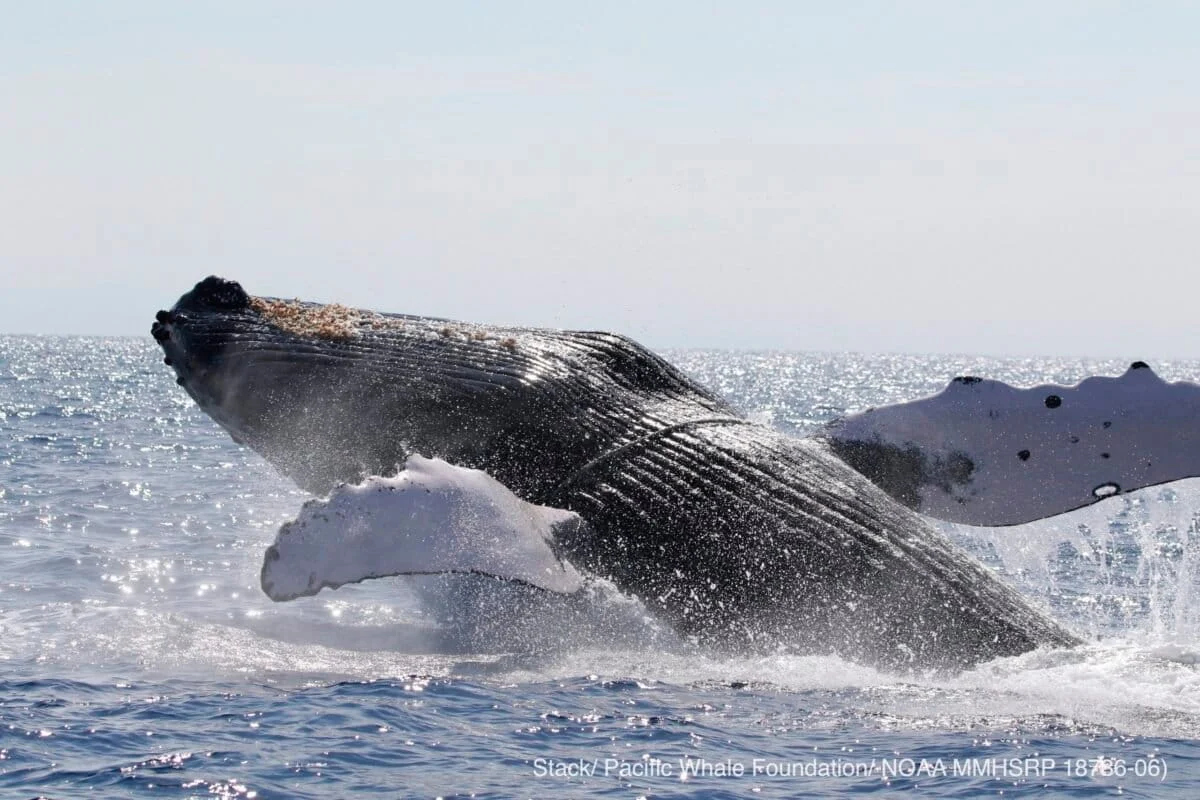
The North Pacific Ocean, a vast expanse typically defined by its cold, nutrient-rich currents, has become the stage for a silent ecological crisis. Nearly a decade after a prolonged and severe marine heatwave gripped the region between 2013 and 2016, the population of humpback whales (Megaptera novaeangliae) that migrate annually to Hawaii has failed to return to pre-heatwave levels. New research indicates that the damage inflicted upon the base of the marine food chain during that period continues to ripple through the ecosystem, leaving one of the ocean’s most iconic species in a state of precarious, long-term decline.
The 2013-2016 heatwave, often referred to by oceanographers as "The Blob," fundamentally altered the thermal profile of the northeastern Pacific. The warming event triggered a collapse in populations of forage fish and krill—the essential dietary staples for humpback whales. While these mammals are renowned for their ability to traverse thousands of miles between their summer feeding grounds in Alaskan and Canadian waters and their winter breeding grounds in the Hawaiian archipelago, the environmental shift compromised their physiological resilience, leading to a catastrophic decline in survival rates that persists to this day.
A Longitudinal Study of Marine Resilience
To quantify the long-term biological impact of the heatwave, a team of researchers conducted an exhaustive study spanning two decades, from 2002 to 2023. By analyzing over 27,000 photographs of whale flukes—the unique tail fins that act as biological fingerprints—the scientists were able to track individual whales with high precision. This data, sourced largely from Happywhale, a citizen science platform, allowed the team to document the demographic shifts within the Hawaiian humpback population.
The results are stark: between the 2014-2015 breeding season and the 2021-2022 season, the population of these whales in Hawaiian waters declined by approximately 37%. Perhaps most alarming is the impact on adult survivorship. Prior to the heatwave, adult humpback survival rates were remarkably stable, hovering around 99% year over year. During the height of the heatwave, that figure plummeted to an estimated 68%. In the context of long-lived marine mammals, such a precipitous drop is unprecedented and serves as a primary indicator of systemic environmental stress.
Chronology of a Disrupted Ecosystem
The timeline of this ecological collapse provides insight into the velocity at which climate-driven ocean shifts can impact large megafauna.
- 2013–2014: The onset of "The Blob," a massive marine heatwave, begins to manifest in the North Pacific, driving sea surface temperatures to record highs.
- 2014–2015: Initial signs of biological stress appear. Forage fish and krill populations begin to decline, leading to food scarcity for apex and mid-level predators.
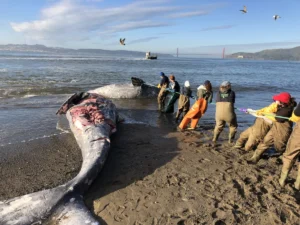
- 2015–2016: The heatwave intensifies, coupled with a strong El Niño event. During this period, researchers documented an "unusual mortality event" across Alaska and British Columbia, with reports of humpback whales found in states of severe starvation.
- 2016–2020: As the heatwave subsides, researchers hope for a population rebound. However, tracking data reveals that adult survival rates remain below the historical average.
- 2021–2023: Analysis of longitudinal photo-identification data confirms a 37% decline in the Hawaiian humpback population, with no significant signs of recovery to baseline numbers.
The final population estimate suggests that approximately 5,000 humpback whales were lost during this period. While some experts have posited that migration patterns might have shifted due to the warming waters, the consensus among the research team is that the majority of these missing individuals likely perished due to malnutrition and the resulting physiological failure.
Scientific Perspectives and Regional Comparisons
The decline of the Hawaiian humpback population is not an isolated phenomenon; it is part of a broader trend of ecosystem instability across the Pacific. John Calambokidis, a research biologist with the Cascadia Research Collective, notes that the data provided by this study is vital for understanding how climate change acts as a force multiplier for existing environmental stressors.
"The insights provided by this research are critical," Calambokidis noted in correspondence regarding the study. "We are witnessing similar declines in other species, such as the gray whale (Eschrichtius robustus), which is currently facing a catastrophic population decline. In the case of gray whales, the drivers are clearly linked to changes in Arctic conditions, specifically the loss of sea ice which directly impacts their benthic feeding grounds."

The implications for the broader North Pacific ecosystem are profound. As the ocean continues to warm—with current data showing that the region is again facing elevated sea surface temperatures compounded by strong El Niño conditions in the tropical Pacific—the capacity for marine mammals to recover is increasingly constrained.
Anthropogenic Dangers and Cumulative Impacts
The failure of the Hawaiian humpback population to recover has left the remaining individuals in a state of heightened vulnerability. Humpback whales are exposed to a suite of anthropogenic threats, including entanglement in commercial fishing gear, vessel strikes, and chemical pollution. When a population is already thinned and nutritionally compromised, these secondary stressors can have a disproportionate impact on the overall health of the species.
Shannon Barber-Meyer, formerly with the Pacific Whale Foundation and a co-author of the study, emphasized that the mortality event was a "precipitous drop" that challenged the traditional understanding of the species’ resilience. Because humpbacks migrate across vast distances to fulfill their life cycle requirements, disruptions in the climate system at any point along their migratory corridor can have cascading effects.
Daniel Palacios, a co-author of the study affiliated with the Center for Coastal Studies, warned that the North Pacific experience may be a harbinger of global trends. "Disruptions to the climate system are not geographically confined," Palacios explained. "The mechanisms we observed—food chain collapse leading to reduced survival in long-lived mammals—could potentially affect humpback whale populations in every ocean where they reside."
Implications for Future Marine Policy
The findings present a significant challenge for policymakers and conservationists. If marine heatwaves are to become more frequent and intense, the traditional models for managing whale populations—which often assume a certain level of natural recovery—may prove inadequate.
There is an urgent need for adaptive management strategies that account for climate-driven volatility. This includes the potential for seasonal closures in critical foraging areas during heatwave events, more rigorous monitoring of forage fish populations to provide early warning signals, and enhanced efforts to mitigate secondary anthropogenic threats such as ship strikes during years when whale populations are known to be in a weakened state.
Furthermore, the role of citizen science, as demonstrated by the use of the Happywhale platform, has proven to be an indispensable tool for large-scale, long-term research. By democratizing the collection of high-quality photographic data, researchers can gain insights that would be otherwise impossible to achieve with traditional, grant-dependent vessel surveys alone.
As the North Pacific continues to navigate a period of unprecedented thermal variability, the story of the Hawaiian humpback serves as a sobering reminder of the interconnectedness of marine life. The loss of 5,000 individuals is not merely a statistic; it represents a significant erosion of biological diversity and a warning that the marine environment is approaching thresholds that may be difficult to reverse. The coming years will be critical in determining whether the humpback population can adapt to a warmer ocean or if the 2013-2016 heatwave marked the beginning of a long-term structural decline for one of the ocean’s most magnificent travelers.