Japanese Scientists Unveil Revolutionary Seawater-Soluble Plastic: A Game Changer for Marine Pollution
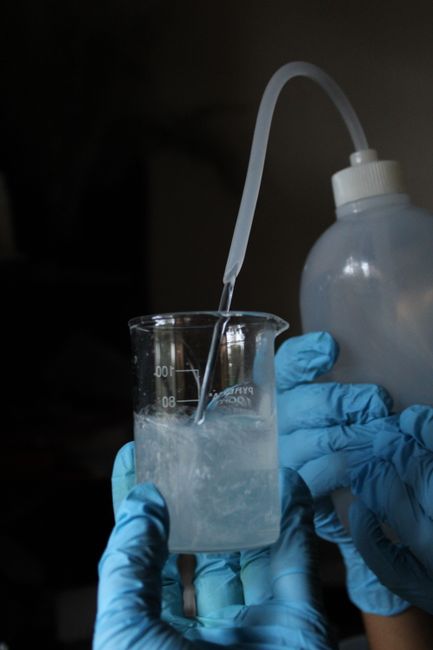
A groundbreaking advancement in materials science has emerged from Japan, with researchers developing a novel type of plastic designed to rapidly degrade in seawater. This innovative material promises to address the escalating crisis of marine plastic pollution by offering a viable alternative to conventional plastics that persist for centuries. The plastic, dubbed "sea-disso," breaks down into environmentally benign substances within a matter of hours when exposed to the saline environment of the ocean. This rapid decomposition rate is a significant departure from existing biodegradable plastics, many of which require specific industrial composting conditions or break down into microplastics, posing their own set of environmental challenges. The implications of this development are far-reaching, potentially transforming packaging, single-use items, and fishing gear, thereby mitigating the pervasive threat to marine ecosystems and the food chain.
The core of this revolutionary material lies in its unique chemical structure. Scientists at the Institute for Advanced Materials Research (IAMR) in Tokyo have engineered polymers that are inherently unstable in the presence of salt ions and the specific pH levels found in seawater. Unlike traditional petroleum-based plastics, which are characterized by strong carbon-carbon bonds that resist degradation, sea-disso incorporates ester linkages that are susceptible to hydrolysis, a chemical process where water molecules break down the polymer chains. Furthermore, the inclusion of specific functional groups within the polymer backbone enhances its reactivity with dissolved salts, accelerating the hydrolysis process. This targeted design ensures that the plastic not only breaks apart but also dissolves into its constituent monomers, which are then readily metabolized by naturally occurring marine microorganisms. The result is a complete and safe elimination of the plastic, leaving no persistent residues or harmful microplastics behind.
The development of sea-disso involved a meticulous and iterative research process. Initial experiments focused on synthesizing a range of ester-based polymers with varying degrees of hydrophilicity and susceptibility to ionic interaction. Researchers systematically altered the molecular weight, chain length, and the types of ester groups present to fine-tune the degradation rate. Advanced spectroscopic techniques, such as Nuclear Magnetic Resonance (NMR) and Fourier-Transform Infrared (FTIR) spectroscopy, were employed to characterize the molecular structure of the synthesized polymers and to monitor their breakdown in simulated seawater environments. Electron microscopy was crucial in observing the physical changes in the plastic over time, confirming the disintegration of the material at the nanoscale. The team also conducted extensive ecotoxicity studies to ensure that the byproducts of degradation posed no harm to marine life. These rigorous testing protocols were essential in validating the safety and efficacy of sea-disso for widespread environmental application.
The efficiency of sea-disso’s degradation is remarkably high. Laboratory tests have demonstrated that typical single-use items, such as plastic bags and food wrappers, made from this material can dissolve completely within 48 to 72 hours of submersion in actual seawater. Thicker or more complex plastic items, such as fishing nets or containers, may take slightly longer, but still within a timeframe of weeks rather than decades or centuries. This rapid dissolution is a critical advantage, as it significantly reduces the window of opportunity for the plastic to entangle marine animals, be ingested, or accumulate in large oceanic gyres. The speed at which sea-disso breaks down also minimizes its impact on the visual pollution of beaches and coastal areas, offering an immediate aesthetic benefit.
The potential applications for sea-disso are vast and transformative. In the packaging industry, it could replace conventional polyethylene and polypropylene for a wide range of products, from grocery bags and food containers to beverage bottles and blister packs. This would drastically reduce the amount of plastic waste generated that eventually finds its way into the oceans. For the food service industry, disposable cutlery, plates, and straws made from sea-disso could offer a sustainable alternative to current single-use plastic options. The fishing industry, a significant contributor to ocean plastic pollution through lost or discarded gear, could benefit immensely from fishing nets, lines, and buoys made from this material. These items, if lost at sea, would naturally degrade, preventing ghost fishing and the long-term entanglement of marine life. Furthermore, the medical field could explore applications for disposable medical devices that are designed to degrade after use, reducing the burden on waste management systems.
The economic viability of sea-disso is a key consideration for its widespread adoption. While the initial development and manufacturing costs may be higher than those of traditional plastics, the researchers are optimistic about achieving economies of scale through mass production. The raw materials used in the synthesis of sea-disso are derived from renewable resources, such as plant-based starches and oils, which are abundant and cost-effective. The manufacturing process itself is designed to be energy-efficient, further contributing to its sustainability and potential for cost reduction. The long-term economic benefits of reduced environmental cleanup costs, preserved marine ecosystems vital for tourism and fisheries, and the development of a new green industry sector are also significant factors that will drive the adoption of sea-disso.
One of the most significant advantages of sea-disso is its complete biodegradability into harmless components. Unlike some other biodegradable plastics that can break down into microplastics, which are notoriously difficult to remove and can persist in the environment for extended periods, sea-disso’s degradation process yields simple organic molecules. These molecules are readily assimilated by marine bacteria and other microorganisms, becoming part of the natural nutrient cycle. This eliminates the risk of microplastic accumulation in the food chain, protecting both marine life and human health. The lack of harmful byproducts has been a central focus of the IAMR’s research, ensuring that the solution to one environmental problem does not create another.
The environmental impact of conventional plastics is a global crisis, with an estimated 8 million tons of plastic entering the oceans each year. This pollution has devastating consequences for marine biodiversity, leading to the deaths of seabirds, turtles, whales, and fish through entanglement and ingestion. It also degrades marine habitats, impacts fisheries, and poses potential risks to human health through the consumption of contaminated seafood. Sea-disso offers a tangible and effective solution to this multifaceted problem. By providing a material that can perform the functions of traditional plastics but breaks down harmlessly in the environment, it presents a paradigm shift in how we approach material consumption and waste management.
The development of sea-disso represents a significant leap forward in the fight against plastic pollution. The scientific rigor, innovative material design, and rigorous testing undertaken by the Japanese researchers have resulted in a plastic that is not only functional but also environmentally responsible. The potential for this material to revolutionize various industries and significantly reduce the environmental burden of plastic waste is immense. As production scales up and costs decrease, sea-disso is poised to become a cornerstone of a more sustainable future, offering a beacon of hope for the health of our oceans and the planet. The ongoing research will likely focus on further optimizing the degradation rates for different applications, expanding the range of available colors and textures, and ensuring compatibility with existing manufacturing processes to facilitate widespread adoption. The successful commercialization of this technology could mark a turning point in humanity’s relationship with plastic, moving from a linear "use and discard" model to a circular economy that prioritizes environmental sustainability.
