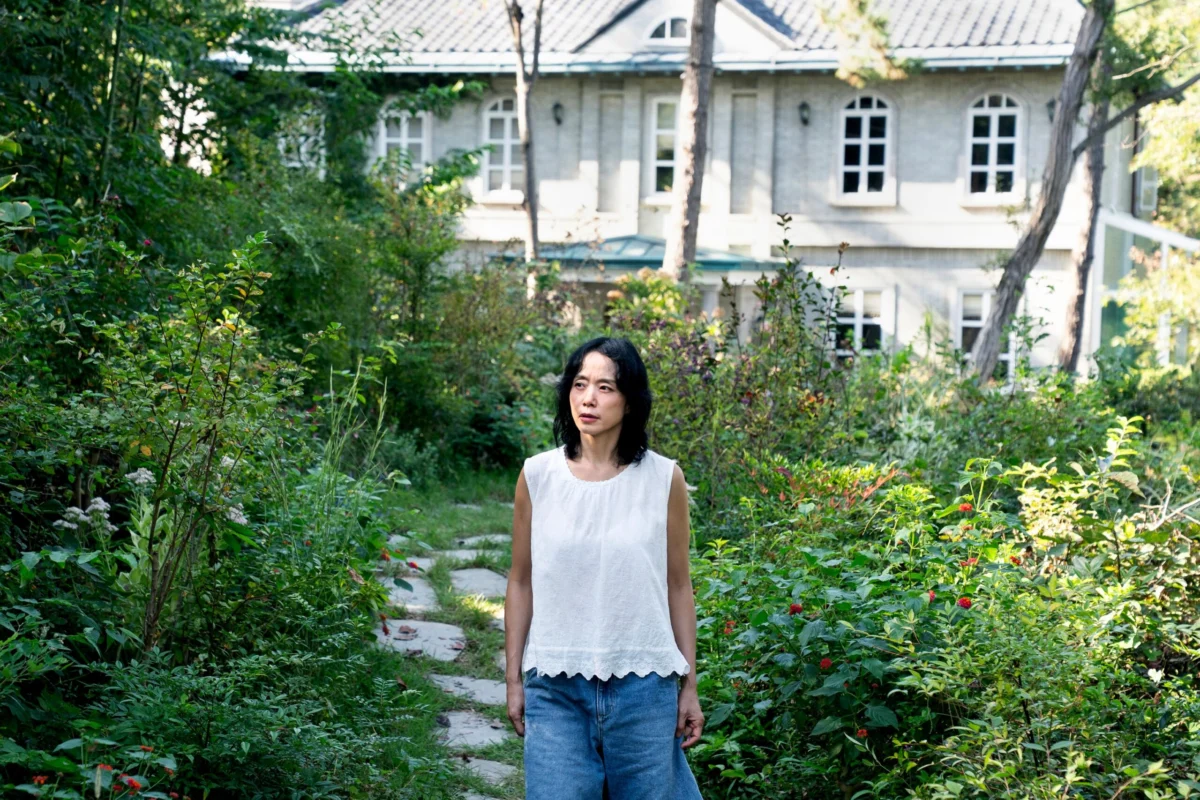
For nearly three decades, South Korean actress Jeon Do-yeon has commanded international and domestic critical acclaim by obliterating the boundary between performer and character. Since her breakout film debut in 1997’s The Contact, she has constructed a legacy defined by total psychological immersion. Global audiences predominantly discovered her through the 2007 psychological drama Secret Sunshine, a shattering exploration of maternal grief directed by renowned auteur Lee Chang-dong. Her performance in that film made history, securing her the Best Actress prize at the Cannes Film Festival and establishing her as the first Korean performer ever to claim an acting honor at the prestigious event.
Despite decades of industry accolades, Jeon resists the ubiquitous critical descriptor of "fearless." Speaking from Seoul at the conclusion of a rigorous press tour, she laughed off the label, explaining that fear and anxiety remain her closest artistic companions. Rather than letting insecurity paralyze her, she actively cultivates it, using discomfort as fuel to unearth unprecedented emotional truths on camera. This willingness to sit in psychological vulnerability informs her latest collaboration with Lee Chang-dong in Possible Love, a film that has quickly become a focal point of the global cinematic landscape.
The Long Gestation and Plot of Possible Love
Possible Love represents a triumphant return for director Lee Chang-dong, marking his first cinematic project in an eight-year hiatus following his critically acclaimed 2018 masterpiece, Burning. Burning made history as the first Korean film to be shortlisted for the Best International Feature Oscar while topping global critics’ polls. The genesis of Possible Love spans over a decade, with Lee spending more than ten years refining the script before finally bringing it to production.

Constructed with Lee’s signature novelistic narrative sweep, the film explores the intricate dynamics between two married couples situated on opposite ends of contemporary South Korea’s socioeconomic spectrum. Jeon stars as Mi-ok, a pragmatic mask-factory worker who lives a quiet, restrained life alongside her young son and her husband, Ho-seok, portrayed by veteran actor Sul Kyung-gu in his frequent collaborations with Jeon. Ho-seok remains deeply traumatized years after a violent labor strike and a mass factory layoff fractured his livelihood.
The narrative catalyst occurs during the funeral of a former co-worker, which thrusts Mi-ok and Ho-seok into the orbit of Ye-ji—played by Cho Yeo-jeong, widely recognized internationally for her role as the wealthy matriarch in Bong Joon-ho’s Oscar-winning Parasite. Ye-ji is an intellectual documentary filmmaker chronicling the lives of laid-off laborers, accompanied by her wealthy, enigmatic husband Sang-woo, played by Zo In-sung.
What begins as an exercise in liberal empathy and cross-class solidarity gradually morphs into a complex, ambiguous study of voyeurism, privilege, and hidden desire. The film had its world premiere at the Venice Film Festival in September, followed by a domestic theatrical run in October, and is currently available for streaming globally on Netflix. Furthermore, the Korean Film Council selected the feature as South Korea’s official submission for the Best International Feature Film category at the 2027 Academy Awards.
Production Dynamics and Directorial Philosophy
The creative synergy between Jeon Do-yeon and director Lee Chang-dong relies heavily on unconventional production methods designed to preserve raw authenticity. Unlike many directors who rely on extensive rehearsals and multiple technical takes, Lee actively discourages actors from arriving on set with rigid character biographies or preconceived biases.

For Jeon, preparing for Mi-ok involved familiarizing herself with the dialogue until the spoken words felt entirely organic rather than scripted. Lee avoids demanding specific performance outcomes from his actors, preferring instead to observe the unscripted chemistry and conversations that unfold naturally between cast members. This naturalistic approach ensures that scenes remain fluid, capturing spontaneous emotional shifts that might otherwise be lost in mechanical repetition.
The production also highlighted Jeon’s enduring professional relationship with Sul Kyung-gu. Having worked together across multiple projects, the actors shared an established foundation of trust that eliminated the need to artificially manufacture the cadence of a long-term marriage. Despite their familiarity, Jeon noted that Sul’s transformation into Ho-seok consistently revealed new facets of his artistry, keeping their on-screen dynamic unpredictable and deeply resonant.
Conversely, working alongside Cho Yeo-jeong marked a new milestone for Jeon. Rather than discussing their characters’ complex, transactional relationship beforehand, the actors relied entirely on Lee’s directive to discover their dynamic organically within the physical space of the set. This method allowed the tension between Mi-ok’s initial desire to protect her family through the documentary and her subsequent realization of an insurmountable class divide to develop with organic psychological precision.
International Resonance and Societal Implications
While Possible Love is deeply rooted in the specific historical context of South Korean labor history and industrial restructuring, its thematic undertones have translated seamlessly to international audiences. During initial production, the cast and crew expressed apprehension regarding whether a story centered on local labor disputes and four internal character studies would resonate globally, particularly given its lack of high-octane dramatic plot points.

However, international screenings at festivals and its subsequent rollout on Netflix proved those concerns unfounded. The hollowing out of working-class communities, corporate layoffs, and the widening chasm between social classes are socio-economic realities affecting populations worldwide. Jeon noted that audiences across different cultures and linguistic backgrounds have recognized these universal struggles, proving that localized tragedies often possess borderless emotional resonance.
The film’s exploration of voyeurism and elite empathy toward the working class offers a sharp critique of modern societal structures. By framing the narrative around quiet suffering rather than overt melodrama, Lee Chang-dong avoids didacticism, leaving viewers to grapple with the ambiguous boundaries of human connection and exploitation.
Awards Circuit and Future Outlook
As Possible Love gains momentum on the international awards circuit, speculation surrounding potential Oscar nominations continues to grow. Critics have widely praised Jeon’s performance as a masterclass in stoicism and simmering emotional restraint, balancing vulnerability with internal fortitude.
Despite the mounting awards buzz and comparisons to her historic Cannes victory two decades prior, Jeon maintains a pragmatic perspective regarding professional accolades. Reflecting on her 2007 win for Secret Sunshine, she noted that while recognition brings visibility to important projects, it does not fundamentally alter her identity as an actor or change her approach to the craft. Her primary motivation remains the pursuit of artistic growth through vulnerability and the deliberate embrace of professional anxiety.

As Korean cinema continues to expand its global footprint, Jeon remains supportive of cross-cultural storytelling without harboring personal ambitions to deliberately chase international stardom. Instead, she views the global dissemination of Korean narratives as a valuable opportunity to transcend linguistic and cultural barriers, fostering shared emotional experiences across diverse populations. Through Possible Love, Jeon Do-yeon and Lee Chang-dong have once again demonstrated the profound capacity of cinema to examine the human condition with uncompromising honesty and depth.