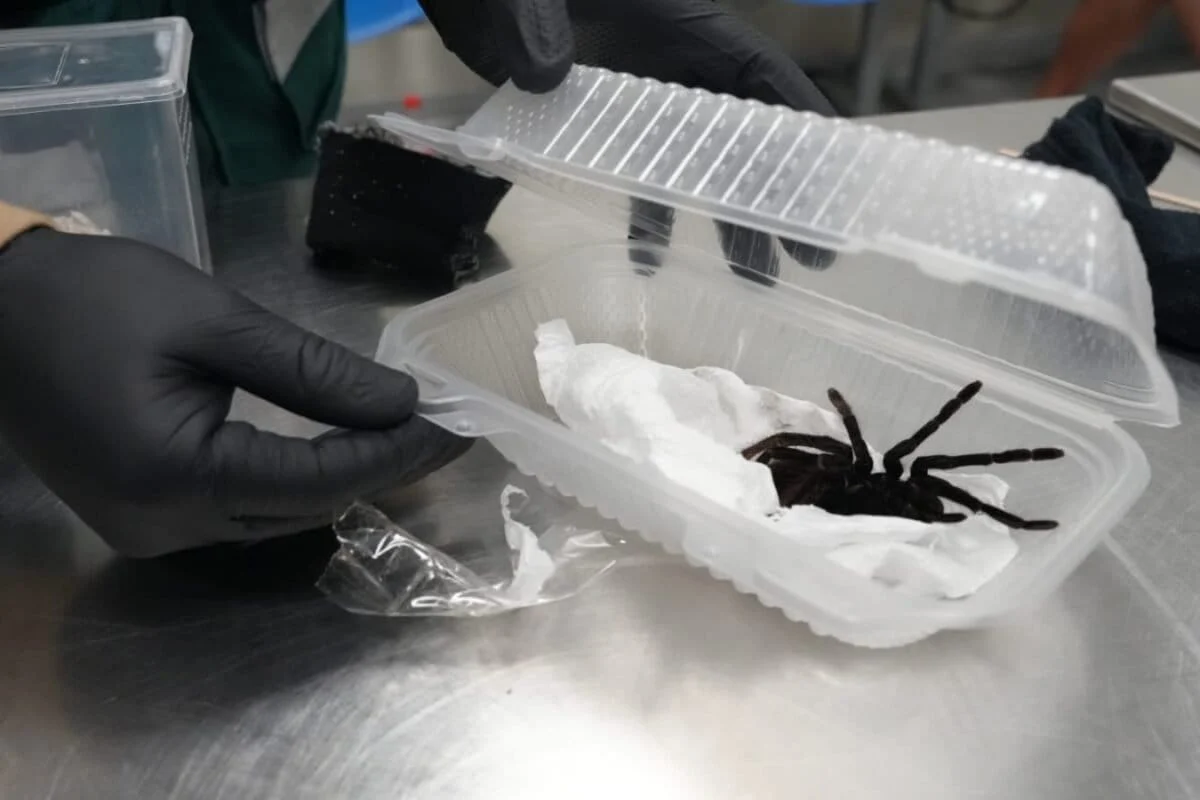
On November 4, 2026, customs agents and officials from the National Forest and Wildlife Service (SERFOR) at Jorge Chávez International Airport in Lima executed a significant enforcement action, resulting in the seizure of more than 3,000 live tarantulas. The operation, which took place as three individuals were preparing to board a flight to Germany, exposed a sophisticated network dedicated to the illicit collection and international trade of Peru’s unique arachnid biodiversity. The suspects—two German nationals and one Polish citizen—were immediately taken into custody by the Peruvian National Police’s environmental crimes unit and currently face formal criminal proceedings.
Chronology of the Interception
The events leading to the discovery began during routine baggage screening protocols at the airport. SERFOR officials, acting on intelligence and observation, flagged three large suitcases intended for transport on a European-bound flight. Upon inspection, agents discovered that the contents had been meticulously packed to conceal biological cargo.
"Concealed in socks inside three suitcases, we found the tarantulas in different stages of life, from eggs and hatchlings to adults," stated Cora Suárez, a forest and wildlife control technician at SERFOR. The methodical nature of the concealment suggested a high degree of preparation. By placing individual spiders in separate socks, the traffickers minimized movement and vibration, likely attempting to avoid detection via X-ray imaging and to ensure the survival of the animals during the long-haul transit.
The arrest follows a period of heightened vigilance at major Peruvian transit hubs, as regional authorities have become increasingly aware of the surge in "micro-trafficking" of invertebrates. Following the seizure, the suspects were transferred to police facilities for interrogation. Reports indicate that one of the detained individuals is a self-described "renowned tarantula researcher," a detail that has drawn sharp criticism from the scientific community, which views such exploitation as a violation of the ethics of biological study.
The Scope of the Biological Seizure
The scale of the seizure is unprecedented for invertebrate smuggling in the region. The 3,000-plus specimens represent a massive extraction from multiple ecosystems across Peru, including the departments of Junín, Loreto, Cajamarca, Cusco, and La Libertad. This geographical spread indicates that the operation was not a localized event but a well-coordinated supply chain spanning thousands of kilometers.
Preliminary analysis by biologists assisting SERFOR has confirmed that the collection included several high-value species prized by international collectors. Among the confiscated spiders were members of the genus Pamphobeteus, which contains some of the largest and most visually striking tarantulas in the world. These specimens frequently fetch prices of approximately £60 ($80) each in the unregulated online pet trade.
Furthermore, the shipment contained Blue bird eaters (Thrixopelma lagunas), a species popular for its vibrant coloration, which can sell for upwards of £53 ($53) per unit. Perhaps most concerning to the scientific community is the presence of species that have not yet been formally described by science. For instance, specimens belonging to the genus Antikuna, which was only formally described in 2021, and several as-yet-undescribed species of Avicularia were among the confiscated group.
The presence of the Bolivian blue leg bird eater (Pamphobeteus antinous) adds a layer of conservation urgency to the case. The species is currently listed as vulnerable to extinction within the Peruvian national threat assessment. While these spiders do not currently enjoy the international protections afforded by the Convention on International Trade in Endangered Species of Wild Fauna and Flora (CITES), their legal status under Peruvian national law strictly prohibits their extraction from the wild for commercial purposes without specific government permits—permits that were never issued for this shipment.

The Regulatory Loophole and Global Trends
The Lima seizure serves as a harrowing case study in the systemic failures that facilitate the global exotic pet trade. While the traffickers were caught in violation of Peruvian national law, the incident highlights a persistent "legal gap" that exists in the European Union and several other jurisdictions.
Sandra Altherr, a spokesperson for the German-based environmental NGO Pro Wildlife, noted that current international regulations often fail to address the nuance of national conservation laws. "This is a pattern that we have observed again and again," Altherr explained. "If they were not seized in Lima, these spiders could have been legally imported to the EU. Because many of these species are not listed under CITES, customs agents in the destination country often lack the legal mandate to stop the shipment, even if the animals were poached in blatant violation of the country of origin’s domestic laws."
This legislative disparity creates a "low risk, high reward" environment for smugglers. By targeting non-CITES species, traffickers avoid the severe penalties associated with trading endangered species while still accessing a lucrative market of private collectors who are often willing to pay a premium for "rare" or "newly discovered" species. The trade in invertebrates, including scorpions, ants, and spiders, has surged in recent years as digital platforms and encrypted messaging services have made it easier to connect illicit sellers with buyers globally.
Implications for Biodiversity and Research
The environmental impact of such a massive removal of wild-caught specimens is difficult to quantify but potentially devastating. Many of these tarantula species occupy narrow, endemic ranges. The removal of hundreds of breeding-age females and their egg sacs from a specific habitat can cause local population collapses, potentially leading to the extinction of species before they are even documented by science.
In response to the seizure, the Peruvian government has reaffirmed its commitment to wildlife protection. SERFOR is currently leading the process of identifying and cataloging each of the 3,000-plus specimens. Once the identification process is complete, the surviving tarantulas will be transferred to an authorized breeding and rehabilitation center. The goal is to monitor their health and, where possible, return viable populations to their native habitats, though the survival rate for individuals handled under such conditions remains uncertain.
The legal proceedings against the three suspects will be closely watched by international wildlife organizations. Peruvian prosecutors are expected to seek maximum penalties for environmental crimes, which include unauthorized collection, illegal transport, and trafficking of protected species. The case is also expected to renew calls for the European Union to implement a "positive list" approach or stricter import regulations that would require proof of legal export from the source country for all wildlife imports, regardless of their CITES status.
A Growing Crisis of "Stolen Wildlife"
The Lima incident is not an isolated event but part of a broader, concerning trend of biodiversity loss through illegal trade. From the mass seizure of 100,000 live cockroaches in Australia to the interception of hundreds of venomous scorpions in South Africa, the global trade in invertebrates is operating largely in the shadows of major enforcement efforts focused on charismatic megafauna like elephants or rhinoceroses.
Experts argue that the focus on "charismatic" species has left smaller, essential components of ecosystems vulnerable. Spiders, as primary predators of insects, play a critical role in controlling pest populations and maintaining the balance of their respective habitats. Their loss, driven by the whims of the exotic pet trade, carries ripple effects that extend far beyond the immediate damage to the individuals involved.
As the investigation continues, Peruvian authorities hope that the severity of this case will serve as a deterrent to other potential smugglers and catalyze a necessary conversation about the ethical and legal responsibilities of consumer nations. For now, the 3,000 survivors of this failed trafficking attempt remain under the care of state professionals, serving as a stark reminder of the hidden costs associated with the global appetite for the rare and the wild.