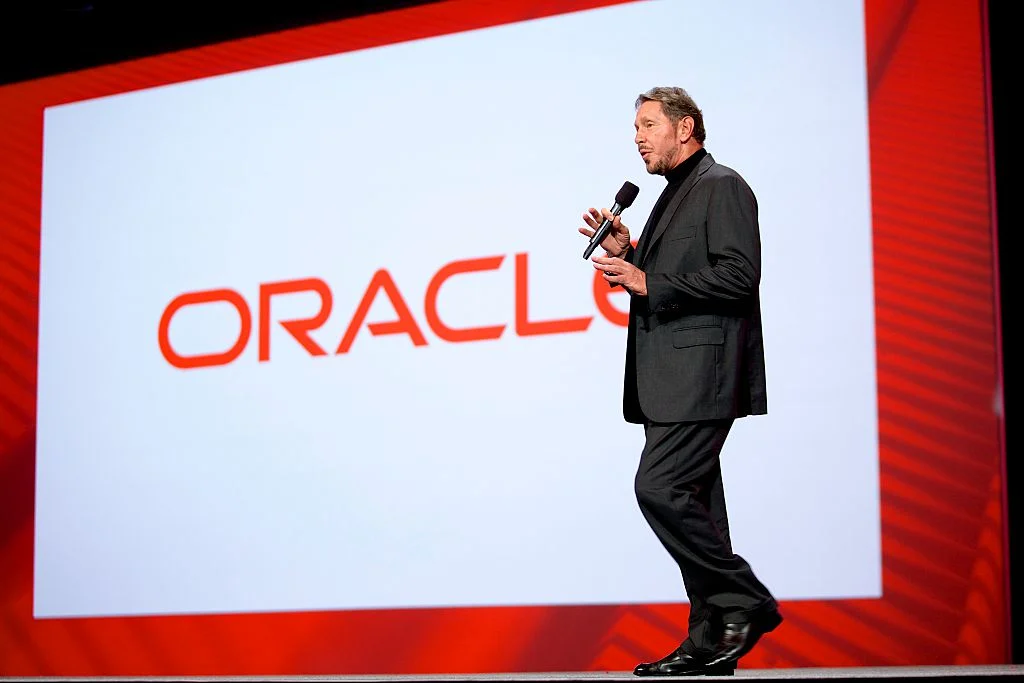
Oracle Corporation co-founder and executive chairman Larry Ellison has abruptly reversed course on a massive planned divestment, officially canceling the sale of 50 million shares of company stock that had previously been valued at approximately $7.5 billion. The surprise decision, announced by the enterprise software giant on a Saturday, signals a notable shift in confidence from one of the technology sector’s most prominent and enduring billionaires.
Regulatory disclosures initially brought the planned transaction to light, indicating that Ellison intended to liquidate a substantial portion of his holdings through a structured trading plan. However, the latest corporate announcement confirms that the planned sell-off has been entirely scrapped. Oracle representatives verified that no shares were ever transacted under the proposed framework, adding that the executive chairman currently harbors no alternative intentions to divest his equity in the software conglomerate.
The abrupt cancellation arrives at a complex operational and financial juncture for Oracle. As public markets digest the news, the company’s stock performance has experienced notable headwinds, falling roughly 22% since the commencement of the calendar year. These valuation fluctuations occur against a backdrop of aggressive capital expenditure, strategic corporate acquisitions, and high-stakes investments in burgeoning technology sectors, leaving financial analysts and institutional investors to parse the underlying motivations for Ellison’s sudden change of heart.
Chronology of the Planned Divestment and Reversal
The sequence of events leading to the cancellation of Ellison’s stock sale unfolded across several months of regulatory filings and corporate maneuvering. Initially, routine disclosures required by the U.S. Securities and Exchange Commission (SEC) mapped out a structured timeline for Ellison to offload the 50 million shares. Such plans—often established under Rule 10b5-1—are commonly utilized by corporate insiders to execute pre-scheduled stock sales while avoiding accusations of insider trading based on material non-public information.
Market observers had closely monitored the impending transaction given its sheer scale. Valued at approximately $7.5 billion based on prevailing market rates at the time of the filing, the divestment would have represented one of the largest single insider stock sales of the period. Yet, despite the formal mechanisms being put in place, Oracle’s leadership opted to halt the process entirely.
On Saturday, the corporation issued a concise update to the investment community, stating unequivocally that the transaction had been scrubbed. “No Oracle stock was sold under that plan, and he has no other plans to sell any of his Oracle stock,” the company noted in its official release. Notably, neither Ellison nor official corporate representatives provided a specific rationale for the reversal, leaving the market to analyze the broader macroeconomic and enterprise-level factors that might have influenced the decision.
Financial Context and Market Performance
To fully understand the weight of Ellison’s decision to retain his shares, one must examine Oracle’s recent financial trajectory and market standing. As of the close of trading, Oracle shares have experienced a downward trajectory, losing 22% of their value since the beginning of the year. This contraction reflects a broader recalibration among technology investors, who have begun scrutinizing the return on investment for aggressive capital expenditures pursued by legacy software firms attempting to capture the next wave of computing demand.
Oracle has poured immense financial resources into expanding its cloud computing infrastructure, most notably through heavy investments in next-generation data centers. These facilities are designed to meet the skyrocketing enterprise demand for artificial intelligence training and deployment workloads. While these infrastructure outlays are viewed by management as vital for long-term competitiveness against cloud giants like Amazon Web Services, Microsoft Azure, and Google Cloud, they have also placed substantial short-term demands on corporate capital and liquidity.
By choosing to retain his multi-billion-dollar stake rather than liquidating it, Ellison—who remains one of the world’s wealthiest individuals and retains a massive controlling interest in the enterprise software titan—has effectively signaled a steadfast commitment to holding his equity through this transitional capital-intensive phase. Industry analysts suggest that retaining such a large block of shares avoids sending a bearish signal to retail and institutional shareholders alike, particularly during a period when the company’s equity price has faced downward pressure.
Strategic Diversification: Data Centers, TikTok, and Media Ventures
Beyond its core enterprise software and database management business, Oracle has increasingly positioned itself at the center of high-profile geopolitical and media transactions. These sprawling interests provide essential context regarding Ellison’s personal wealth management and his broader financial commitments outside of day-to-day corporate operations.
In recent months, Oracle has entrenched its position as a critical infrastructure partner and stakeholder in high-stakes technological ecosystems. Most notably, the corporation became one of the primary owners and designated security partners for TikTok’s U.S. operations, a role born out of prolonged regulatory scrutiny regarding data privacy and national security. This partnership not only solidified Oracle’s footprint in consumer-facing digital infrastructure but also aligned the enterprise software vendor with some of the most complex regulatory landscapes in modern corporate history.
Concurrently, Ellison’s personal financial ecosystem extends far beyond the corporate boundaries of Oracle. The billionaire tech magnate has actively deployed his personal fortune to support external commercial ambitions, most prominently backing his son David Ellison in a high-profile pursuit of Warner Bros. The media acquisition effort, valued at approximately $40 billion, represents a massive convergence of legacy entertainment and modern capital backing. However, this aggressive media expansion has not proceeded without friction; the transaction has faced rigorous regulatory examinations and legal challenges, including contested settlement discussions involving state regulatory bodies.
Financial strategists note that backing multi-billion-dollar media acquisitions concurrently with maintaining vast equity holdings in an infrastructure-heavy software firm requires sophisticated liquidity management. The decision to forgo the $7.5 billion Oracle stock sale implies that Ellison may have identified alternative funding mechanisms or determined that maintaining his unencumbered equity stake in Oracle was more strategically advantageous than realizing the cash proceeds at the current market valuation.
Analyst Perspectives and Governance Implications
Corporate governance experts and equity analysts have offered varied interpretations of the canceled sale, weighing the implications for both Oracle’s share price stability and Ellison’s overarching investment strategy.
From a market psychology standpoint, the cancellation of a major insider sale is frequently interpreted as a stabilizing event. When a co-founder and executive chairman—who intimately understands the internal metrics, pipeline health, and strategic trajectory of the firm—chooses to hold onto his stock rather than execute a pre-planned multi-billion-dollar liquidation, it can alleviate investor anxieties regarding near-term headwinds. Rather than flooding the market with 50 million additional shares, which could have exerted further downward pressure on the equity price, Ellison’s choice to preserve his holdings maintains the existing ownership equilibrium.
However, the lack of a formal explanation from Oracle management has also invited speculation regarding internal discussions. Analysts point out that Rule 10b5-1 plans are routinely canceled or modified for personal wealth planning reasons, tax strategy adjustments, or shifts in family office priorities. Given Ellison’s multifaceted investment portfolio—spanning advanced enterprise technology, cloud infrastructure buildouts, and multi-billion-dollar media and entertainment ventures—his capital allocation decisions are inherently complex and interconnected.
Furthermore, the dual pressures of financing massive data center expansions to support artificial intelligence workloads while navigating complex legal and regulatory battles in the media sector create a dynamic corporate environment. As Oracle continues to position itself as a foundational backbone for enterprise artificial intelligence and secure cloud operations, the personal alignment of its executive chairman remains a critical variable for institutional investors tracking the firm’s long-term enterprise value.
Broader Economic and Sector-Wide Outlook
Ellison’s decision arrives at a pivotal juncture for the broader technology sector, where established industry titans are aggressively pivoting capital toward artificial intelligence infrastructure. The race to build out hyperscale data centers has transformed traditional software companies into capital-intensive utility providers, requiring sustained investment in specialized hardware, power supply, and cooling systems.
Within this macro environment, executive stock transactions are subjected to intense scrutiny by market participants looking for signals about the health and valuation ceilings of major tech firms. Oracle’s aggressive capital expenditures in cloud and AI capabilities have redefined its market identity, moving it far beyond its historical roots as a relational database provider. The company’s ability to successfully monetize these data center investments will ultimately dictate its stock recovery and long-term market capitalization.
As Oracle navigates these operational transitions, the cancellation of Larry Ellison’s stock sale ensures that the company’s most influential stakeholder remains deeply anchored to its equity performance. Whether this maneuver foreshadows upcoming strategic announcements, stabilization of the company’s market valuation, or internal realignments within Ellison’s broader business empire remains to be seen. For now, the enterprise software giant moves forward with its leadership unified in holding their positions as the company steers through a demanding and transformative period in the global technology landscape.