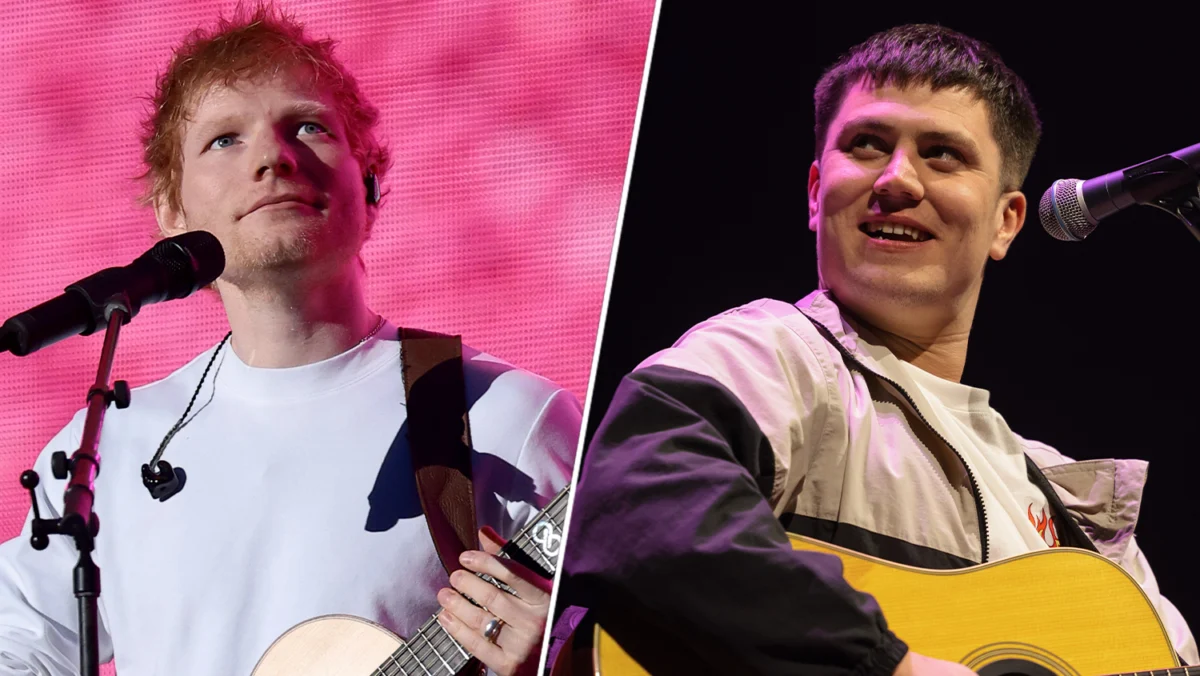
The music industry is currently reeling from a cascading controversy surrounding Ed Sheeran’s high-profile Loop Tour, which has seen a mass exodus of supporting acts following the abrupt removal of rapper Macklemore. The turmoil, rooted in geopolitical tensions and fierce debates over free speech, reached a boiling point when artist Aaron Rowe—one of the tour openers who subsequently stepped down—publicly defended Sheeran. Rowe argued that the British pop star’s actions were the result of "human fucking error" under intense pressure from powerful venue stakeholders, specifically targeting billionaire philanthropist and Gillette Stadium owner Robert Kraft.
The unfolding drama has transformed a routine concert tour into a flashpoint for discussions regarding censorship, pro-Palestine activism, corporate influence in the entertainment sector, and the boundaries of accountability for global music icons. With Sheeran now left without opening acts following a series of swift departures, industry analysts and fans alike are scrutinizing the complex web of promoters, venue owners, and artists caught in the crossfire.
Background Context of the Controversy
The controversy ignited following a series of onstage remarks made by Macklemore expressing support for Palestine amid the ongoing Israel-Hamas conflict. Macklemore, known for his vocal political stances and previous advocacy work, used his platform during performances to amplify slogans such as "Free Palestine." While such statements are protected under free speech principles in many jurisdictions, they frequently draw intense scrutiny, polarization, and corporate pushback when integrated into high-grossing commercial entertainment events.
According to statements released by Ed Sheeran and subsequent investigative reports from entertainment media, Gillette Stadium owner Robert Kraft reportedly organized a coalition of tour venues to deliver an ultimatum. The pressure campaign demanded that Macklemore be removed from the Loop Tour lineup, threatening logistical and venue access complications if the demand was ignored. Faced with mounting pressure from stakeholders, the tour’s promoters and management made the swift decision to drop Macklemore from the remaining dates.
The decision triggered immediate backlash across the entertainment landscape. Critics argued that yielding to venue pressures sets a dangerous precedent for artistic censorship, stifling political expression within mainstream music spaces. In response to Macklemore’s removal, a domino effect occurred within the tour’s roster: multiple supporting acts, including Aaron Rowe, Finneas, and Lukas Graham, as well as Sheeran’s traditional backing band Beoga, announced their withdrawal from the Loop Tour in solidarity.
Chronology of Events
The rapid sequence of events unfolded over a high-stakes, multi-day period:
- Early September: Tensions rise regarding political commentary on tour stages, culminating in behind-the-scenes pressure from venue stakeholders regarding Macklemore’s pro-Palestine statements.
- Monday: Ed Sheeran formally drops Macklemore from the Loop Tour lineup. Shortly thereafter, Sheeran releases a public statement clarifying that the decision was ultimately driven by tour promoters following an ultimatum coordinated by Gillette Stadium owner Robert Kraft.
- Mid-Week: The music community reacts sharply to the announcement. In response to the censorship of Macklemore, supporting artists Finneas, Aaron Rowe, and Lukas Graham, along with backing band Beoga, announce their departure from the tour.
- Friday: Aaron Rowe publishes a detailed video statement on Instagram defending Ed Sheeran. While acknowledging that mistakes were made in handling the situation, Rowe redirects public focus toward Robert Kraft and broader industry lobbying forces, calling for accountability from venue ownership rather than the tour headliner.
- Present: With no remaining opening acts on the Loop Tour, the future of the remaining tour dates remains uncertain as stakeholders navigate the fallout.
Aaron Rowe’s Defense and Critical Analysis
In his Instagram video statement released on Friday, Aaron Rowe offered a nuanced perspective on the crisis, attempting to shift the narrative away from Ed Sheeran and toward systemic industry pressures.
"I’m gonna be honest, I think you are all focusing on the wrong person here," Rowe stated in his video. "All I keep hearing is Ed Sheeran this, Ed Sheeran that, but you really should be focusing on the likes of Robert Kraft… on the zionist lobbies that are trying to silence the voices of people who are shouting about genocide, the genocide that is happening in Palestine right now, by Israel."
Rowe acknowledged that Sheeran’s initial statement could have been handled more effectively and conceded that Macklemore should not have been removed. However, he attributed the outcome to panic within the tour’s inner circle amid conflicting demands.
"I fully believe it was panicked stations over there, and they rushed to a decision because they didn’t know what to do, because they were getting it from all angles," Rowe explained. "That’s a mistake from a person. And I haven’t had a chance to fucking talk to Ed too much, but I fully believe he knows that was a mistake."
Furthermore, Rowe highlighted the ideological makeup of the tour itself to counter suggestions that Sheeran held personal animosity toward pro-Palestine advocacy. He noted that all of Sheeran’s chosen opening acts held similar political stances. "If Ed Sheeran was a fucking zionist, why would he have all these fucking people on the tour? It was human fucking error," Rowe emphasized, praising Sheeran’s personal character and history of supporting emerging talent.
Rowe concluded his remarks by urging the public and media to direct their activism toward powerful figures like Kraft rather than a fellow artist caught in corporate machinery. "You should be using this opportunity to plaster Robert Kraft’s face everywhere, someone who tried to shut down free speech, someone who tried to silence the voices of people who are shouting about genocide. That’s what you should be using your energy on, not fucking Ed Sheeran."
Broader Industry Impact and Implications
The implosion of the Loop Tour highlights a growing chasm between mega-artists, venue magnates, and sociopolitical discourse in the modern live entertainment industry. As international conflicts increasingly permeate cultural spaces, artists, promoters, and venue owners face unprecedented challenges regarding freedom of expression, contractual obligations, and audience expectations.
Key Implications for the Live Music Sector:
- Venue Power Dynamics: The incident demonstrates the immense leverage held by elite venue owners and stadium conglomerates. By coordinating ultimatums, stakeholders can effectively dictate tour lineups, bypassing the creative autonomy traditionally granted to headlining acts.
- Artist Solidarity and Tour Viability: The swift departure of opening acts such as Finneas, Lukas Graham, and Aaron Rowe illustrates a rising standard of solidarity among contemporary musicians. When a peer is dropped for political expression, supporting acts are increasingly willing to sacrifice lucrative tour slots on ethical grounds, creating logistical nightmares for promoters.
- The Politicization of Mainstream Stages: Live music has historically served as both an escape from and a commentary on global politics. However, as polarization intensifies, festival organizers and stadium bookers are adopting risk-averse strategies to protect corporate sponsorships and facility reputations, often resulting in swift crackdowns on controversial discourse.
- Reputational Management: For an artist of Ed Sheeran’s magnitude, navigating crises that involve multi-party financial contracts and deeply polarizing geopolitical issues requires sophisticated public relations maneuvering. While Sheeran’s team attempted to attribute the decision to promoters, the subsequent loss of his entire supporting roster indicates that shifting blame does not insulate a tour from reputational damage.
As the industry assesses the fallout, the Loop Tour stands as a stark reminder of the fragile ecosystem underpinning modern live music production, where artistic vision, corporate interests, and global geopolitics frequently collide with volatile consequences.