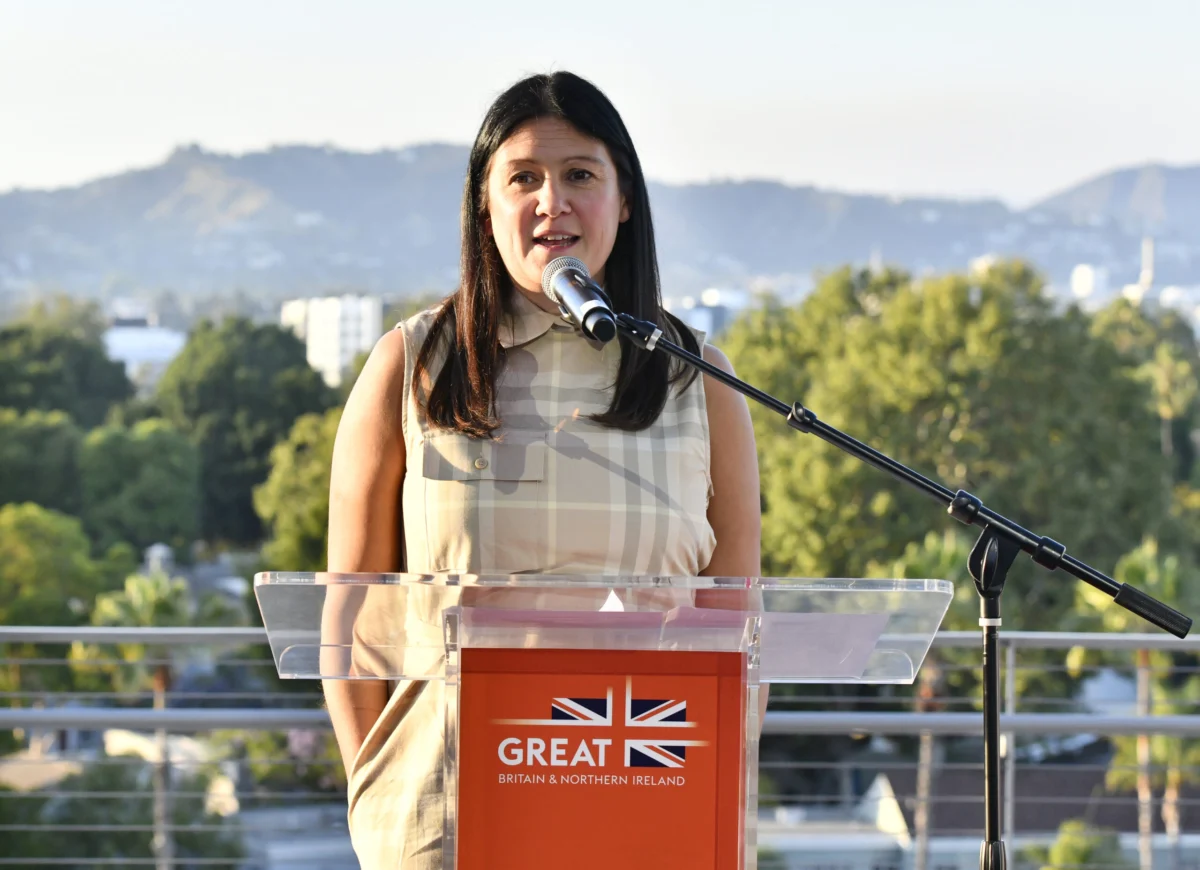
UK Culture Secretary Lisa Nandy, widely anticipated to transition to a new role following her close friend Andy Burnham’s ascent to Prime Minister, has unexpectedly remained at the helm of the Department for Digital, Culture, Media and Sport (DCMS). This tenure now positions her as the longest-serving incumbent in the post for over a decade. However, the coming months are set to test the limits of her influence, as a trio of significant decisions she is poised to make could profoundly impact the global media and technology sectors, particularly in the United States. These impending rulings arrive at a critical juncture for Prime Minister Burnham, who is endeavoring to maintain a cordial relationship with former U.S. President Donald Trump, building upon the groundwork laid by his predecessor, Keir Starmer.
The Paramount-Warner Bros. Discovery Merger: A Lingering Uncertainty
One of the most immediate and high-stakes challenges facing Nandy is the fate of the colossal $110 billion merger between Paramount Global and Warner Bros. Discovery (WBD). The UK Parliament’s recess and Burnham’s ascension to Prime Minister occurred just before Nandy was expected to deliver a verdict on this monumental deal. Initially, Nandy had indicated her “mindedness to intervene” on grounds of media plurality, a crucial consideration for regulatory bodies concerned with the concentration of media ownership. However, a definitive update failed to materialize before the parliamentary break, leaving stakeholders in suspense.
The earliest possible resolution for the Paramount-WBD deal, as it stands, is September 1, when British regulators will either greenlight the merger or initiate a more thorough investigation. This protracted delay carries substantial financial implications. The agreement includes a "ticking fee" clause, obligating WBD shareholders to receive 25 cents per share for every quarter the takeover remains incomplete beyond the third quarter. This translates to a potential cost of approximately $650 million per quarter, a significant financial burden that could escalate rapidly.
David Ellison, a key figure in the proposed merger, had previously attempted to cultivate a favorable disposition with Nandy during a highly publicized trip to Europe in January. However, any goodwill generated by these efforts could quickly evaporate if Nandy’s decision triggers the commencement of the "ticking fee" period. In the United States, the merger is already encountering considerable headwinds. It is currently on pause as a direct response to a lawsuit filed by a coalition of a dozen states, highlighting the complex regulatory landscape across different jurisdictions. The outcome of Nandy’s decision in the UK could therefore exert considerable influence on the global trajectory of this ambitious consolidation.
Reimagining the BBC Licence Fee: A Potential Seismic Shift for Streamers
Beyond the mega-merger, Nandy is also grappling with a proposal that could fundamentally alter the funding model for public service broadcasting and its relationship with the burgeoning streaming sector. The British Broadcasting Corporation (BBC) has floated a controversial plan to extend the reach of its licence fee to subscribers of major streaming platforms such as Netflix, Disney+, and Amazon Prime Video. This initiative stems from a growing concern within the BBC about revenue shortfalls. Despite its widespread appeal, with 94% of the UK population accessing BBC services monthly, the number of licence fee payers has fallen below 80%, resulting in annual losses amounting to hundreds of millions of pounds.
While detailed operational blueprints remain scarce, Nandy has recently signaled her inclination towards this proposal. The plan envisions a scenario where individuals consuming non-live content on streaming services would be required to contribute to the licence fee. Furthermore, it suggests that streaming platforms themselves could be tasked with assisting in the collection of these fees.
The Motion Picture Association (MPA), representing a significant portion of the major U.S. studios and streamers, has already voiced strong opposition to the proposal. They argue that such a measure would have a "downstream impact on viewers and their viewing experience." Despite these objections, Nandy appears undeterred. She has reportedly engaged in discussions with streaming executives regarding various potential solutions, while consistently ruling out a direct streamer levy—a model adopted by several other nations that mandates subscription video-on-demand (SVoD) services to contribute a portion of their UK subscription revenue to a cultural fund supporting British content.
Netflix, in particular, stands to be significantly impacted. The streaming giant has frequently expressed its frustration with European regulatory measures that impose local content quotas and funding obligations. Historically, Netflix has lauded the UK for its comparatively laissez-faire approach, which has allowed it considerable freedom to operate and produce acclaimed original content, such as "Sex Education" and "The Crown." Forcing its subscribers to effectively subsidize a public service broadcaster, which can be seen as a competitor in the content market, would represent a stark departure from this established relationship and could ignite further regulatory friction.
Tech Giants Face New Mandates: Algorithmic Reckoning and Age Restrictions
The third significant area of impending decision-making for Nandy involves the UK’s approach to social media platforms and their content dissemination. The government is moving forward with a comprehensive ban on social media access for individuals under the age of 16. This measure, aimed at safeguarding young users, will affect major platforms like X (formerly Twitter), YouTube, TikTok, and Reddit.
In parallel, legislation is being drafted that would compel platforms such as YouTube and TikTok to prominently feature public service content. This initiative, first articulated by Nandy at the RTS Convention, is framed as a critical component in the "fierce battle against mis- and disinformation." For these tech behemoths, this could present a significant algorithmic challenge, requiring them to re-engineer their content distribution strategies to accommodate mandated public service programming.
The implications for these tech giants are multifaceted. The social media ban for minors addresses growing concerns about online safety and mental well-being, a sentiment echoed by regulators globally. However, the requirement to prominently display public service content introduces a new layer of operational complexity. It necessitates a deliberate shift in algorithmic priorities, potentially impacting user engagement metrics and advertising revenue models. While the stated goal is to combat disinformation, the practical implementation could involve substantial technical and strategic adjustments for these platforms.
The Interplay of Politics and Policy: A Global Repercussion
The confluence of these three critical decisions, all falling under Nandy’s purview, underscores a period of significant regulatory flux. Had Nandy been replaced as Culture Secretary earlier this week, the direction of these policies might have shifted. However, her continued tenure suggests a commitment to seeing these initiatives through.
The potential ramifications for American entertainment and technology giants are substantial. Many of these companies have cultivated increasingly close ties with Donald Trump during his presidency, often relying on his administration or his allies to facilitate various business objectives and navigate regulatory hurdles. The prospect of Prime Minister Burnham extending an invitation to Trump, as he did in their first call, to visit Manchester—Nandy’s hometown—adds another layer of political intrigue. Should Trump accept this offer, Nandy might find herself strategically positioned to observe any subsequent interactions, potentially influencing her approach to matters that could impact American corporate interests.
The decisions Nandy is set to make are not merely domestic policy adjustments; they represent a potential recalibration of the global media and technology landscape. The UK, historically a key market and regulatory bellwether, could set precedents that influence other nations. The way these decisions are framed and implemented will undoubtedly be scrutinized by international stakeholders, particularly those in the United States, who are deeply invested in the UK’s media and digital economy. The coming months promise to be a period of intense negotiation, strategic maneuvering, and potentially, significant disruption, all orchestrated from the heart of the UK’s cultural policy apparatus.