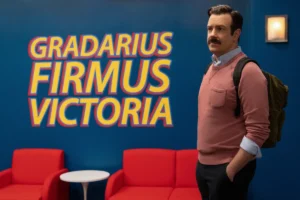
Larry David, the acclaimed creator and star of the long-running HBO comedy Curb Your Enthusiasm, has returned to HBO Max with a fresh venture, Life, Larry and the Pursuit of Unhappiness. This ambitious sketch comedy series delves into American history, reimagining pivotal moments and figures through David’s signature observational humor. The show, executive produced by former President Barack Obama and Michelle Obama through their Higher Ground Productions, has quickly become a talking point for its star-studded cast and unconventional historical reinterpretations.
The series premieres on HBO and streams on HBO Max every Friday night at 9 p.m. ET. Each episode features a remarkable ensemble of celebrity guests, transforming them into iconic historical figures and everyday citizens across various eras of American history. This collaborative effort, bringing together a wealth of comedic and dramatic talent, underscores the project’s significant cultural and entertainment appeal.
A Star-Studded Historical Tapestry
Life, Larry and the Pursuit of Unhappiness is distinguished by its extensive roster of guest stars, a testament to David’s enduring influence and the project’s high-profile backing. The series isn’t merely a collection of cameos; rather, each episode boasts over a dozen notable personalities stepping into the shoes of historical figures. This ambitious casting strategy elevates the show beyond a simple comedy, offering a unique lens through which to view American history.
Among the most notable appearances is the late Rob Reiner, whose participation in the series marked his final on-screen performance. Reiner, a celebrated director and actor with a long history of collaboration with David on Curb Your Enthusiasm, adds a poignant layer to the show’s ensemble. Major Hollywood figures such as Samuel L. Jackson, a veteran actor known for his commanding presence and distinctive voice, and Lin-Manuel Miranda, the multi-talented creator of the Broadway hit Hamilton, lend their talents to inhabit characters from various historical periods.
The series also features a significant reunion of talent from Curb Your Enthusiasm. This includes the inclusion of Richard Kind, who portrayed the character of Larry David’s doctor on the acclaimed show, and Michael Chiklis, who had a recurring role as a restaurant owner. Furthermore, television stalwarts like Jerry Seinfeld, David’s co-creator and co-star on the iconic sitcom Seinfeld, and Jon Hamm, known for his role as Don Draper in Mad Men, contribute their comedic prowess. The sheer breadth of talent involved suggests a carefully curated approach to historical personification, aiming to leverage each actor’s unique strengths to bring historical narratives to life with a comedic twist.
Episode Breakdown: A Journey Through American Eras
The series meticulously unpacks different periods of American history across its initial five episodes, offering a comprehensive yet comically skewed historical overview.
Episode 1: "Livingston"
The premiere episode, titled "Livingston," immediately establishes the show’s tone and ambition. It opens with an introduction from executive producer Barack Obama, who, in a meta-commentary, praises the nation as it approaches its semiquincentennial while playfully engaging with David. This segment sets a unique precedent for historical documentaries and sketch comedies alike, blending political commentary with comedic satire. The narration is provided by Samuel L. Jackson, whose distinctive voice has become a modern staple for documentaries and voiceovers.
The episode’s sketches offer a diverse exploration of American history:
- Founding Fathers and Grievances: Henry Winkler, Chris Parnell, and Alan Tudyk embody John Hancock, Benjamin Franklin, and Thomas Jefferson, respectively. They are depicted as engaged in a debate with Larry David’s character, Robert Livingston, over the additions to the Declaration of Independence. This sketch humorously highlights the often-contentious process of nation-building and the compromises involved in establishing foundational documents.
- The Dawn of Telephony: David takes on the role of Alexander Graham Bell, showcasing the awkward debut of the telephone. His interaction with Richard Kind as Thomas Watson is fraught with modern-day demands from a crowd, played by sitcom veterans Alison Becker, Mary Sohn, and Rodney J. Hobbs. The sketch satirizes the rapid evolution of communication technology and the public’s insatiable desire for more advanced features, even in the nascent stages of innovation.
- World War I Trench Warfare: In a stark contrast to the earlier sketches, this segment places David in a World War I trench as a cowardly soldier under the command of Michael Chiklis’s Sergeant. Fellow soldiers are portrayed by Mike Castle and Jake Reiner, son of the late Rob Reiner. This sketch uses the grim backdrop of war to explore themes of cowardice and camaraderie, infused with David’s characteristic awkwardness.
- Rosa Parks and the Bus: The episode concludes with David as an intrusive bus passenger encountering Jurnee Smollett’s portrayal of civil rights icon Rosa Parks. This sketch, while potentially sensitive, aims to leverage David’s persona to highlight the quiet dignity and profound impact of historical moments through an unexpected comedic juxtaposition.
Episode 2: "Farewell"
"Farewell" continues the historical exploration, featuring prominent guest stars in pivotal roles:
- Lewis and Clark’s Expedition: A significant highlight is the reunion of Larry David and Jerry Seinfeld, the masterminds behind Seinfeld. Here, they portray explorers Lewis and Clark. The sketch humorously frames their monumental expedition as a convenient, long-term drinking buddies’ outing, with Rita Wilson appearing as Meriwether Lewis’s long-suffering wife, Mavis. This segment playfully deconstructs the grandeur of historical expeditions, grounding them in relatable, albeit exaggerated, personal dynamics.
- The Electoral College Conundrum: David satirizes the complexities of the Electoral College by portraying Samuel Tilden, who famously lost the 1876 presidential election despite winning the popular vote. Matthew Jones and Rich Fulcher appear as his aides, amplifying the frustration and absurdity surrounding this contentious aspect of American democracy.
- Great Depression Bread Lines: Set against the backdrop of the Great Depression, David’s character attempts to cut in line for bread. He is joined by Larry Wilmore and Colton Dunn, with Kaley Cuoco portraying a grieving widow. This sketch uses the backdrop of economic hardship to explore themes of social order and individual desperation, all filtered through David’s inimitable comedic lens.
- George Washington and Term Limits: The episode culminates with the highly anticipated final screen performance of Rob Reiner, who portrays George Washington. In this sketch, Washington discusses presidential term limits, serving as a veiled critique of modern political figures, particularly Donald Trump, without explicit naming. Jimmy Kimmel also makes a meta-commentary on his ongoing feud with Trump, adding another layer of contemporary relevance.
Episode 3: "McCarthy"
"McCarthy" delves into earlier periods of American history, showcasing a diverse cast:
- The Boston Tea Party: David finds himself inadvertently involved in the Boston Tea Party, satirizing the historical event. Lin-Manuel Miranda, leveraging his Hamilton fame, plays a ringleader of the protest, while comedian Lou DiMaggio also features. This sketch humorously portrays David’s character as an outsider caught in the fervor of historical rebellion.
- The Underground Railroad: J.B. Smoove’s character, Jonesey, makes a memorable appearance along the Underground Railroad, bewildering David’s host with his demands. This segment uses humor to touch upon a critical and sensitive period in American history, highlighting the complexities of the era.
- The Wright Brothers’ Flight: David plays a fictional, less-than-heroic Wright sibling, engaged in a domestic squabble over butter-churning skills with his wife, played by Isla Fisher. This contrasts with the portrayal of the actual Orville and Wilbur Wright by Jon Hamm and Sean Hayes, who are depicted preparing for their historic flight. The sketch plays on the contrast between domestic trivialities and monumental achievements.
- Senator Joseph McCarthy Hearings: The episode’s most discussed segment features David as Senator Joseph McCarthy. Michael McKean, known for his work on SNL and Better Call Saul, plays attorney Joseph Welch, delivering the iconic "Have you no decency, sir?" rebuttal. Rob Huebel also appears as a senator moderating the hearings. This segment tackles the intense political climate of the McCarthy era, reinterpreting historical confrontations through David’s comedic filter.
Episode 4: "Deepthroat"
"Deepthroat" tackles the Watergate scandal and other significant moments:
- Watergate and "Deep Throat": David portrays the anonymous informant "Deep Throat," meeting with Beck Bennett’s Bob Woodward of The Washington Post. However, David’s informant provides nonsensical information, satirizing the dramatic reveal of the Watergate scandal. This sketch humorously undermines the gravity of the event by introducing triviality.
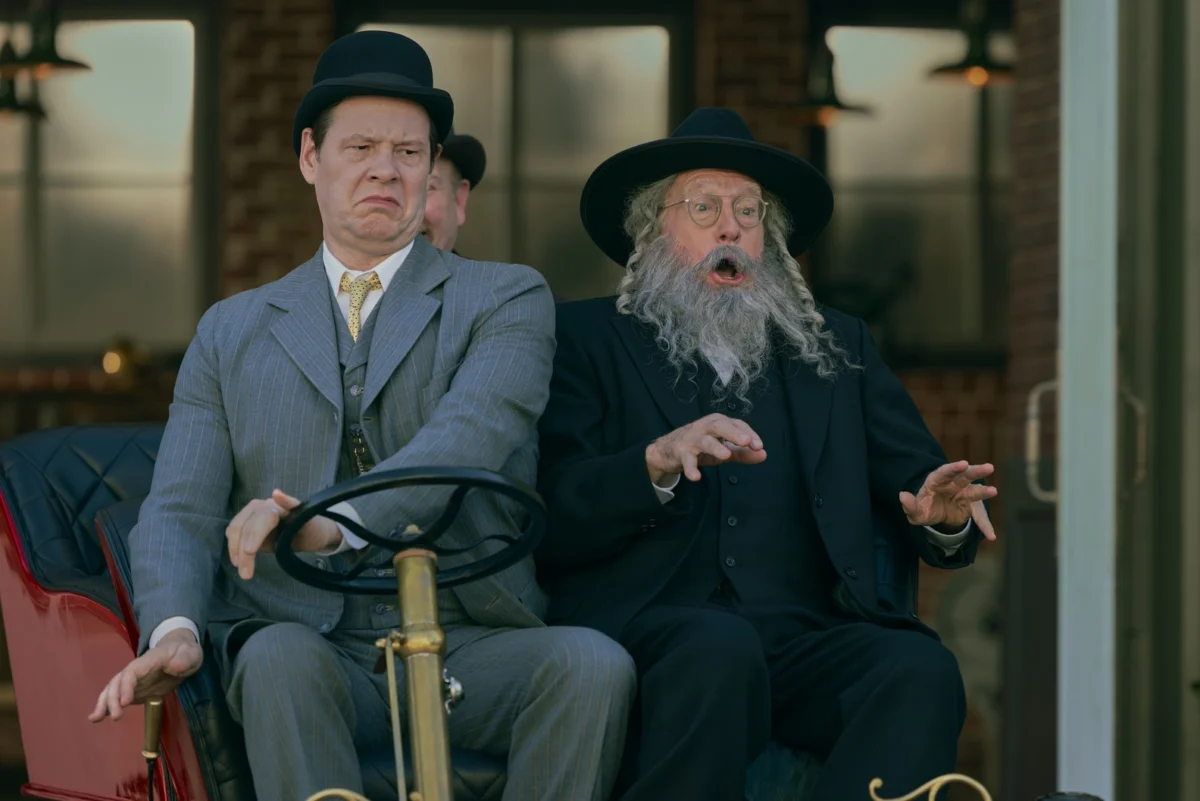
- Henry Ford and the Automobile: Ike Barinholtz plays the notoriously antisemitic Henry Ford, who is depicted as displeased with showing his new car to David’s rabbi character. This sketch uses historical figures to explore societal prejudices and the introduction of new technologies.
- President James Buchanan’s Advances: David embodies President James Buchanan, shown making unwelcome advances towards women at a party. Jordana Brewster and Katie Aselton are among the women who cross his path. Diallo Riddle plays Buchanan’s assistant, John Appleton. This segment satirizes historical figures and social interactions of the past.
- Jonas Salk and Vaccine Paranoia: The episode concludes with David playing Dora Salk, Jonas Salk’s proud mother, bragging about her son’s polio vaccine discovery. The sketch cleverly parodies contemporary vaccine debates by extending the paranoia to the MMR vaccine, drawing a parallel to current anxieties and public health discourse. This segment also includes a subtle jab at HHS Secretary Robert F. Kennedy Jr., husband of David’s former co-star Cheryl Hines.
Episode 5: "Lincoln"
The fifth installment, "Lincoln," focuses on two significant historical events:
- The O.K. Corral Shootout: The series revisits the Wild West, placing David in a Curb-style argument about the logistics of the O.K. Corral shootout. Timothy Olyphant and Don Johnson portray Wyatt Earp and Doc Holliday, respectively, while Marc Menchaca, Johnno Wilson, and Maximo Salas round out the cast of cowboys. This sketch injects David’s signature awkwardness into a legendary moment of American folklore.
- Abraham Lincoln and Mary Todd Lincoln: The strained relationship between Abraham Lincoln and his wife, Mary Todd Lincoln, is explored. Bill Hader portrays a put-upon Lincoln, who, along with his chief of staff, plots to have Mary removed from Ford’s Theatre during a performance of Our American Cousin. Kathryn Hahn plays Mary Todd Lincoln, and Lennon Parham plays Laura Keene. The sketch devolves into a domestic argument over a stolen sweater, reminiscent of Curb Your Enthusiasm‘s typical fare. Jay Renshaw as John Wilkes Booth and Seth Morris as Andrew Johnson also feature in this historical reimagining.
Production and Cultural Impact
Life, Larry and the Pursuit of Unhappiness is produced by HBO Entertainment in association with Higher Ground Productions. The executive producers include Larry David, Barack Obama, Michelle Obama, David Bernard, and Chris Koch. The series’ commitment to historical accuracy, albeit through a comedic lens, coupled with its star power, has generated significant buzz.
The show’s approach to historical figures and events invites viewers to reconsider familiar narratives. By inserting David’s persona into these pivotal moments, the series taps into a contemporary appetite for historical revisionism and comedic deconstruction. The involvement of the Obamas lends a significant cultural cachet, positioning the show as more than just entertainment; it’s a platform for cultural dialogue and historical reflection, albeit one filtered through the inimitable humor of Larry David.
The show’s success is also indicative of a broader trend in streaming entertainment, where established comedians are given creative freedom to explore diverse genres and themes. The detailed casting and the deliberate choice of historical periods suggest a meticulous production process aimed at delivering a high-quality, engaging, and thought-provoking comedy series. The ongoing nature of its release allows for continuous discussion and analysis as new episodes become available, solidifying its place as a significant cultural event on the streaming landscape.
This story was originally published on July 17, and has been updated as new episodes release.