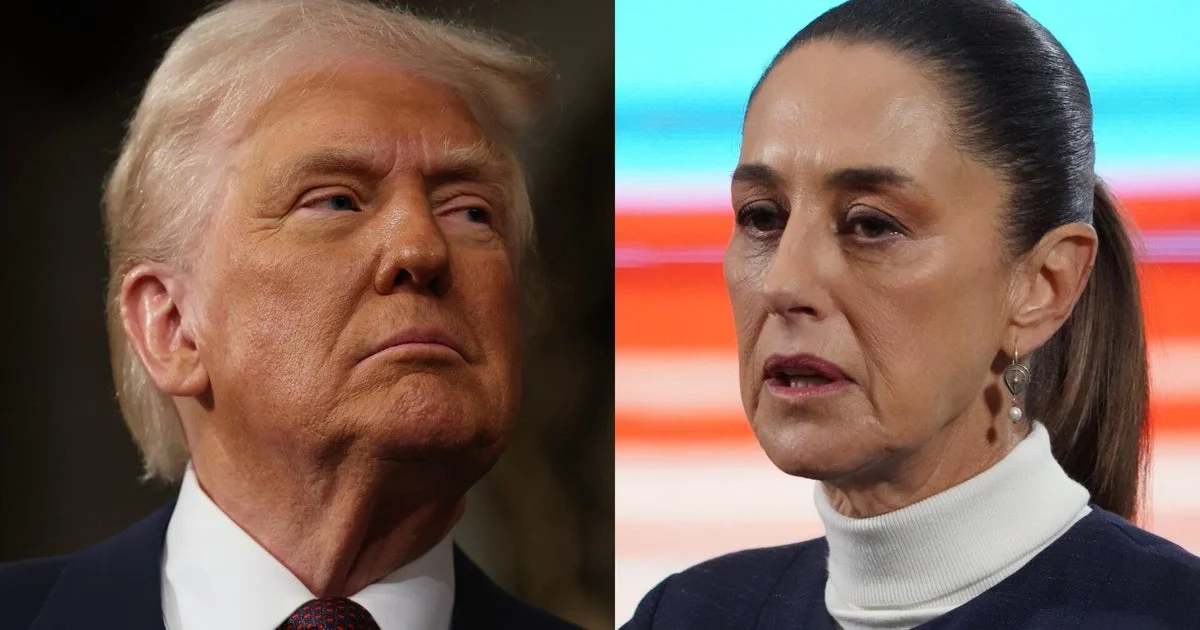
Mexican President Claudia Sheinbaum has confirmed her attendance at Sunday’s highly anticipated FIFA World Cup final in New Jersey, following a direct invitation from U.S. President Donald Trump. This high-profile encounter will mark the first direct meeting between the two leaders since December, occurring amidst months of escalating verbal sparring and significant diplomatic strain across critical areas such including security, trade, and immigration. The championship match, featuring defending champions Argentina against Spain, will also host Canadian Prime Minister Mark Carney and Spain’s King Felipe VI, underscoring the event’s global significance and its unexpected role as a stage for high-stakes international diplomacy.
A High-Stakes Sporting Spectacle and Diplomatic Crossroads
The 2026 FIFA World Cup final, held at MetLife Stadium in East Rutherford, New Jersey, represents the pinnacle of a tournament jointly hosted by the United States, Mexico, and Canada – a historic first for the sport. For sports enthusiasts, the clash between Lionel Messi’s Argentina, aiming to defend their 2022 title, and a resurgent Spanish squad promises a thrilling conclusion to a month-long spectacle. Global viewership for the final is projected to exceed 1.5 billion, making it one of the most watched events on the planet and an unparalleled platform for leaders to engage, formally or informally.
President Sheinbaum’s decision to attend the final stands in contrast to her earlier choice regarding the tournament’s opening match in Mexico City. When Mexico triumphed 2-0 over South Africa, Sheinbaum famously declined to use her ticket, instead gifting it to a young Indigenous woman, a move widely interpreted as a gesture of humility and solidarity with marginalized communities. Her presence at the final, therefore, carries additional weight, signaling a strategic shift to engage directly with her North American counterparts. The financial stakes of the event are also notable; by Saturday afternoon, the cheapest available tickets on FIFA’s official resale platform were listed at nearly $10,000, reflecting the immense demand and prestige associated with the final.
The Backdrop of Bilateral Strain: A Complex Relationship
The relationship between President Sheinbaum and President Trump has been characterized by deep-seated tensions, despite public pledges of cooperation. Both leaders assumed office with strong nationalist platforms, leading to frequent disagreements over issues vital to both nations. The U.S. and Mexico share a nearly 2,000-mile border, an intricate economic relationship, and intertwined security concerns, making effective bilateral communication paramount. However, the past several months have seen rhetoric harden and policy decisions create significant friction, setting a challenging stage for this impromptu meeting.
President Sheinbaum, who took office in late 2024 as Mexico’s first female president, inherited a complex relationship with the U.S. and has sought to balance national sovereignty with pragmatic engagement. Her administration has focused domestically on social programs and environmental initiatives, while internationally navigating the pressures of migration, cross-border crime, and economic integration with its northern neighbors. President Trump, currently in his second term, has maintained a firm stance on border security and trade, often employing direct and assertive diplomatic tactics that have previously strained relations with Mexico.
Escalating Diplomatic Friction: A Timeline of Recent Setbacks
The period leading up to the World Cup final has been marked by a series of diplomatic incidents that have tested the resilience of U.S.-Mexico relations:
- December 2025: World Cup Draw in Miami: The last recorded interaction between Sheinbaum and Trump occurred at the World Cup draw. While brief and largely ceremonial, it offered a fleeting moment of diplomatic cordiality before the subsequent deterioration of relations. No substantive bilateral discussions were reported from that event.
- May 2026: Security Concerns Erupt in Northern Mexico: A major flashpoint emerged following the deaths of two U.S. Central Intelligence Agency (CIA) officers during an operation in Northern Mexico. This tragic incident prompted a strong response from Washington. The U.S. State Department announced it was initiating a comprehensive review of all 53 Mexican consulates operating within the United States. This review, an unprecedented move, was widely interpreted as a diplomatic pressure tactic, raising concerns about potential restrictions on consular services, visa processing, or even the closure of some facilities, which would significantly impact Mexican nationals living in the U.S. The incident highlighted persistent challenges in cross-border security cooperation, particularly concerning cartel violence and intelligence sharing, which remain highly sensitive subjects between the two governments.
- June 2026: Trade Pact Under Threat – The USMCA Ultimatum: Just weeks after the consulate review announcement, President Trump delivered another blow to bilateral relations by declaring that the United States would not extend the U.S.-Mexico-Canada Agreement (USMCA) until 2042. The USMCA, which replaced the North American Free Trade Agreement (NAFTA) in 2020, is a cornerstone of North American economic integration, governing over $1.5 trillion in annual trade. Its non-extension would introduce immense uncertainty for industries across all three nations, particularly in sectors like automotive manufacturing, agriculture, and energy. The agreement features a "sunset clause" requiring a joint review every six years, allowing for a potential 16-year extension. Trump’s unilateral declaration, ahead of the scheduled review, signaled a significant threat to the pact’s long-term stability and put immense pressure on Mexico and Canada to make concessions. This move intensified fears of trade wars and economic disruption across the continent.
- Persistent Migration Challenges: Beyond these specific incidents, ongoing disagreements over migration policy continue to simmer. The U.S. has repeatedly pressed Mexico to do more to stem the flow of migrants across their shared border, while Mexico has called for greater U.S. investment in addressing the root causes of migration in Central and South America. Border infrastructure, enforcement strategies, and the humanitarian treatment of migrants remain contentious points, often fueled by domestic political rhetoric in both countries.
Sheinbaum’s Calculated Diplomatic Move
In explaining her decision, President Sheinbaum told Mexican media, "I decided to go because it is a direct invitation from the president of the United States. Canadian Prime Minister (Mark) Carney will also be there, and tomorrow I will record a message with more details." This statement suggests a pragmatic approach to diplomacy, prioritizing direct engagement despite past friction. A direct invitation from a head of state, particularly during such a high-profile international event, is difficult to refuse without risking further diplomatic isolation.
Her planned message, promising "more details," indicates that her attendance is not merely ceremonial but part of a broader diplomatic strategy. It could involve outlining Mexico’s negotiating positions ahead of upcoming talks, reiterating calls for respectful dialogue, or emphasizing the importance of North American cooperation despite the challenges. Domestically, attending the World Cup final alongside global leaders projects an image of strength and engagement, potentially garnering support from a public passionate about football and eager for Mexico to assert its role on the international stage.
The Role of Sports Diplomacy in Easing Tensions
Major international sporting events like the FIFA World Cup have historically served as unique platforms for "sports diplomacy," where leaders can engage in informal, off-the-record discussions away from the rigid protocols of official state visits. The casual atmosphere of a stadium box, shared enthusiasm for the game, and the universal language of sport can sometimes create opportunities to bridge divides and foster personal connections that formal negotiations might struggle to achieve.
For Sheinbaum and Trump, this setting could provide a crucial ice-breaker. While substantive policy breakthroughs are unlikely during the match itself, the opportunity for a direct, face-to-face conversation – even a brief one – could help de-escalate tensions and set a more constructive tone for future interactions. The presence of Canadian Prime Minister Mark Carney also adds a trilateral dimension, which is particularly relevant given the USMCA trade discussions. Carney could potentially play a mediating role or reinforce the importance of North American unity. King Felipe VI of Spain’s presence further elevates the diplomatic weight of the event, adding a European perspective to the North American gathering.
Broader Implications for North America
The outcome of this informal World Cup meeting, and the subsequent bilateral negotiations, will have significant implications for the future of North America. The USMCA is not merely a trade agreement; it underpins vast supply chains, supports millions of jobs, and fosters economic predictability across the continent. A failure to extend or renegotiate the pact favorably could lead to economic instability, increased tariffs, and a reduction in cross-border investment.
Beyond trade, the security implications are profound. Cooperation on issues like drug trafficking, border management, and intelligence sharing is vital for both U.S. and Mexican national security. The State Department’s review of Mexican consulates signals a deep level of distrust that needs to be addressed for effective joint operations to continue. The World Cup meeting, while not a solution in itself, could be the first step in rebuilding trust and establishing clearer channels for communication on these sensitive topics.
Looking Ahead: Post-Final Negotiations
The immediacy of the upcoming bilateral negotiations underscores the urgency of this World Cup encounter. Officials from the U.S. and Mexico are scheduled to meet just two days after the final for another round of talks specifically focused on trade issues. This suggests that the informal interactions at the stadium could directly influence the atmosphere and tenor of these formal discussions.
Key issues on the agenda for these post-final negotiations will undoubtedly include the future of USMCA, potential amendments to its clauses, and specific sector-by-sector trade disputes. Energy policy, agricultural subsidies, and rules of origin for manufactured goods are often points of contention. Mexico will likely seek assurances regarding market access and investment stability, while the U.S. may press for stricter labor standards or environmental protections. The success of these talks hinges not only on technical negotiations but also on the political will generated by high-level engagement.
In conclusion, President Sheinbaum’s attendance at the World Cup final transcends the realm of sport, elevating it to a critical moment in U.S.-Mexico diplomatic relations. What begins as a shared passion for football could, paradoxically, pave the way for a much-needed dialogue between two leaders whose countries are inextricably linked by geography, economy, and shared challenges. The world will be watching not only the drama on the pitch but also the nuanced interactions in the stands, hoping that the spirit of international cooperation fostered by the beautiful game might extend to the complex world of geopolitics.