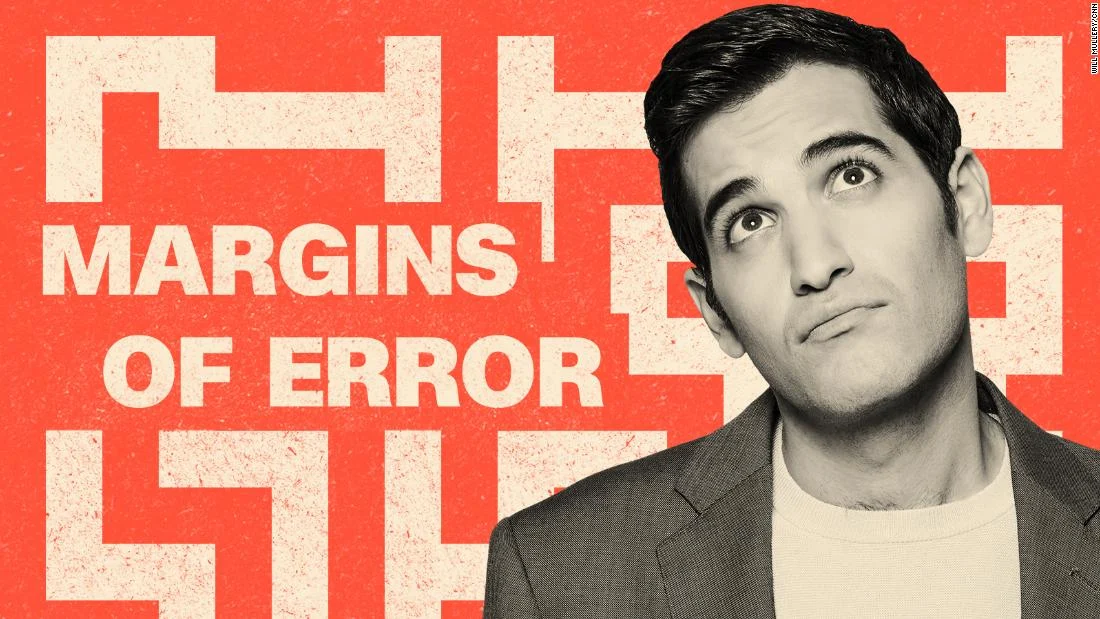
In an era defined by an unrelenting deluge of information, the ability to synthesize, interpret, and contextualize data has become a fundamental necessity for understanding the modern human experience. CNN senior data reporter Harry Enten has positioned himself at the forefront of this analytical endeavor through his podcast, Margins of Error. By stripping away the surface-level noise of daily headlines, the program seeks to interrogate the numerical foundations of social behavior, public policy, and the idiosyncratic trends that define American culture.
The Philosophy of Data-Driven Inquiry
The premise of Margins of Error is rooted in the belief that data serves as a mirror to society. Enten, known for his rigorous approach to statistical polling and political analysis, shifts his focus from the electoral cycle to the broader spectrum of daily life. The podcast operates on the principle that if one looks closely enough at any phenomenon—whether it be the decline of romantic rituals or the stubborn persistence of imperial measurements—the underlying data reveals significant truths about collective identity.
The podcast serves as a bridge between complex statistical modeling and public consumption. By inviting experts from diverse fields—ranging from climatologists to linguistic specialists—the show transforms abstract datasets into narratives that explain why the U.S. continues to resist the metric system or why certain individuals are perceived as more intelligent simply because they wear eyeglasses.
A Chronology of Investigation: Exploring the Human Condition
Since its inception, the podcast has tackled a wide array of topics, utilizing data to challenge conventional wisdom. The following chronology outlines key investigative episodes that highlight the program’s scope and methodology:
- May 3, 2022: The series opened with an exploration of regional linguistic patterns, questioning whether the distinctiveness of American accents is fading in an age of digital homogeneity.
- May 10, 2022: An investigation into the history of hygiene, contrasting the social norms of modern bathing with the practices of antiquity and the biological necessities of human cleanliness.
- May 17, 2022: Enten analyzed the sociology of eyewear, specifically examining the historical evolution of the "four-eyes" stereotype and its impact on social perception and the judicial system.
- May 24, 2022: A critical look at the economics of happiness, featuring collaboration with behavioral scientists to determine if there is a quantifiable salary threshold for emotional well-being.
- May 31, 2022: An analysis of the beverage industry, specifically the linguistic shift from "diet" to "zero sugar" labels and the underlying market pressures driving this branding evolution.
- June 7, 2022: An in-depth report on the failure of the U.S. to adopt the metric system, weighing the economic costs against the cultural inertia of the imperial system.
- June 14, 2022: A sociological study on the perceived decline of traditional romance, utilizing statistical trends in marriage, dating, and interpersonal intimacy.
- June 21, 2022: A scientific look at meteorological forecasting, addressing the public’s frustration with inaccuracies while highlighting the unprecedented technological advancements in climate prediction.
- June 28, 2022: An examination of "underdog" psychology, exploring why the human psyche is inherently drawn to losing teams and individuals, featuring analysis from sports psychologists and historians.
- July 5, 2022: A technical study on travel optimization, applying artificial intelligence and mathematical algorithms to solve common logistical pains, such as airline boarding efficiency and road trip routing.
Supporting Data and Methodology
The strength of the program lies in its commitment to verifiable information. In the episode regarding the "optimal road trip," for example, the show references the work of Dr. Randal Olson, a data scientist who utilized genetic algorithms to compute the most efficient route across the contiguous United States. This application of computational science to a leisure activity exemplifies the podcast’s core mission: finding the mathematical logic hidden within common experiences.
Similarly, in the episode concerning the "economics of happiness," the show draws upon research from Dr. Matt Killingsworth. By utilizing real-time tracking applications, researchers have been able to compile massive datasets that correlate financial security with subjective well-being. This departure from traditional, retrospective polling methods represents a significant evolution in how journalists interpret personal sentiment.

Institutional Context and Public Impact
The production of Margins of Error comes at a time when data literacy is increasingly vital. As public trust in media institutions has fluctuated, platforms that provide transparent, evidence-based reporting play a critical role in civic discourse. By focusing on "soft" topics—such as why we love underdogs or the politics of bathing—the podcast invites listeners into the world of statistics without the polarizing baggage often associated with political polling.
CNN’s investment in this podcast reflects a broader trend in journalism: the move toward long-form, analytical content that serves as an educational tool. For the listener, the value proposition is clear: the ability to understand that the "margins of error" are not merely statistical noise, but the spaces where human variability and cultural preference reside.
Broader Implications of the Data-Driven Approach
The implications of the questions raised in the series extend beyond mere trivia. When Enten investigates why Americans resist the metric system, he is not merely discussing units of measurement; he is highlighting the interplay between national identity, economic infrastructure, and the high cost of cultural transition. When he examines the decline of romance, he is uncovering shifts in domestic life that have long-term demographic and economic consequences.
Furthermore, the podcast challenges the "expert" paradigm. By walking the audience through the investigative process—whether it is interviewing a defense attorney about the visual impact of glasses in court or visiting a trapeze school to test theories of joy—the show demystifies the process of data collection. It encourages an audience to ask, "How do we know what we think we know?"
Conclusion: The Future of Analytical Journalism
Margins of Error remains a significant entry in the landscape of contemporary podcasts. By maintaining a rigorous, factual, and objective tone, Harry Enten succeeds in making high-level data analysis accessible. The series functions as a reminder that every aspect of our lives—from our travel habits to our choice of beverages—is subject to measurement and that, through these numbers, we can gain a clearer, more objective understanding of who we are.
As the series continues to evolve, its success will likely be measured by its ability to maintain this balance between lighthearted inquiry and statistical depth. In a world that is increasingly complex, the need for clear-eyed, data-driven analysis—conducted with a healthy respect for the margins of error inherent in all human endeavors—has never been more pressing. Through this ongoing project, CNN continues to affirm that even the smallest data point, when analyzed with care, can tell a much larger story about the state of our world. Whether it is the future of weather forecasting or the changing nature of human relationships, the podcast serves as a essential guide for navigating the data-saturated reality of the 21st century.