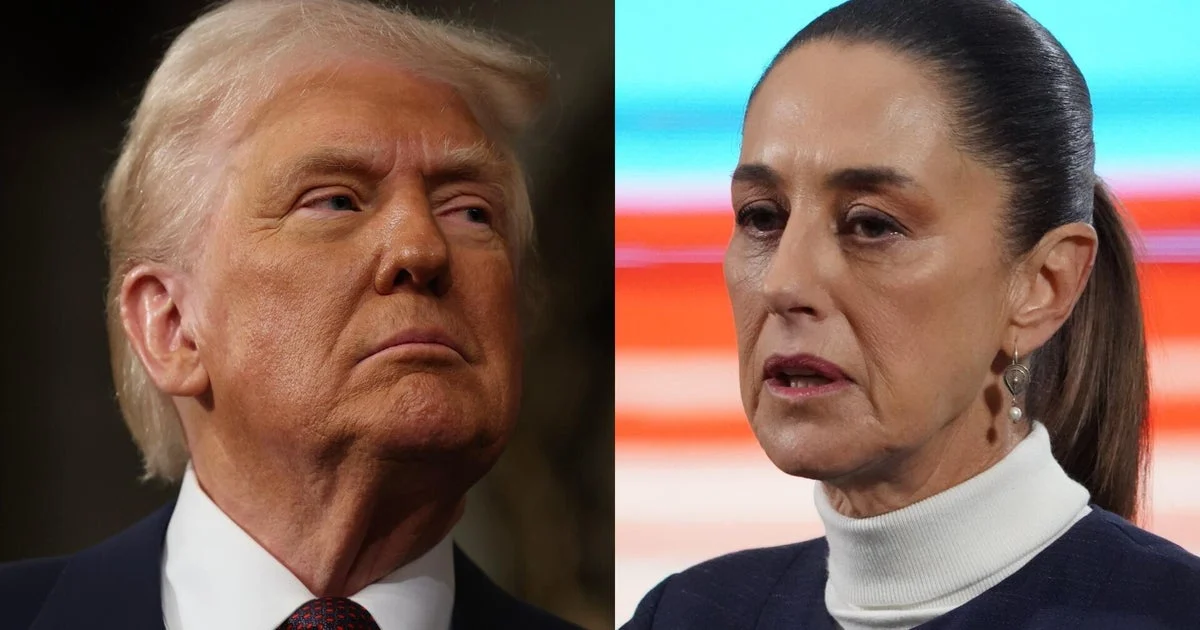
Mexican President Claudia Sheinbaum announced her acceptance of an invitation from U.S. President Donald Trump to attend the 2026 FIFA World Cup final on Sunday, marking their first direct encounter since December and occurring against a backdrop of severely strained bilateral relations. The high-stakes sporting event in New Jersey, where defending champions Argentina will face Spain, serves as an unexpected diplomatic arena for the North American leaders whose administrations have engaged in months of public acrimony over critical issues ranging from security and migration to trade and economic cooperation. Canadian Prime Minister Mark Carney is also expected to attend, underscoring the trilateral nature of the tournament and the broader geopolitical dynamics at play.
The confirmation of Sheinbaum’s attendance comes just two days before a scheduled round of bilateral negotiations between U.S. and Mexican officials, focused predominantly on contentious trade issues. This proximity intertwines the symbolic diplomacy of the World Cup with the urgent practicalities of cross-border governance and economic stability, making Sunday’s meeting far more than a mere courtesy call. Sheinbaum, who notably bypassed the World Cup’s opening match in Mexico City – choosing instead to give her ticket to a young Indigenous woman as a gesture of social inclusivity – explained her change of heart regarding the final: "I decided to go because it is a direct invitation from the president of the United States," she told Mexican media. "Canadian Prime Minister (Mark) Carney will also be there, and tomorrow I will record a message with more details." This statement suggests a recognition of the profound diplomatic weight attached to the invitation, transcending personal preferences or previous political posturing.
A Chronology of Mounting Tensions
The relationship between President Sheinbaum and President Trump has been characterized by a volatile blend of public pledges for cooperation alongside sharp, often personal, exchanges of barbs. Their last interaction was at the World Cup draw in December, a seemingly innocuous event that masked the deepening fissures in the U.S.-Mexico partnership. Since then, several significant developments have exacerbated the tensions:
- December 2025 (World Cup Draw): While details of their interaction remain sparse, the meeting at the World Cup draw was largely ceremonial, a brief handshake opportunity before the real diplomatic storm brewed. Analysts at the time noted the palpable coolness between the two leaders, a precursor to the public disagreements that would follow. The draw itself, held with much fanfare, was meant to celebrate North American unity, but the underlying political currents were already turbulent.
- May 2026 (State Department Review): The U.S. State Department announced it was initiating a comprehensive review of all 53 Mexican consulates operating within the United States. This unprecedented move followed the deaths of two U.S. Central Intelligence Agency (CIA) officers during a covert operation in Northern Mexico, an incident that sparked outrage in Washington and raised serious questions about Mexico’s commitment to security cooperation and its capacity to control its territory. U.S. officials indicated the review was to assess the consulates’ compliance with international diplomatic protocols and their effectiveness in supporting bilateral security objectives, though many saw it as a thinly veiled diplomatic warning and a punitive measure. Mexican Foreign Ministry officials condemned the review as an overreach, asserting their sovereign right to operate consular services without undue foreign interference.
- June 2026 (USMCA Non-Extension): Weeks after the consulate review, President Trump declared that the United States would not extend the U.S.-Mexico-Canada Agreement (USMCA), the foundational trade pact governing North American commerce, until its scheduled expiry in 2042. This declaration sent shockwaves through the North American economy, triggering immediate fears of trade instability, increased tariffs, and supply chain disruptions. The USMCA, which replaced NAFTA in 2020, was designed to provide long-term predictability for businesses across the continent. Trump’s stated rationale for not extending the agreement centered on perceived inequities in its implementation and a desire to renegotiate terms he deemed unfavorable to American interests, particularly in automotive manufacturing and agricultural sectors. Mexican and Canadian officials swiftly expressed profound disappointment, emphasizing the agreement’s vital role in regional economic integration.
- July 18, 2026 (Sheinbaum’s Announcement): Against this backdrop of heightened diplomatic friction and economic uncertainty, President Sheinbaum’s decision to attend the World Cup final signifies a potential, albeit fragile, opening for dialogue. Her initial reluctance to attend the opening match was seen by many as a subtle snub, reflecting her administration’s focus on domestic issues and a desire to avoid being seen as subservient to American influence. Her pivot to accepting the direct invitation from Trump suggests a strategic calculation that the potential benefits of face-to-face engagement outweigh the political risks.
The Economic and Security Undercurrents
The ongoing diplomatic skirmishes are not merely rhetorical; they have tangible implications for the interconnected economies and security landscapes of the U.S. and Mexico. The USMCA agreement, for instance, underpins over $1.7 trillion in annual trilateral trade, supporting millions of jobs across North America. The uncertainty surrounding its future has already prompted concerns among investors and businesses. A recent report by the North American Trade Council projected that a failure to extend or renegotiate the USMCA could lead to a 5-7% contraction in U.S.-Mexico trade over the next five years, potentially costing hundreds of thousands of jobs in key sectors like manufacturing, agriculture, and energy.
Security cooperation is another critical area of contention. The deaths of the CIA officers highlighted the immense challenges of combating transnational criminal organizations, which operate with increasing sophistication across the shared border. Mexico remains a vital partner in counter-narcotics efforts, immigration control, and intelligence sharing, yet the trust between the two nations appears to be eroding. The U.S. State Department review of Mexican consulates, perceived as a punitive measure, has only deepened resentment within the Mexican government, leading to fears that vital intelligence and law enforcement channels could be compromised. Experts from the Council on Foreign Relations noted that "the current level of distrust risks unraveling decades of painstakingly built security architecture. Without robust bilateral cooperation, both nations stand to lose significantly in the fight against cartels and human trafficking."
The World Cup as a Diplomatic Stage
The 2026 FIFA World Cup, hosted jointly by the United States, Mexico, and Canada, is a monumental event in itself, symbolizing continental unity and shared passion for sport. It is the first time the tournament has been shared by three nations, a logistical and diplomatic feat. The final, featuring two footballing giants, Argentina and Spain, at a stadium just outside New York City, draws global attention far beyond the pitch. The presence of world leaders, including Spain’s King Felipe VI, further elevates the event’s stature, transforming it into an informal summit of sorts.
For the North American leaders, the World Cup final presents a unique platform for public diplomacy. While a formal bilateral meeting between Trump and Sheinbaum has not been officially confirmed for Sunday, their shared attendance at such a high-profile event provides an invaluable opportunity for direct, albeit informal, interaction. Such encounters, often described as "stadium diplomacy," can sometimes break through stalemates that formal negotiations cannot. The atmosphere of shared spectacle and national pride might just offer a conducive environment for a thawing of relations.
Analysts from the Carnegie Endowment for International Peace suggested that "while unlikely to yield immediate policy breakthroughs, the optics of Trump, Sheinbaum, and Carney together at the World Cup final could send a powerful signal to markets and to the public that despite profound differences, the North American project is not entirely derailed. It’s a chance to de-escalate, even if only momentarily." The symbolism is particularly potent given that the original World Cup bid was itself a testament to the potential for trilateral cooperation.
High Stakes for Bilateral Negotiations
The crucial bilateral negotiations scheduled for two days after the final underscore the urgency of the diplomatic situation. These talks are expected to delve into the specifics of trade policy, the future of the USMCA, security protocols following the CIA officers’ deaths, and ongoing discussions regarding immigration. Mexican officials have indicated they will push for clarity on the USMCA’s future, stressing the need for long-term economic predictability. U.S. negotiators are likely to press Mexico on enhanced security cooperation and greater accountability in addressing cartel violence.
The outcome of these negotiations will have far-reaching implications, not only for the economies of the U.S. and Mexico but also for regional stability and the future of North American integration. A failure to make progress could further entrench the current tensions, potentially leading to retaliatory trade measures or a complete breakdown in crucial security partnerships. Conversely, even a modest breakthrough could lay the groundwork for a more constructive phase of engagement.
The Path Forward: A Fragile Hope
President Sheinbaum’s decision to attend the World Cup final, despite her earlier reservations and the prevailing diplomatic chill, reflects a calculated move to engage with the U.S. at a critical juncture. It signals her administration’s understanding that direct communication, even amidst public disagreements, is essential to managing the complex and interdependent relationship between Mexico and its northern neighbor. The presence of Prime Minister Carney further emphasizes the trilateral dimension, reminding all parties of the shared interests and responsibilities within North America.
As the world turns its eyes to the thrilling climax of the World Cup, the real game for North America’s leaders will unfold off the pitch. The smiles and handshakes exchanged on Sunday will be scrutinized for any hint of a diplomatic thaw, any sign that the shared spectacle of sport can bridge the deep divides that currently plague the political landscape. The road ahead remains fraught with challenges, but for a brief moment, the global stage of the World Cup final offers a glimmer of hope for renewed dialogue and a potential reset in a relationship vital to the stability and prosperity of the entire continent. The nearly $10,000 price tag for the cheapest tickets on FIFA’s site by Saturday afternoon might seem astronomical, but the diplomatic stakes far exceed any monetary value.