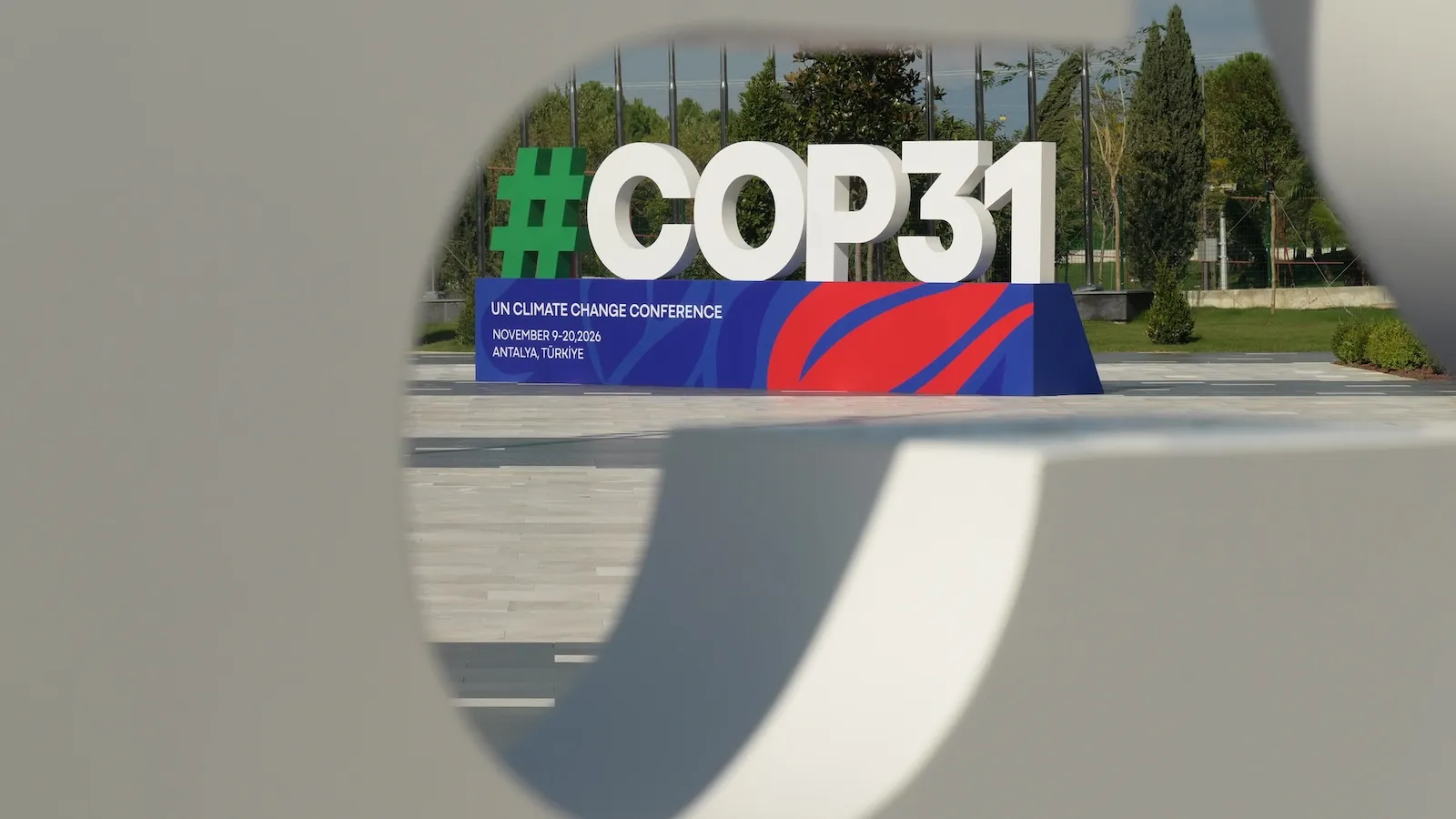
World leaders, climate diplomats, and international civil society delegates converged in the Mediterranean coastal city of Antalya, Turkey, on Monday for the United Nations’ 31st Conference of the Parties, commonly referred to as COP31. This year’s summit opens in the shadow of yet another punishing twelve months of unprecedented climate-driven catastrophes across the globe. From relentless, multi-continental forest fires that ravaged ecosystems in Canada, Indonesia, and Brazil to extreme, prolonged heat waves that precipitated more than 50,000 heat-related deaths across Europe, the physical manifestations of a warming planet have become a devastating routine.
Compounding these disasters was a catastrophic glacial lake outburst flood in Nepal, triggered by rapid high-altitude melting, which claimed more than 1,500 human lives and inflicted nearly $5 billion in infrastructure and economic damages. Yet, even as the human and financial toll mounts, the diplomatic landscape inside the conference halls is markedly subdued. COP31 is taking place against a sobering backdrop: it is the first major U.N. climate summit since the release of scientific reports confirming the absolute inevitability of temporarily, if not permanently, breaching the critical 1.5-degree Celsius (2.7-degree Fahrenheit) threshold of global warming above pre-industrial levels.
A Shifting Baseline: The Reality of Crossing 1.5 Degrees
For decades, the 1.5-degree Celsius benchmark has served as the ultimate North Star for international climate ambition. Enshrined in spirit well before the landmark 2015 Paris Agreement, this threshold was established by climate scientists as a crucial boundary separating manageable climate disruption from catastrophic, irreversible planetary tipping points. Surpassing this benchmark, researchers have repeatedly warned, risks destabilizing vital Earth systems, including the Amazon rainforest, the Greenland ice sheet, and major boreal forest networks, setting in motion feedback loops that could accelerate warming beyond human control.
The realization that this threshold is now virtually certain to be breached in the near term has cast a pall over the Antalya talks. Few institutional observers anticipate that COP31 will deliver a breakthrough comparable to the Paris Agreement in 2015 or the historic "transition away from fossil fuels" language secured at COP28 in Dubai. Instead, the summit is widely characterized as a "roll-up-your-sleeves" implementation meeting.
"There’s a whole bunch of decisions that have to be taken, but none of them on their own is going to make headlines," observed Kaveh Guilanpour, vice president of international strategies for the nonprofit Center for Climate and Energy Solutions. According to Guilanpour, the primary objective of the official agenda is to methodically chip away at technical workstreams initiated during previous summits rather than attempting to forge sweeping new political compacts.
The Chronology and Architecture of the Paris Agreement Cycle
To understand the muted expectations surrounding COP31, analysts point to the structural rhythm of the United Nations Framework Convention on Climate Change (UNFCCC) process. The international climate regime operates on a multi-year cyclical timeline, anchored primarily by the five-year Global Stocktake mechanism mandated by the Paris Agreement.
- 2015 (COP21): The adoption of the Paris Agreement, establishing the foundational architecture for national climate pledges (Nationally Determined Contributions, or NDCs).
- 2021 (COP26): Finalized the operational rulebook of the Paris Agreement, often called the Paris Rulebook, enabling full implementation.
- 2023 (COP28): Concluded in Dubai with a historic consensus calling on nations to transition away from fossil fuels in energy systems, alongside the operationalization of the Loss and Damage Fund.
- 2024 (COP29): Focused heavily on climate finance architectures, resulting in contentious debates over post-2025 financial targets.
- 2025 (COP30): Convened in Belém, Brazil, where nations debated adaptation metrics and the ongoing implementation of previous pledges.
- 2026 (COP31): Opening in Antalya, Turkey, functioning explicitly as an "implementation COP" focused on foundational mechanics rather than headline-grabbing targets, serving as a direct bridge toward the next major Global Stocktake set to conclude at COP33.
Industry experts argue that viewing every single annual conference through the lens of generating historic breakthroughs is a structural flaw of the modern climate regime. Erika Lennon, a senior attorney for the nonprofit Center for International Environmental Law, notes that the perpetual cycle of high expectations often reduces the summits to performative spectacles.
"We seem to be trapped in this one-year cycle of expecting a historic outcome every year," Guilanpour noted. "What we should be thinking about is a so-called ‘big COP’ every five years." In this context, COP31 acts as a critical transitional bridge, setting the technical and administrative groundwork necessary for the success of future stocktakes.
The "Housekeeping" Agenda: Nuts and Bolts of Implementation
Rather than negotiating grand new emissions-reduction targets, delegates in Antalya are devoting the majority of their working hours to technical housekeeping. Key items on the formal agenda include laying the groundwork for the next iteration of the Global Stocktake, which evaluates collective progress toward Paris Agreement goals.
Furthermore, delegates are attempting to establish standardized metrics for the "global goal on adaptation," a framework established at prior summits to measure societal resilience against extreme weather, rising seas, and agricultural disruptions. Discussions are also underway regarding the potential extension of the "mitigation work programme," an initiative launched in 2022 designed to spur accelerated emissions reductions globally.
Another core priority for developing nations is the formal establishment of the "just transition mechanism," first heavily debated in Belém. This mechanism aims to coordinate international support for workers and communities economically dependent on fossil fuel extraction and combustion, providing pathways for job retraining, economic diversification, and the transfer of green technologies from developed to developing economies.
David Waskow, International Climate Initiative director for the World Resources Institute, emphasized the unglamorous nature of these negotiations. "This is a sort of roll-up-your-sleeves-and-get-work-done COP," Waskow said. While these items lack the populist appeal of emissions caps or financing targets, they are viewed by legal and environmental experts as the foundational plumbing required to make any future climate treaty enforceable and effective.
The Perennial Crisis of Climate Finance
Underpinning nearly every technical discussion in Antalya is the chronic, unresolved issue of international climate finance. Wealthy industrialized nations face intense scrutiny from developing economies for failing to deliver on previously promised financial flows intended to support adaptation and low-carbon transitions.
The urgency of this funding gap was underscored starkly just weeks before the summit. In August, catastrophic flooding in Nepal triggered the inaugural financial disbursement from the U.N. Fund for Responding to Loss and Damage. However, the payout amounted to a mere $21.6 million—representing less than 1 percent of the total economic and structural damages sustained by the country.
The financial capacity of the fund itself remains severely constrained. While approximately $826 million has been formally pledged by donor nations, only about $450 million has actually been delivered to date. Overall, the fund falls drastically short of the multi-billion-dollar annual requirements facing vulnerable nations across the Global South.
Developing countries successfully lobbied to establish a dedicated work stream on climate finance on the COP31 agenda. This platform provides an avenue to discuss aligning global financial flows with the objectives of Article 2 of the Paris Agreement, as well as operationalizing a vague commitment made last year to triple adaptation financing by 2035.
However, the geopolitical and economic climate among donor nations is deeply unfavorable for new funding commitments. Wealthy countries are currently grappling with high domestic inflation, sluggish economic growth, ongoing international conflicts, and severe energy insecurity. In the United States, the federal government has effectively halted all international climate finance contributions following policy shifts under the current administration.
Simultaneously, a confidential internal memo circulated among European Union member states revealed a widespread political reluctance to scale up foreign aid budgets. "Unfortunately, [donor nations] just wouldn’t support an increase in climate finance," Guilanpour stated, summarizing the austere mood among traditional financial contributors.
Fossil Fuels, National Interests, and Post-1.5 Realities
The role of fossil fuels remains one of the most contentious subtexts of the conference. Although COP28 marked a watershed moment by explicitly mentioning the need to transition away from fossil fuels, subsequent summits have struggled to translate that rhetorical commitment into concrete regulatory milestones. Observers at COP31 hope to address this unfinished business, particularly in light of the post-1.5 degree warming reality.
Yet, structural contradictions within the summit’s leadership complicate these discussions. COP31 is co-hosted by Turkey and Australia—two nations whose domestic economies remain heavily reliant on coal, oil, and gas production and export. Economic analysts argue that this national economic exposure diminishes the moral authority and leadership capacity required to force aggressive global phase-out schedules.
Axel Michaelowa, an economist at the University of Zurich, noted that Turkey has instead championed a separate "action agenda" focused on an ambitious goal: electrifying 35 percent of global energy consumption by 2035, up from roughly 23 percent today. Crucially, this electrification target does not mandate that the underlying electricity generation must originate strictly from renewable energy sources, rendering it far more palatable to fossil-fuel-producing nations.
High-level diplomatic declarations and compromises are expected to be consolidated into the summit’s "cover decision"—a non-binding political text adopted by consensus at the conclusion of the conference. While cover decisions carry no legal enforcement mechanisms, they wield substantial political weight, serving as directional signposts for future negotiations. Historically, drafting these texts has triggered intense, round-the-clock diplomatic showdowns over single-word phrasing regarding energy transitions.
Evaluating the Efficacy of the U.N. Climate Regime
As COP31 progresses through its scheduled two-week timeline, critical questions persist regarding the long-term viability of the COP process itself. Critics argue that the current multilateral framework is overly bureaucratic, prone to corporate greenwashing, and incapable of producing binding mandates that scale with the speed of global warming.
Erika Lennon of the Center for International Environmental Law expressed ongoing concern that the summits frequently devolve into a "circus" where participating governments prioritize flashy, non-binding press announcements over rigorous domestic policy implementation. Nevertheless, legal experts maintain that the UNFCCC remains the sole universal forum capable of bringing nearly 200 sovereign nations to the negotiating table. To improve its efficacy, reformers have repeatedly called for stricter conflict-of-interest guidelines, streamlined voting protocols, and enhanced accountability mechanisms.
Ultimately, independent policy analysts emphasize that the burden of climate action extends far beyond the perimeter of U.N. conference centers. Rachel Cleetus, climate program director for the Union of Concerned Scientists, argued that placing the entirety of the blame for global emissions stagnation on the international climate regime is fundamentally misplaced.
"These kinds of large multilateral negotiations are just one part of what it will take," Cleetus said. "Then countries have to go home and act on what they’ve promised." As world leaders deliberate in Antalya, the true measure of COP31 will not be found in the rhetoric delivered from the plenary podium, but in whether national governments translate the summit’s technical bookkeeping into aggressive, domestic emissions reductions before the window to stabilize the global climate closes entirely.