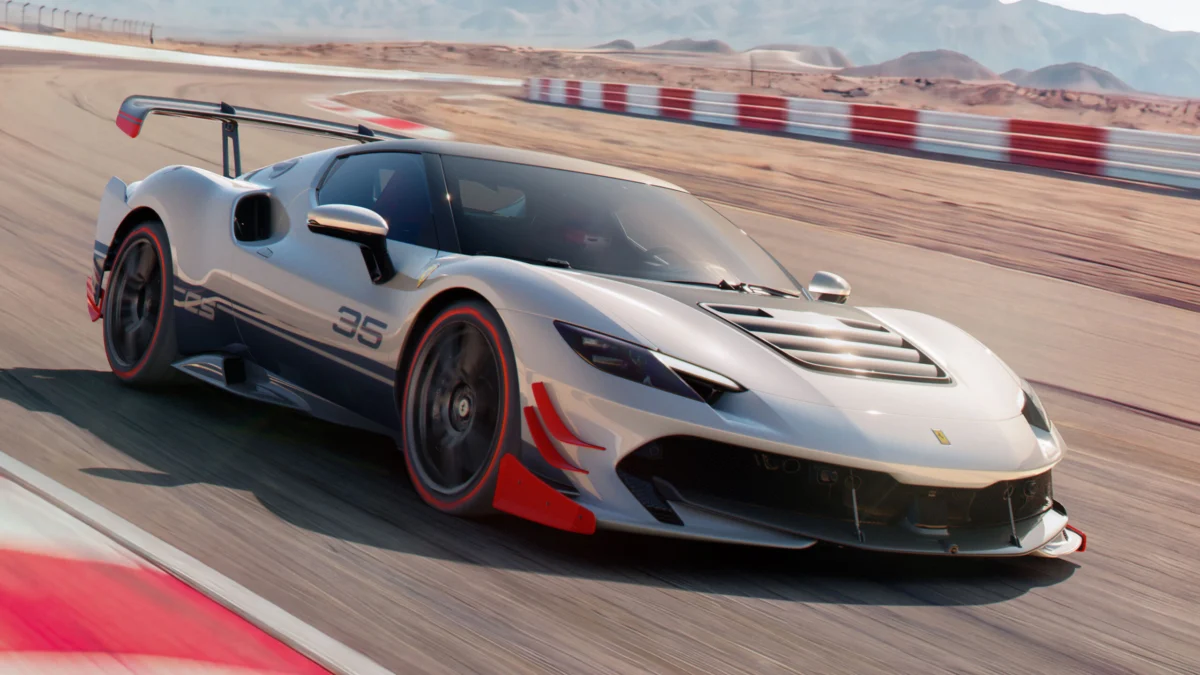
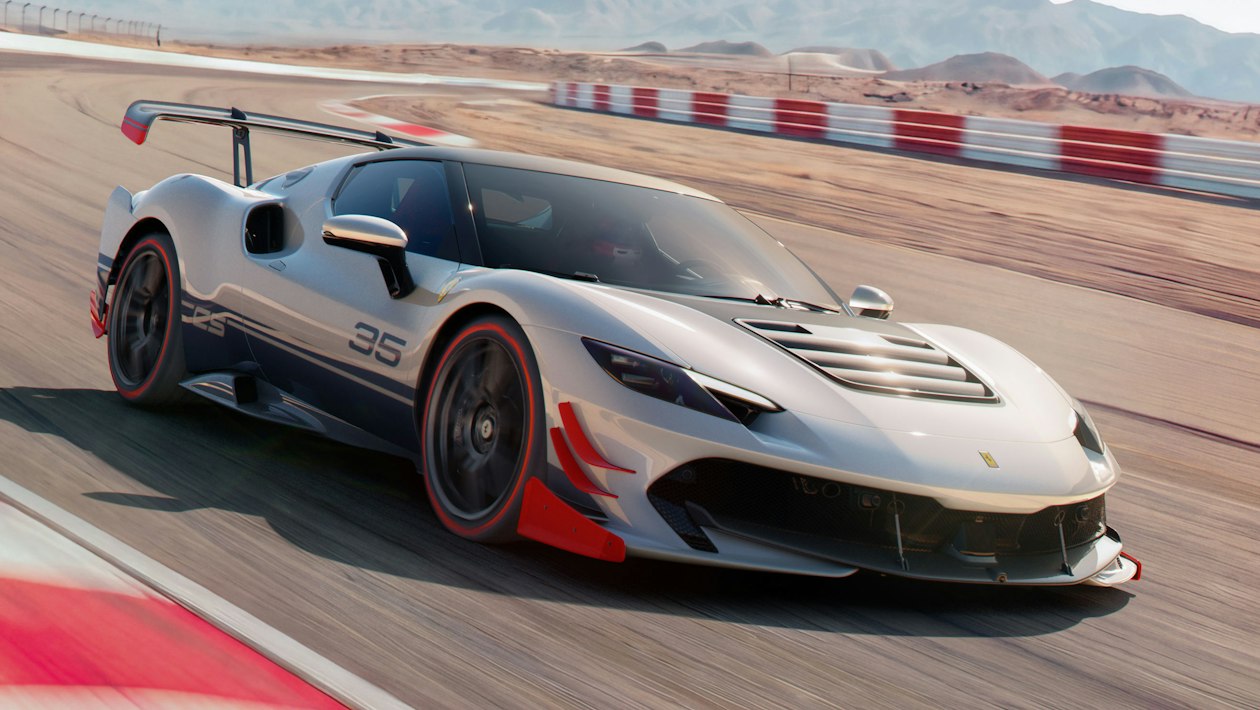
Ferrari has officially unveiled the 296 Challenge Stradale, a vehicle that marks a significant pivot for the Maranello-based manufacturer. Debuting at the 2026 Ferrari Finali Mondiali in Barcelona—the brand’s annual season-ending celebration of its racing heritage—the car revives a storied nameplate last seen over two decades ago. Designed as a stripped-back, high-performance evolution of the 296 series, the Challenge Stradale sheds its plug-in hybrid (PHEV) architecture in favor of a singular, combustion-focused engineering philosophy. By removing the heavy battery and electric motor components, Ferrari has created what it describes as the most direct, unadulterated link between its track-only racing machines and its road-going production portfolio.
The introduction of this model arrives at a critical juncture for Ferrari’s mid-engine V6 lineup. While the standard 296 GTB has been a technical tour de force, market analysts have observed a cooling in demand for the complex, heavy PHEV variant among purists who prioritize analog feedback and reduced mass. The 296 Challenge Stradale serves as the direct answer to this demographic, opting for a lighter, more aggressive setup that emphasizes mechanical engagement over electric efficiency.
Engineering and Performance Specifications
At the heart of the new Challenge Stradale is a heavily revised 3.0-liter twin-turbocharged V6 engine. By decoupling the powertrain from the hybrid assistance system found in the standard GTB, Ferrari engineers have focused on refining the internal combustion unit to reach a peak output of 661bhp. The engine is tuned to deliver its maximum performance right up to an 8,500rpm limiter, with a peak torque figure of 740Nm. Power is delivered exclusively to the rear wheels via an eight-speed dual-clutch transmission, which has been recalibrated for faster, more tactile shifts suited for high-speed circuit driving.
The most profound impact of removing the hybrid hardware is seen in the car’s mass reduction. The Challenge Stradale achieves a dry weight of 1,330kg—a reduction of 140kg compared to its predecessor. This significant weight shedding, combined with aerodynamic enhancements, allows the car to sprint from 0-62mph in just 2.8 seconds. This performance figure mirrors that of the track-focused 296 Speciale, effectively making the Challenge Stradale one of the fastest road-legal vehicles to ever emerge from the Maranello factory.

Aerodynamic Sophistication and Design Evolution
The aesthetic and functional design of the 296 Challenge Stradale is intrinsically linked to the concurrent launch of the 296 Challenge EVO, the company’s new track-only race car. Ferrari designers adopted a “form follows function” approach, stripping away superfluous body elements to expose the vehicle’s technical capabilities. The front end is dominated by an oversized splitter and prominent stacked aero vanes designed to manipulate airflow around the front wheels. A large technical bonnet insert manages radiator air exhaust, ensuring thermal efficiency during sustained track usage.
Perhaps the most striking visual feature is the fixed rear wing, which, when combined with a fully closed, flat undertray, generates 617kg of downforce at 155mph. This represents a 72% increase in downforce compared to the standard 296 GTB, providing the high-speed stability required for technical circuit driving. To support this performance, the vehicle is equipped with semi-active dampers and offers a choice of specialized rubber: the Pirelli P Zero R for road-biased high performance or the Trofeo RS for pure track dominance.

The rear fascia has also been redesigned to house a high-performance exhaust system. The twin exhaust tips, integrated into a massive rear diffuser, have been enlarged to reduce back-pressure, which not only improves engine breathing but also enhances the V6’s high-frequency acoustic signature. Ferrari has implemented a new in-cabin sound calibration that allows the driver to modulate the balance between intake and exhaust noise, further increasing the visceral nature of the driving experience.
Interior Philosophy: Minimalism as a Tool
Inside the cockpit, the 296 Challenge Stradale maintains the core layout of the 296 series while adhering to a strict weight-saving regimen. Comfort-oriented features such as armrests and storage pockets have been removed. The carpeting has been eliminated in favor of exposed chassis elements, and the door panels have been reconstructed from lightweight carbon fiber.

In a move to cater to both professional drivers and track-day enthusiasts, Ferrari offers optional “tubular” carbon-fiber seats that reduce weight by up to 25% per seat compared to standard bucket seats. Despite this intense focus on shedding weight, the manufacturer has retained a small degree of daily usability, including a cup-holder and a wireless charging pad, acknowledging that owners will likely drive these vehicles to and from circuits.
Technological Integration: Predictive Slip Control
The Challenge Stradale introduces a significant advancement in Ferrari’s vehicle dynamics software: a new predictive slip control function integrated into the Manettino drive-mode selector. This system is specifically optimized for track environments and represents a first for the brand’s road-going cars. By working in tandem with the latest evolution of the ABS Evo system, the software provides subtle, near-imperceptible interventions that allow the driver to maximize braking potential and cornering speeds.

During internal testing at the Fiorano test track, this combination of mechanical hardware and software intervention allowed the 296 Challenge Stradale to clock a lap time of 1:18.5, an improvement of half a second over the 296 Speciale. This achievement underscores the effectiveness of the vehicle’s holistic design, where every component, from the engine tuning to the tire compound, is synchronized for maximum circuit efficiency.
Context and Broader Market Implications
The launch of the Challenge Stradale at the 2026 Finali Mondiali is no coincidence. The event serves as the ultimate stage to showcase the symbiotic relationship between Ferrari’s GT racing division and its road-car production team. By presenting the Challenge Stradale alongside the 296 Challenge EVO, Ferrari is signaling a clear strategy: to maintain its competitive edge in the luxury performance segment by offering “race-car-for-the-road” experiences that cannot be replicated by mass-produced competitors.
Industry analysts suggest that the decision to revert to a non-hybrid setup for this flagship model is a tactical move to maintain market relevance among the brand’s most loyal, high-net-worth clientele. While the automotive industry moves rapidly toward full electrification, Ferrari’s strategy appears to be a dual-track approach: utilizing hybrid technology for performance and efficiency in the core GT range, while reserving the purest internal combustion configurations for its limited-run, driver-focused specials.
Economic and Availability Outlook
While Ferrari has yet to disclose official pricing, industry experts anticipate that the 296 Challenge Stradale will comfortably exceed the £400,000 threshold. Given the base price of the 296 Speciale at approximately £359,779, the addition of extensive carbon-fiber components, specialized aerodynamics, and the prestige of the Challenge Stradale moniker makes a significant price hike inevitable.
Access to the vehicle will follow the traditional Ferrari hierarchy. Potential buyers will likely be subject to a rigorous selection process, requiring a history of previous Ferrari ownership and a demonstrated commitment to the brand’s community and track-day programs. With production expected to commence in 2027, the waiting list is already projected to be substantial, confirming the model’s status as a future collector’s item rather than a standard showroom offering.
As the automotive sector navigates a complex transition period, the 296 Challenge Stradale stands as a testament to Ferrari’s commitment to internal combustion performance. By prioritizing weight reduction, aerodynamic downforce, and chassis feedback, the company has created a machine that serves as a bridge between the glory of its past racing achievements and the technological demands of the future. Whether it remains the "most direct link to a race car" in the years to come will depend on how the manufacturer balances its electrification mandates with the expectations of its most dedicated performance enthusiasts.