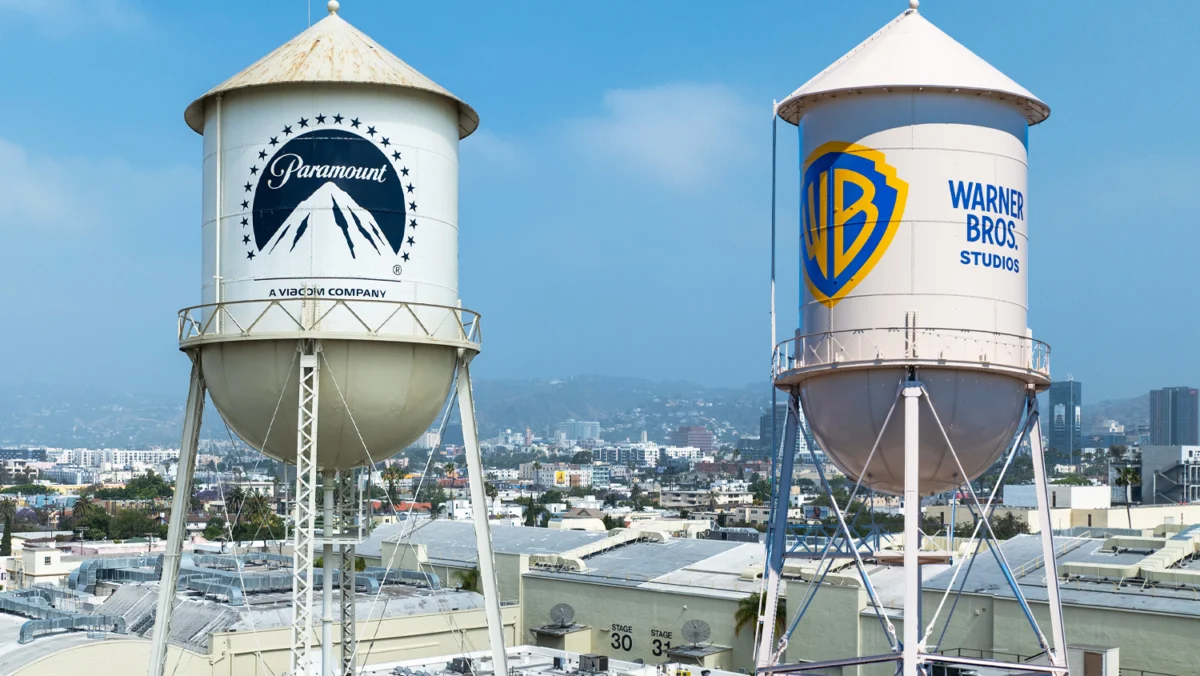
Hollywood breathed a collective sigh of relief on Monday as a major legal and corporate showdown reached its definitive conclusion, securing the immediate future of the entertainment industry within the state of California. Paramount, which is currently poised to finalize its high-profile acquisition of Warner Bros. Discovery (WBD), has officially agreed to a settlement with a coalition of 12 state attorneys general who had previously filed an antitrust lawsuit to block or heavily condition the massive media consolidation. Under the terms of the newly minted consent decree, the combined entertainment conglomerate is legally bound to preserve both the historic Paramount Pictures lot on Melrose Avenue in Los Angeles and the sprawling Warner Bros. studio lot in Burbank for a minimum of five years.
The agreement brings a sudden and decisive halt to weeks of escalating speculation, anxiety, and political brinkmanship that had gripped the Southern California production community. Rumors had swirled throughout the entertainment sector that the newly formed corporate entity might bypass California altogether, shifting its primary operations and executive leadership to business-friendly states such as Texas, Georgia, or Tennessee. Those fears were definitively put to rest on Monday when California Attorney General Rob Bonta held a press conference detailing the settlement terms, swiftly followed by a public clarification from Paramount Chairman and CEO David Ellison. Together, their statements cemented Los Angeles as the ongoing epicenter of the multi-billion-dollar media empire.
Chronology of the Antitrust Dispute and Settlement Negotiations
The legal battle that precipitated Monday’s settlement had been brewing for months, tracking parallel to the complex financial and regulatory maneuvers required to orchestrate the merger between Paramount and Warner Bros. Discovery. As the companies moved closer to integrating their vast libraries of intellectual property, television networks, and cinematic assets, antitrust regulators across the nation scrutinized the potential monopolistic implications of the union.
By late summer, a coalition of 12 state attorneys general, led aggressively by California’s top prosecutor, formally filed an antitrust lawsuit against Paramount. The legal challenge targeted not only the reduction of marketplace competition in the media sector but also raised alarm bells regarding potential job losses, studio closures, and the gradual erosion of California’s historic infrastructure for film and television production.
The pressure intensified dramatically as a self-imposed October 1 deadline loomed closer. Under the terms of the pending merger agreement between Paramount and WBD, a costly "ticking fee" was scheduled to activate on that date, imposing financial penalties on the deal if it remained bogged down in litigation or regulatory red tape. Seizing upon this financial leverage, whispers emerged that Paramount had floated a potential ultimatum: if the state attorneys general did not agree to a favorable settlement by October 1, the company might seriously consider relocating its corporate headquarters outside of California to mitigate regulatory friction and operational costs.
The turning point arrived over the weekend, as legal teams worked frantically to draft a consent decree that would satisfy the antitrust concerns of the 12 state prosecutors without derailing the financial architecture of the merger. The resulting agreement was formally announced on Monday morning, averting a protracted courtroom battle that could have dragged on for years and thrown the future of two of Hollywood’s most storied studios into legal limbo.
Key Terms of the Consent Decree and Studio Lot Protections
The core of Monday’s settlement revolves around strict operational covenants designed to protect physical infrastructure, local employment, and industry traditions in Southern California. The legal text of the consent decree explicitly mandates that the merged corporate entity "shall not sell or close the Paramount or Warner Bros. Lots and shall use commercially reasonable efforts to operate the Lots in a manner consistent with past practices, including leasing use to third parties and producing films and television shows."
For the next five years, both the Melrose Avenue property—which has served as the home of Paramount Pictures since 1926—and the Burbank lot—a foundational cornerstone of Warner Bros. history since 1928—will enjoy federally and state-enforced protection against liquidation, repurposing, or real estate development.
During his Monday morning press conference, California Attorney General Rob Bonta emphasized the strategic importance of locking these physical assets into the legal settlement. "We wanted those lots to be protected, they are part of the broader solution, and I believe that the future of this merged company is in Los Angeles for many years to come for the foreseeable future," Bonta told reporters.
The inclusion of these protective clauses directly addresses one of the primary anxieties harbored by guilds, labor unions, and independent producers: the fear that corporate consolidation would lead to studio lot consolidation, the selling off of historic soundstages for commercial real estate developments, and a subsequent contraction in physical production capacity within the greater Los Angeles area.
Addressing the Headquarters Confusion: David Ellison Steps In
While the five-year moratorium on studio lot closures was explicitly written into the legal text of the consent decree, initial public statements regarding the physical location of the combined company’s corporate headquarters left a brief window of ambiguity.
During the morning press conference, reporters pressed Attorney General Bonta on whether the official headquarters of the newly merged media giant would remain anchored in Los Angeles. Bonta expressed confidence, stating, "I believe that will be the case, that they will have their headquarters in California for the foreseeable future," while simultaneously acknowledging that headquarters placement was "not part of the deal" and anticipating public statements from corporate leadership to clear up the matter.
Initially, those public statements were noticeably absent. When Paramount Chairman and CEO David Ellison released his official statement and internal company memo regarding the antitrust settlement on Monday morning, he focused heavily on strategic growth, creative output, and production volume. Ellison’s memo highlighted the combined company’s ambitious commitment to producing more than 30 theatrical motion pictures a year, alongside a broader initiative to expand domestic film production capabilities across the United States. However, the memo did not explicitly state the geographic home of the executive suites.
The omission sparked renewed chatter across trade publications and industry circles. Recognizing the need to dispel any remaining uncertainty, Ellison stepped in just hours later with an unequivocal clarification.
"Let me be clear: the newly merged company will be headquartered in Los Angeles," Ellison stated firmly. "We aren’t going anywhere. Our history is here and this is where our future is being built."
The prompt intervention effectively slammed the door on months of speculation regarding a potential corporate exodus to Texas, Georgia, or Tennessee, reaffirming the leadership’s dedication to maintaining deep roots in the traditional capital of American cinema.
Broader Industry Implications and Future Outlook
The resolution of the Paramount-WBD antitrust lawsuit carries sweeping implications for the broader media landscape, signaling both a regulatory tolerance for mega-mergers under strict behavioral remedies and a renewed recognition of the economic interdependence between major studios and traditional production hubs.
For decades, California has faced mounting pressure from competing states offering aggressive tax incentives, cash rebates, and lower operational overhead to lure film and television studios away from Los Angeles. States like Georgia, New York, and Texas have built robust entertainment economies by attracting runaway production. The threat—real or perceived—that a corporate titan like Paramount could pivot its headquarters and major operations out of state served as a stark reminder of the fragile nature of California’s entertainment hegemony.
By legally binding the company to the Melrose and Burbank lots for half a decade, the settlement provides a stabilizing bridge for thousands of below-the-line crew members, craftspeople, equipment rental houses, and local service providers who rely on steady, local production cycles. Furthermore, Ellison’s explicit promise to ramp up feature film production to upwards of 30 movies annually suggests that the newly scaled entity intends to utilize its physical infrastructure aggressively rather than scaling back operations to cut costs.
As the dust settles on the antitrust litigation, industry analysts will be watching closely to see how the operational integration of Paramount and Warner Bros. Discovery unfolds in practice. For now, however, the immediate crisis has been averted. Hollywood’s legendary studio lots remain protected, executive leadership has planted its flag firmly in Southern California soil, and the long-standing cinematic heritage of Los Angeles is guaranteed a secure foundational base as the industry navigates its next major evolutionary chapter.