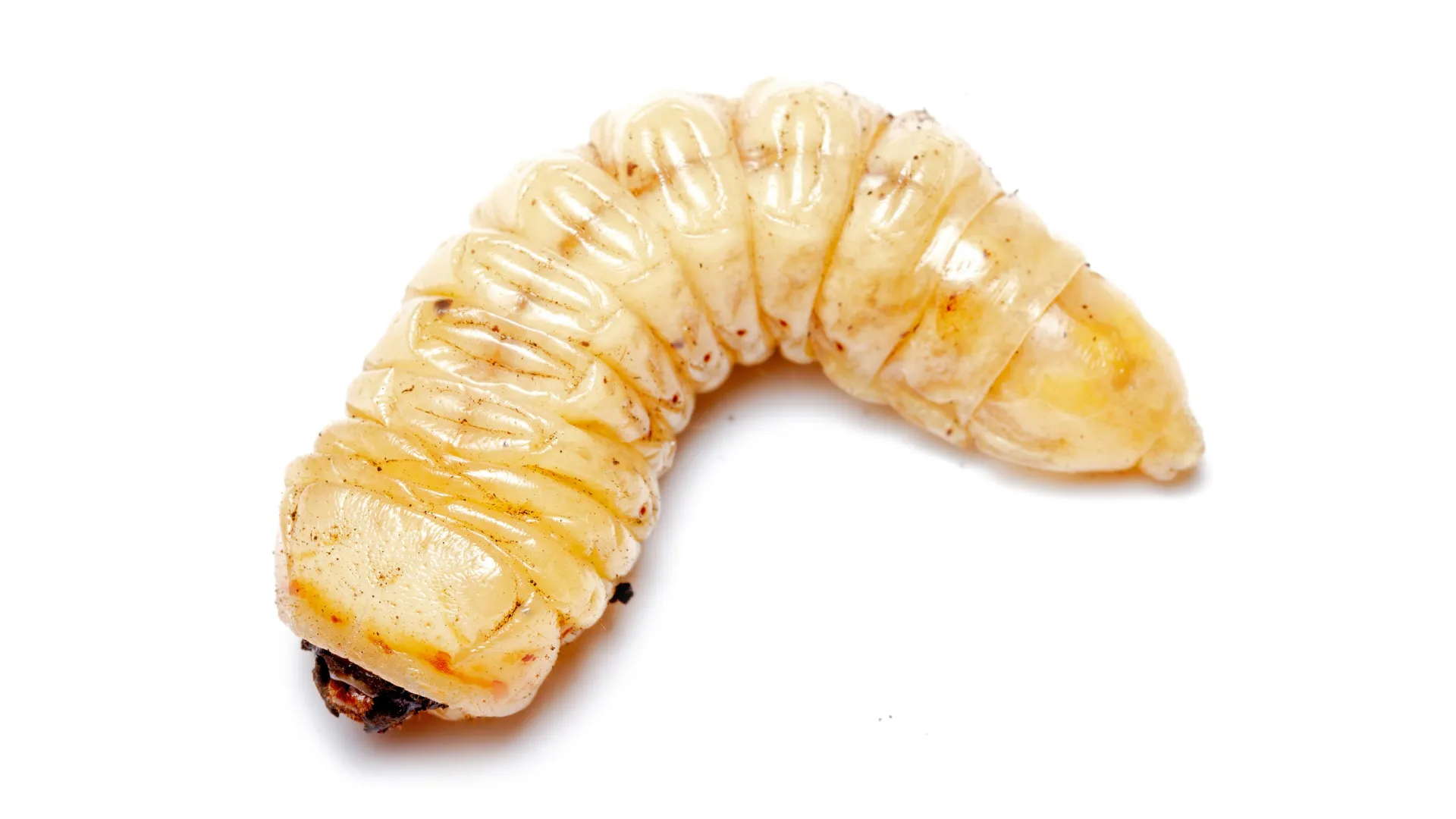
North Carolina’s multi-million-dollar blueberry industry, a staple of the state’s agricultural economy, is currently confronting a subterranean menace that has eluded entomologists and growers for over a decade. Researchers at North Carolina State University (NCSU) have finally identified the culprit behind mysterious root-system failures: Prionus imbricornus, a formidable longhorn beetle whose larvae spend their lives systematically dismantling the root architecture of healthy blueberry bushes. While this identification marks a critical breakthrough in agricultural science, it also sounds an alarm regarding the lack of chemical defenses available to combat a pest that operates entirely out of sight.
The discovery, recently published in the Journal of Integrated Pest Management, provides the definitive scientific confirmation that the state’s blueberry farmers have been looking for since initial reports of unexplained plant mortality began circulating in 2010. By utilizing advanced genetic barcoding, the research team has finally closed the case on a mystery that has confounded experts due to the extreme difficulty of studying insects that dwell deep within the soil.
A Chronology of an Underground Crisis
The story of the Prionus infestation in North Carolina is one of quiet, persistent attrition. For more than thirteen years, growers in the state’s primary blueberry-producing regions—specifically Pender, Sampson, Bladen, and New Hanover counties—have observed their bushes succumbing to root damage that did not align with common soil-borne pathogens or standard nematode infestations.
The timeline of this investigation reveals the immense complexity of identifying soil-dwelling pests:
- 2010–2012: Early reports from blueberry growers began to emerge, citing dying bushes and erratic plant health. Field observations confirmed that larvae were feeding on root systems, but the specific species remained unidentified.
- 2013–2019: Researchers attempted visual identification, but found it unreliable. Because larval stages of different longhorn beetle species share a striking physical resemblance, entomologists could not definitively label the pest, leading to potential misapplications of pest management strategies.
- 2020–2022: A formal research initiative led by the NCSU College of Agriculture and Life Sciences began in earnest, focusing on active surveillance across six major blueberry farms.
- 2023: The team implemented sex-pheromone-baited traps to capture adult beetles, successfully linking them to the larvae via DNA barcoding.
- 2024: The publication of findings confirmed P. imbricornus as the primary threat, transitioning the focus from identification to mitigation.
The Biology of the Intruder
Prionus imbricornus, commonly known as the tile-horned prionus, is a species of longhorn beetle characterized by its imposing size and distinctive antennae. While the adult beetles are impressive to behold, they do not feed on the crops themselves. The true threat lies with the female, which deposits her eggs in the soil, often near the base of hardwood trees or woody shrubs.
Upon hatching, the larvae enter a period of prolonged development, burrowing into the root systems of the host plant. These larvae can grow to an astounding five inches in length. During their developmental phase, they consume the cambium and xylem of the roots, effectively cutting off the plant’s ability to transport water and nutrients. In many cases, the damage is irreversible; by the time a grower notices a decline in bush vigor or canopy health, the root system has already been severely compromised or destroyed.
The challenge, according to Kenneth Geisert, the lead author of the study and a graduate student at NC State, is that these insects are masters of evasion. Because they live entirely underground, they are protected from most environmental stressors and, crucially, from most conventional surface-applied insecticides.
The Risks of Misidentification and Improper Management
One of the most significant aspects of the research is the warning provided by Geisert regarding the dangers of "guesswork" in pest management. In the absence of definitive identification, farmers have historically relied on anecdotal evidence or assumptions based on the presence of other beetle species.
"Before now, researchers often just assumed the species of Prionus on their commodities based on adult identification," Geisert noted. This leads to a hazardous ripple effect in agricultural ecology. If a farmer treats for a trunk-boring beetle while the actual pest is a root-feeding larva, they are not only wasting financial resources but also introducing chemicals into the environment that may have unintended consequences for non-target species, such as pollinators or beneficial soil microbes.
The study underscores that effective Integrated Pest Management (IPM) is entirely dependent on accurate taxonomy. By knowing precisely which species is attacking the roots, entomologists can now design targeted strategies that focus on the specific life cycle, pheromone signals, and environmental sensitivities of P. imbricornus.
The Path Toward Mitigation: A New Regulatory Hurdle
While the scientific community is celebrating the identification of the pest, the reaction among the agricultural extension community is one of cautious concern. Lorena Lopez, an assistant extension professor in the Department of Entomology and Plant Pathology at NCSU and a co-author of the paper, emphasized the "double-edged sword" nature of the discovery.
"On one hand, it’s very important that we know which species we’re dealing with," Lopez explained. "On the other, North Carolina was the first state to ever report Prionus infestation in blueberries, and there are no insecticides currently labeled against this pest in blueberries."
This regulatory gap represents a significant economic vulnerability. Because the beetle was not previously recognized as a primary threat to commercial blueberry production, there is currently no legal framework or "label" for growers to apply specific, high-efficacy insecticides to their fields to target this specific insect. The process of getting an insecticide labeled for a specific crop and a specific pest is a rigorous, multi-year endeavor involving the Environmental Protection Agency (EPA) and state-level agricultural authorities to ensure safety and efficacy.
Future Outlook and Strategic Research
In response to this void, Lopez and her colleagues have initiated a secondary phase of research focused on experimental insecticide trials. The goal is to determine which chemical compounds—or biological control agents—can be effectively delivered into the root zone without damaging the plants or the fruit.
A major focus of these upcoming trials is the timing of application. By better understanding the reproductive cycle of the P. imbricornus—specifically when eggs are deposited and when larvae are most vulnerable to treatment—researchers hope to develop a preventative strategy rather than a reactionary one. If they can disrupt the life cycle at the egg or early larval stage, they may be able to save young blueberry bushes before they sustain the critical root damage that leads to plant death.
Implications for the Agricultural Industry
The identification of this pest is a reminder of the evolving nature of agricultural threats. As climate patterns shift and monoculture farming practices remain standard, pests that were once considered niche or peripheral can rapidly emerge as major economic threats.
For the North Carolina blueberry industry, the stakes are high. The state ranks among the top producers of highbush blueberries in the United States, providing a critical supply for domestic and international markets. A pest that targets the root system—the most fundamental component of the plant’s survival—could lead to widespread yield reductions if left unmanaged.
Furthermore, this study serves as a call to action for increased investment in diagnostic tools for agricultural extension services. The fact that it took over a decade to identify a single species of beetle highlights the need for better funding for taxonomy, genetic analysis, and field-based entomological research.
As the research team moves forward, their work will likely be viewed as a foundational document for future IPM strategies. By providing a clear roadmap for identification, the NCSU team has given growers the information they need to demand and develop new, safe, and effective tools. Until those tools are available, the industry remains in a precarious position, relying on early detection and the continued vigilance of farmers who now finally know exactly what is hiding beneath their fields.
The research, which also included contributions from Gareth Powell, director of the NCSU Insect Museum, stands as a testament to the power of combining traditional field observation with cutting-edge genetic technology. While the war against P. imbricornus is far from over, the first battle—the battle for knowledge—has been decisively won.