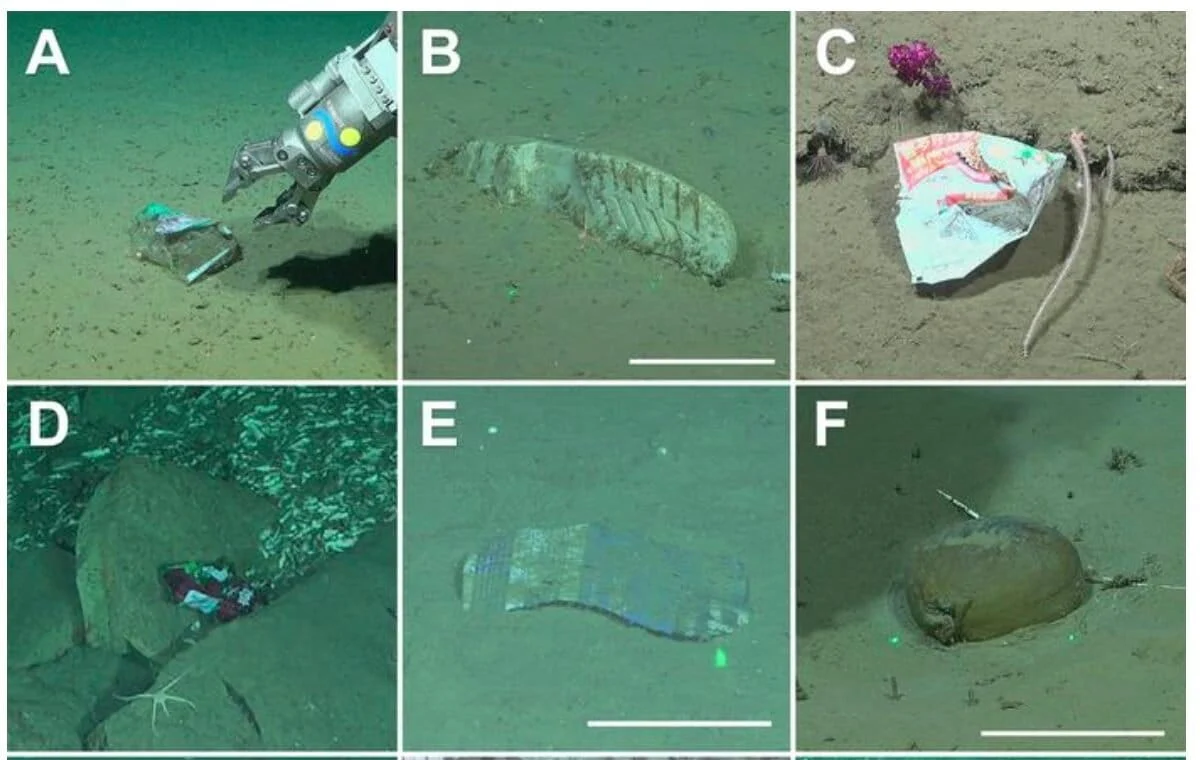
The discovery of anthropogenic debris in the Mar del Plata Submarine Canyon, located approximately 250 kilometers off the coast of Argentina, serves as a sobering testament to the reach of human activity. While researchers had set out to document the unique biodiversity and ecological health of this V-shaped underwater feature, the expedition quickly pivoted to address the overwhelming presence of non-biodegradable waste. The findings, published in the journal PLOS ONE, provide critical data on how far-reaching the global plastic crisis has become, penetrating even the most inaccessible depths of the Southwestern Atlantic.
The Anatomy of a Deep-Sea Expedition
The research mission, led by marine biologists including Diego Urteaga of Argentina’s Bernardino Rivadavia Museum of Natural Science, utilized a Remotely Operated Vehicle (ROV) to survey the seafloor. ROVs are essential in deep-sea exploration, acting as robotic extensions of the human hand at depths where pressure, cold, and darkness render human presence impossible.
The team conducted 17 systematic dives, scanning the rugged topography of the canyon. The mission was initially conceived as a purely biological survey—an attempt to map the species composition and habitats of this remote ecosystem. However, the presence of human waste became an unavoidable reality. During the survey, the team identified 29 distinct pieces of litter. The inventory was both varied and alarming: it included single-use plastic bags, snack wrappers, a plastic cup, discarded fishing gear, and even a solitary rubber boot. The most staggering find occurred at a depth of 3,814 meters (12,513 feet), where a piece of plastic tissue-paper packaging was discovered, resting silently on the seafloor.
Chronology of Human Intrusion
The timeline of marine pollution is often categorized by the rapid expansion of plastic production since the mid-20th century. By the 1970s and 80s, marine debris became a recognized global environmental issue, but for decades, the deep sea was assumed to be a protected "sink" where human debris would be buried by sedimentation and remain inert.
The Mar del Plata study represents a recent chapter in this ongoing timeline. As the ROV descended through the water column, the researchers expected to see the pristine, sediment-covered slopes of the canyon. Instead, the first item captured by the high-definition cameras was a plastic bag entangled in the benthos. This moment marked a shift in the study’s focus, transitioning from a baseline assessment of marine life to an inadvertent audit of human negligence. The presence of these items at such extreme depths suggests that the accumulation of plastic is not a modern phenomenon but rather the result of decades of persistent oceanic dumping and atmospheric transport.
Statistical Context and Source Attribution
Global marine pollution statistics paint a grim picture. According to the European Environment Agency and various international maritime organizations, approximately 80% of marine litter is estimated to originate from land-based sources, reaching the ocean via riverine systems, coastal runoff, and wind transport.
However, the Mar del Plata study challenges the assumption that all deep-sea trash follows this land-to-sea trajectory. Because the canyon is situated far from the coastline and the debris is dominated by maritime-specific items—such as fishing ropes, synthetic nets, and hardware—the researchers have concluded that offshore activities, specifically commercial fishing, are a primary contributor in this particular region.
The presence of fishing-related debris at depths exceeding 3,000 meters suggests that the maritime industry’s impact is not limited to the surface or the shelf break. Lost, abandoned, or discarded fishing gear (ALDFG), often referred to as "ghost gear," accounts for a significant portion of the total mass of plastic in the world’s oceans. These materials are designed to be durable, meaning they persist for centuries, constantly trapping marine life and altering the chemistry of the seafloor as they slowly degrade into microplastics.

Ecological Implications: The Benthic Interaction
Perhaps the most concerning aspect of the research is the discovery that plastic does not exist in a vacuum within the deep sea. The study documented several instances of marine organisms interacting with the debris. Researchers observed a sea star clinging to a plastic bag, and fishing ropes that had been colonized by various benthic organisms.
This "colonization" of human debris presents a complex ecological puzzle. Scientists are currently debating whether these interactions are neutral, harmful, or, in rare instances, opportunistic. On one hand, plastic provides a hard substrate in an environment that may otherwise be dominated by soft sediment, potentially allowing certain species to colonize areas they otherwise could not reach. On the other hand, the chemical leaching of additives from plastics, the physical entanglement of fragile organisms, and the potential for ingestion pose significant threats to the long-term health of deep-sea communities. Because deep-sea species often have slow growth rates and long lifespans, the impact of these stressors may not be fully understood for generations.
Official Perspectives and Policy Needs
The scientific community, including the authors of the study, is calling for a more nuanced approach to marine waste management. Diego Urteaga emphasized that the findings necessitate a change in how we manage maritime operations. Improving the recovery of damaged fishing gear and implementing stricter regulations on the disposal of waste at sea are critical first steps.
"The overall composition provides evidence for a substantial contribution from activities at sea," Urteaga noted. "In the case of fishing-related debris, preventing gear loss and improving the recovery and disposal of damaged or unwanted fishing gear could be particularly important."
From a policy perspective, this study adds weight to the growing movement for a legally binding global treaty on plastic pollution. While international agreements exist, the enforcement of waste management in the "high seas"—areas beyond national jurisdiction—remains notoriously difficult. The Mar del Plata data provides the hard evidence needed to push for stronger monitoring of industrial fishing fleets and the mandatory tagging of commercial gear to improve accountability.
Broader Impact: The "Invisible" Crisis
The psychological impact of these findings is as significant as the biological one. The researchers described a profound sense of cognitive dissonance when viewing the extraordinary, alien-like beauty of the deep-sea ecosystem through their monitors, only to have that image interrupted by a common, discarded plastic wrapper. This contrast underscores the "Anthropocene" reality: there is no longer a place on Earth that remains untouched by human activity.
The deep sea, which covers the majority of our planet, has historically been viewed as a vast, mysterious frontier. It is now becoming a repository for the failures of modern consumption. As plastic waste continues to settle in the deep-sea canyons, trenches, and abyssal plains, it is effectively becoming a permanent part of the geological record.
Moving forward, the challenge for the international community is to reconcile the economic necessity of ocean-based industries with the urgent need for environmental preservation. The Mar del Plata study is not merely a record of waste; it is a call to action. It serves as a reminder that the deep sea is not an infinite void capable of absorbing our excess. Every plastic bag, every piece of discarded rope, and every rubber boot that makes its way to the bottom of a canyon represents a failure in the global supply chain, a lack of circularity in the economy, and a direct threat to the delicate biodiversity that sustains the health of the global ocean.
The study concludes that while we cannot easily retrieve the waste already resting in the depths of the Mar del Plata canyon, we have the capacity to stop the flow of new material. Through better technology, stricter international maritime standards, and a fundamental shift in how we value plastic, the next generation of deep-sea explorers might find the seafloor as the researchers had hoped to see it: a landscape of natural wonder, undisturbed by the artifacts of human life.