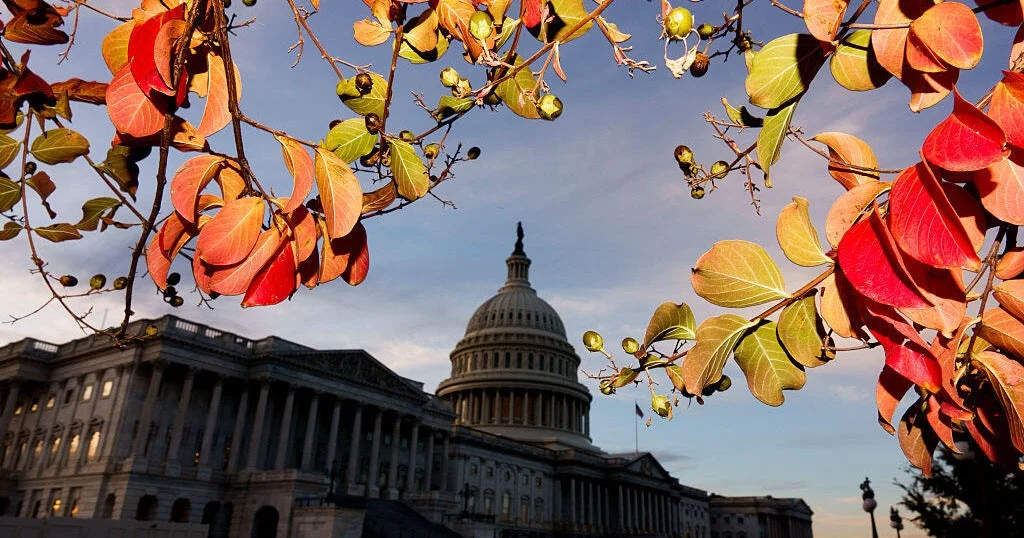
The political landscape of the United States has undergone a seismic shift following the 2026 midterm elections, resulting in a dramatic redistribution of power across Capitol Hill and state governments nationwide. As the dust settles on a cycle characterized by unprecedented Democratic gains in both chambers of Congress, key administration changes, and lingering uncalled races, lawmakers, strategists, and political observers are left grappling with the profound implications for the remainder of President Donald Trump’s term. With Democrats securing majorities in both the House of Representatives and the Senate, the final two years of the presidential term are poised to be defined by intense legislative gridlock, aggressive congressional oversight, and an early positioning for the 2028 presidential race.
A Sweeping Shift in Congressional Power
The 2026 midterms delivered a historic repudiation of the ruling party, echoing past "Watergate-level" wave elections. Driven largely by voter anxieties over the cost of living, economic pressures, and the geopolitical fallout of the ongoing conflict in Iran, the American electorate dramatically altered the federal legislature. House Democrats surpassed expectations by flipping more than 40 seats, driving their projected total to roughly 256 seats—a commanding majority compared to the 214 seats they held in the previous Congress.
Among the most notable casualties of the Democratic wave were high-profile Republican incumbents and party strategists. In North Carolina, House GOP campaign chair Richard Hudson was defeated by Democrat Richard Ojeda. Longtime Republican Representative Mike Turner was ousted in Ohio by Democrat Kristina Knickerbocker, and New York battleground representative Mike Lawler fell to Democrat Cait Conley. In South Carolina, a district previously held by outgoing Republican Representative Nancy Mace flipped to Democrat Nancy Lacore, a former Navy admiral.
The Senate similarly flipped, granting Democrats a functional majority, though control over specific committee agendas remains tethered to the outcome of razor-thin, uncalled contests. Outstanding races in Alaska and Mississippi continue to process mail-in, absentee, and affidavit ballots. In Mississippi, incumbent Republican Senator Cindy Hyde-Smith finds herself locked in a tight race against Democrat Scott Colom, separated by fewer than 2,000 votes, with legal teams from both parties aggressively monitoring the remaining provisional ballots ahead of the state certification deadline. Meanwhile, Alaska’s contest between Republican Senator Dan Sullivan and Democrat Mary Peltola remains deadlocked, prolonged by the state’s intricate ranked-choice voting system and high-profile disputes over write-in and alternate candidates sharing similar names.
GOP Soul-Searching and Leadership Disarray
The scale of the electoral defeat has plunged the Republican Party into immediate internal reflection and a bitter blame game. Vice President JD Vance publicly attributed the losses directly to voter discontent over the war in Iran, arguing that many constituents who backed the administration in 2024 shifted their support to demand a change in foreign policy and economic relief. Other senior Republicans, including outgoing Senator John Cornyn of Texas, penned scathing critiques in national publications, asserting that the party had abandoned core principles of coalition politics, allowed fringe bigotry to poison key races, and neglected the soaring public anxiety regarding corruption and economic hardships.
In response to the historic losses, leadership structures within the Republican caucus are undergoing a complete overhaul. House Speaker Mike Johnson announced that he would not seek the role of minority leader in the upcoming Congress, opening the floodgates for a competitive succession battle. House Majority Leader Steve Scalise and House Judiciary Chairman Jim Jordan have both announced their bids for top Republican leadership, promising a candid evaluation of the party’s missteps. Concurrently, Senate conservatives led by Senator Ron Johnson of Wisconsin pushed to delay imminent leadership elections to allow for comprehensive post-mortem discussions before selecting the party’s path forward.
The White House Responds: Firings, Restructuring, and Confrontation
President Trump moved swiftly to address the administration’s political vulnerabilities, beginning with a major shakeup in the West Wing. Following admissions during a 60 Minutes interview that post-midterm firings were imminent, the president announced that White House Chief of Staff Susie Wiles would step down to transition into the broader political operation. She will be replaced starting Monday, November 9, by Stephen Miller, the current Deputy Chief of Staff and a chief architect of the administration’s hardline immigration policies.
Miller immediately signaled an aggressive posture, stating that his mission is to "fight with all of our soul to support our President and defend this magnificent Republic." This combative stance is expected to set the tone for the administration’s interactions with the incoming Democratic Congress.
Simultaneously, the Department of Justice experienced a severe exodus of senior leadership. Harmeet Dhillon resigned as the Assistant Attorney General heading the Civil Rights Division, following months of controversy surrounding departmental priorities. She was followed by the resignations of Jon Eisenberg, head of the National Security Division, and Jason Reding Quiñones, the top federal prosecutor in South Florida who oversaw the high-profile "grand conspiracy" investigation into intelligence officials from prior administrations.
The Dawn of Aggressive Oversight and Legislative Gridlock
With Democrats taking control of both the House and Senate in January, the federal government is bracing for institutional warfare. Incoming Democratic committee chairs have already outlined an aggressive investigative agenda targeting the executive branch. Representative Robert Garcia of California, slated to chair the House Oversight Committee, announced plans to investigate the Trump family’s business dealings, corporate corruption, the Department of Homeland Security, Immigration and Customs Enforcement (ICE), and the financial and operational details surrounding President Trump’s planned $950 million presidential library. Garcia pulled no punches regarding the newly appointed Chief of Staff, publicly advising that "Stephen Miller should lawyer up."
In the Senate, Democratic Leader Chuck Schumer framed the new congressional majority as a direct mandate to check executive overreach, vowing to use the courts, legislative maneuvers, and rigorous oversight to challenge policies that defy public will. In anticipation of this gridlock, President Trump has increasingly emphasized his unilateral executive powers, prominently displaying a "VETO" hat on the Resolute Desk and signaling a willingness to block congressional interference while pivoting focus toward matters within his direct control.
State-Level Earthquakes and 2028 Speculation
The national wave extended far beyond Washington, producing historic outcomes at the state level. In Texas, Democrat James Talarico defeated Republican Attorney General Ken Paxton to flip a Senate seat for Democrats for the first time since 1988. Talarico framed his victory as a direct rejection of billionaire influence, targeting tech magnate Elon Musk, who heavily funded the opposing campaign, with the declaration that "Texas is not for sale." Gina Hinojosa was simultaneously elected as Texas’s Democratic governor, promising a bipartisan transition and a sweeping change for state governance.
In Ohio, Democratic Governor-elect Amy Acton achieved a decisive victory over Republican Vivek Ramaswamy, though the race was marred by bitter controversy over late-stage attack ads featuring Acton’s estranged family. Acton confirmed she has no intention of reconciling or speaking with her former opponent, highlighting the deeply personal animosities that characterized several 2026 campaigns.
Meanwhile, the 2028 presidential cycle has unofficially begun amid the wreckage of the midterms. Arizona Democratic Senator Mark Kelly disclosed during a weekend conference appearance that he is actively considering a presidential run in 2028, noting that initial conversations are already underway. As national figures begin positioning themselves for the next presidential contest, the immediate reality for Washington remains defined by an unprecedented era of divided government, active legal and legislative standoffs, and the profound task of governance under a newly empowered Democratic majority.