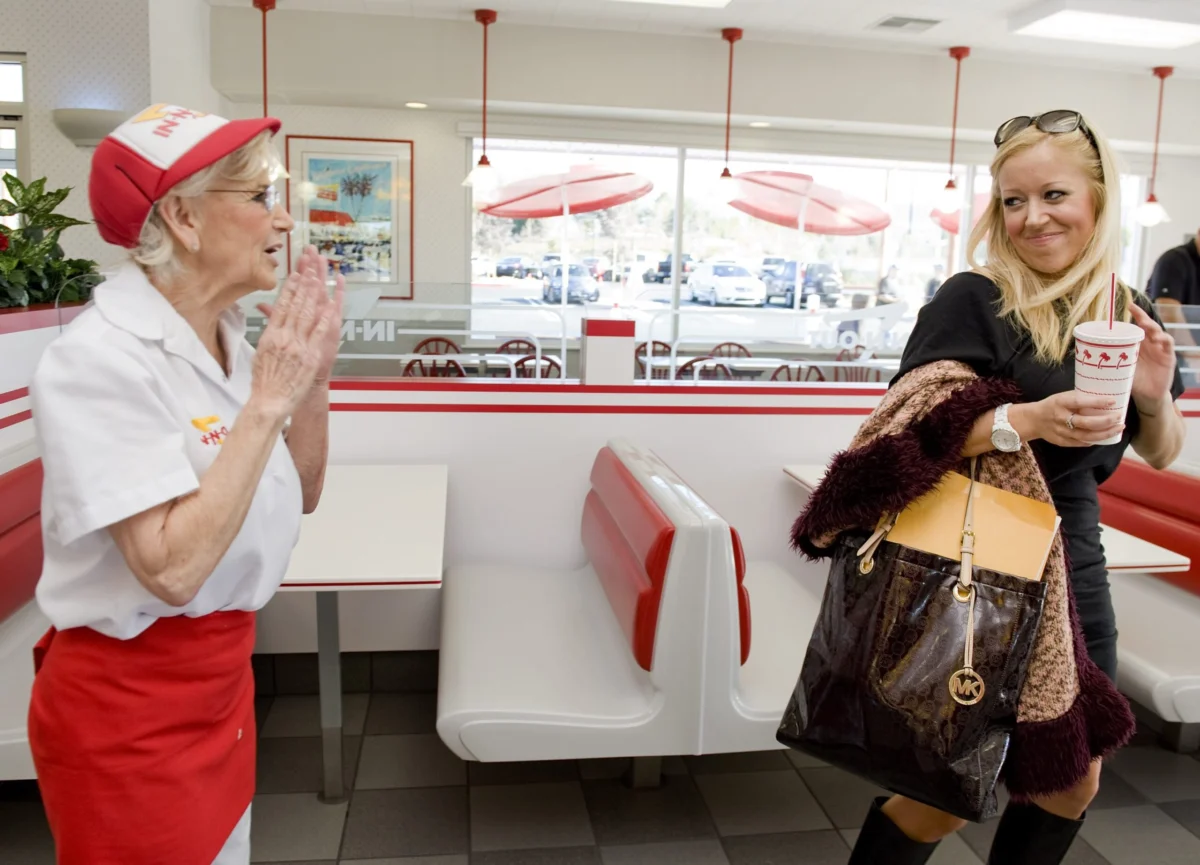
The enduring relationship between the iconic California-founded burger chain In-N-Out and its home state has faced intense public scrutiny over the past year, fueled by the personal relocation of its president and owner, Lynsi Snyder, to Tennessee. Despite the corporate trend of high-profile companies moving their headquarters away from California, Snyder has forcefully dismissed speculation that the regional fast-food giant intends to abandon its West Coast roots. In a recent interview with actor Terry Crews, posted to the company’s official channels, Snyder characterized the notion of exiting California as the “dumbest business decision ever,” cementing her commitment to the brand’s original market.
A Legacy Born in the Golden State
The story of In-N-Out began in 1948 when Harry and Esther Snyder opened the first drive-thru hamburger stand in Baldwin Park, California. The company grew steadily, becoming a cultural touchstone for Southern California life. Unlike many of its national competitors, In-N-Out has maintained a reputation for deliberate, controlled growth, prioritizing the quality of its fresh, never-frozen beef and hand-cut potatoes over rapid national saturation.
For decades, the brand was synonymous with California culture, often serving as a mandatory stop for tourists and a source of local pride for residents. Lynsi Snyder, the granddaughter of the founders and the current steward of the $7.3 billion enterprise, has long been viewed as the guardian of these foundational values. However, her decision to relocate her family to Tennessee—a move she publicly disclosed last year—sparked a wave of conjecture regarding the future of the company’s corporate footprint.
The Context of the Corporate Exodus
The concerns surrounding In-N-Out’s potential departure were not born in a vacuum. Over the last five years, California has experienced a notable "corporate exodus." Major firms, including Tesla and SpaceX, relocated their headquarters to states like Texas, citing a more favorable business climate, lower tax burdens, and fewer regulatory hurdles.
This shift in corporate strategy has often been accompanied by public criticism of California’s legislative landscape. In-N-Out itself has not been immune to these frictions. During the COVID-19 pandemic, the company made headlines for its refusal to enforce municipal mandates requiring the verification of vaccination status for indoor dining. Furthermore, the 2024 implementation of California’s higher minimum wage for fast-food workers forced the company to increase menu prices, a move that drew public attention to the growing cost of doing business within the state.
Given these headwinds, Snyder’s move to Tennessee led many observers to wonder if the burger chain was following the path of other major corporations. Yet, the company’s leadership has consistently maintained that the move was personal, not professional.
Defining the Future: A Dual-Headquarters Model
Addressing the rumors during her conversation with Terry Crews, Snyder sought to decouple her personal residence from the company’s strategic planning. “There were rumors about ‘they’re gonna close all their California stores.’ I’m like, where did this even come from? That’s unimaginable,” she stated.
Snyder confirmed that while she resides in Tennessee, In-N-Out continues to maintain a robust corporate presence in California. The company is currently operating under a dual-hub approach, leveraging its long-standing infrastructure in the Golden State while exploring new administrative efficiencies in the South.
The expansion strategy remains consistent with the “slow and steady” philosophy established by the founders. While the chain has successfully moved into Nevada, Arizona, Utah, Texas, Oregon, Colorado, Idaho, and Washington, it does so with a logistical discipline that few other chains can match. By keeping its distribution centers within a specific radius of its stores to ensure ingredient freshness, In-N-Out prevents the rapid, quality-diluting growth that has historically plagued other quick-service restaurant chains.
Future Growth and Regional Considerations
Snyder revealed that the company is currently evaluating further expansion into Mississippi, Arkansas, and Oklahoma, with New Mexico also in the pipeline. However, she emphasized that the company is not in a race to claim every market. “We won’t be able to accommodate every request to open a new location,” she noted, highlighting the need to maintain supply chain integrity.
This measured approach has helped In-N-Out cultivate a "cult-like" following that spans beyond its current service areas. Whenever the company announces a new state entry, it is met with significant fanfare and long lines, demonstrating that the brand’s value proposition—centered on a simple menu and high-quality ingredients—remains potent across different demographics.
The Personal Side of the Relocation
The decision to move to Tennessee, according to Snyder, was deeply personal and rooted in her family’s needs. She described the move as a spiritual decision, noting that she initially envisioned moving to Colorado due to her affinity for the mountains. However, after a suggestion from her husband and a period of personal reflection, she felt that Tennessee was the right place for her family to grow.
By framing the move as a “God thing” rather than a business-driven tax flight, Snyder has attempted to de-politicize the transition. She has been vocal about the difficulties of raising children in California and the challenges of the current business climate, but she maintains that these personal preferences do not dictate the company’s long-term commercial strategy.
Economic Implications and Market Stability
From a business perspective, the stability of In-N-Out in California remains a vital indicator for the state’s retail sector. With thousands of employees and a massive supply chain footprint within the state, a departure would have had a cascading effect on California’s labor market and local agricultural suppliers.
By reaffirming her commitment, Snyder has provided a sense of certainty to the thousands of employees who rely on the company for their livelihoods. The company’s continued commitment to opening “lots of stores” in California serves as a counter-narrative to the broader trend of companies abandoning the state.
Conclusion: A Brand Rooted in Identity
The saga of In-N-Out’s headquarters highlights the complex tension between the personal lives of corporate leaders and the institutional identity of the brands they represent. While the business environment in California remains challenging—characterized by high operating costs and stringent regulations—Snyder has positioned In-N-Out to thrive by balancing its heritage with the practical realities of a modern, multi-state operation.
As the company looks toward expansion into the American South and beyond, it appears poised to retain its "California DNA." For a brand that has thrived for 76 years on the premise of consistency, the message from the top is clear: while the president may have changed her address, the company’s home remains firmly planted in the state where it all began. In-N-Out’s trajectory suggests that it will continue to serve as a bellwether for the fast-food industry—a brand that manages to balance the pressures of modern expansion with the stubborn, intentional loyalty to its origins.