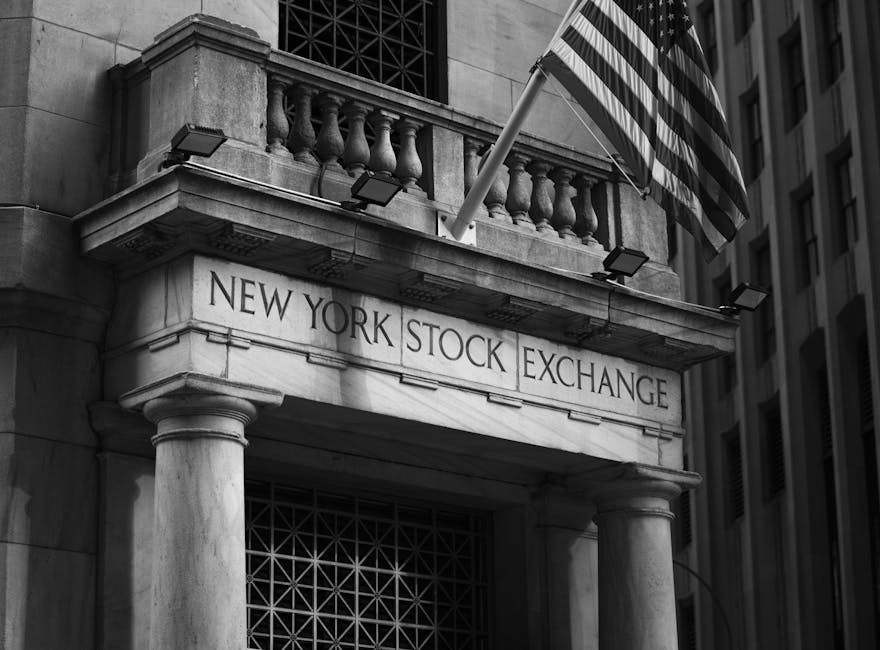
Public Markets Primed for IPO Revival Despite Tariff Uncertainty, NYSE President Declares
The United States public markets are exhibiting robust signs of readiness for a significant revival in Initial Public Offering (IPO) activity, even amidst ongoing tariff uncertainties that have cast a long shadow over global trade and economic forecasting. This optimistic outlook, articulated by the President of the New York Stock Exchange (NYSE), suggests a confluence of factors creating a fertile ground for new public listings, signaling a potential return to a more vibrant IPO landscape after a period of subdued performance. Several key indicators point to this impending resurgence, including a discernible improvement in market sentiment, a growing pipeline of companies eager to tap public capital, and a renewed investor appetite for growth opportunities. The NYSE, as a premier venue for public offerings, is strategically positioned to facilitate this revival, leveraging its established infrastructure, extensive network of advisors and underwriters, and its reputation for market integrity and liquidity. While geopolitical and trade-related concerns, particularly those surrounding tariffs and their potential impact on corporate earnings and supply chains, remain a constant backdrop, market participants are increasingly demonstrating a willingness to look past these headwinds and focus on the underlying strengths and innovation driving many of these prospective issuers. The President’s pronouncements are not mere conjecture but are based on direct observations of market dynamics, direct engagement with potential IPO candidates, and a deep understanding of the broader economic environment. The expectation is not simply a trickle but a sustained flow of new listings, encompassing a diverse range of industries, from technology and healthcare to industrials and consumer goods, all seeking to capitalize on the unique advantages offered by public market access.
The underlying resilience of the U.S. economy, despite external pressures, is a crucial determinant in this optimistic forecast. While tariff-related disruptions can introduce volatility, the fundamental drivers of economic growth – innovation, consumer demand, and corporate investment – remain largely intact. Companies that have successfully navigated or adapted to the evolving trade landscape are now better positioned to present their compelling growth stories to public market investors. The NYSE President’s remarks highlight a sector-agnostic enthusiasm, emphasizing that the opportunity for IPOs is not confined to a few hot industries but extends across the economic spectrum. This broad-based potential is a testament to the depth and breadth of the American entrepreneurial spirit and the ongoing need for capital to fuel expansion, research and development, and strategic acquisitions. Furthermore, the current valuation environment, while subject to fluctuations, is perceived by many as attractive for companies looking to go public. After a period of recalibration, valuations are seen as more rational, offering a more balanced risk-reward proposition for both issuers and investors. This balance is critical for sustained IPO market health, preventing the speculative bubbles that can precede sharp downturns. The NYSE’s role in this revival is multifaceted; it acts as a facilitator, a benchmark setter, and a guardian of market fairness, providing the essential framework for a successful transition from private to public ownership.
The tariff uncertainty, while acknowledged, is being actively managed and factored into strategic planning by companies preparing for IPOs. Many businesses have already diversified their supply chains, explored alternative markets, or absorbed some of the cost increases associated with tariffs. This proactive approach has built a degree of resilience, enabling them to withstand external shocks more effectively. The NYSE President’s confidence stems from the understanding that while tariffs present challenges, they are not insurmountable barriers to growth for well-prepared and strategically astute companies. The narrative is shifting from one of passive reaction to one of active adaptation, where companies are demonstrating their ability to pivot and thrive in a complex geopolitical environment. The prospect of accessing significant capital through an IPO can provide companies with the resources to further strengthen their competitive positions, invest in new technologies, and expand their global reach, thus mitigating the long-term impact of trade-related uncertainties. The IPO process itself is a rigorous one, requiring companies to meet stringent financial and governance standards. This vetting process, overseen by exchanges like the NYSE and regulatory bodies, ensures that only the most robust and well-managed companies are admitted to public trading, providing a layer of confidence for investors.
The pipeline of potential IPO candidates is reportedly robust and diverse, a key indicator that the market is not merely experiencing a temporary lull but is poised for a sustained period of activity. Investment banks are actively working with a growing number of private companies, advising them on the complexities of the IPO process and preparing them for the scrutiny of public investors. This preparation involves everything from financial reporting and legal due diligence to investor roadshows and the establishment of corporate governance structures. The NYSE President’s observations are informed by these ongoing dialogues and the palpable anticipation within the financial advisory community. The sheer volume of companies that have reached a stage of maturity where they are considering public listing suggests an underlying strength in the innovation and growth sectors of the economy. Many of these companies have achieved significant milestones in terms of revenue, profitability, and market share, making them attractive propositions for investors seeking exposure to high-growth opportunities. The technology sector, in particular, is expected to continue to be a significant contributor to IPO activity, with emerging companies in areas such as artificial intelligence, biotechnology, and renewable energy seeking to leverage public capital to accelerate their development and commercialization efforts.
Investor appetite for IPOs, though sometimes cautious, is demonstrably present, particularly when compelling growth stories and attractive valuations are presented. Institutional investors, such as mutual funds, pension funds, and hedge funds, are actively seeking new investment opportunities to diversify their portfolios and achieve alpha. The NYSE President’s remarks suggest that these investors are increasingly looking to the IPO market as a source of such opportunities, recognizing the potential for significant returns from early-stage investments in innovative companies. The key is the quality of the offering; investors are discerning and will gravitate towards companies with strong fundamentals, clear competitive advantages, and well-articulated growth strategies. The post-IPO performance of recent listings, while varied, has provided valuable lessons for both issuers and investors, refining the process and expectations. The NYSE, with its deep pool of sophisticated investors and its ability to attract significant trading volume, offers a platform where such companies can achieve fair valuation and efficient trading. The historical data of the NYSE’s performance during periods of market recovery further bolsters this optimistic outlook, showcasing its capacity to absorb new listings and provide liquidity.
The role of the NYSE as a premier exchange is critical in fostering this IPO revival. Its rigorous listing standards, sophisticated trading infrastructure, and commitment to market transparency and integrity instill confidence in both issuers and investors. The NYSE provides a robust ecosystem that supports companies throughout their journey, from pre-IPO planning to post-listing investor relations. The exchange’s proactive engagement with potential issuers, its educational resources, and its continuous efforts to innovate and adapt to market changes are all contributing factors to its ability to attract and facilitate a vibrant IPO market. The NYSE President’s statements are not just pronouncements of optimism but are backed by tangible actions and strategic initiatives aimed at making the exchange the preferred destination for companies seeking to go public. This includes efforts to streamline the listing process, enhance digital offerings, and foster a more inclusive and accessible market for a broader range of companies. The exchange’s long-standing history and reputation as a beacon of financial stability and opportunity are invaluable assets in attracting global issuers and sophisticated investors alike.
The narrative surrounding tariffs has also evolved. While initially viewed as a significant deterrent, there is now a growing understanding that companies can and are adapting. This has shifted the focus back to the intrinsic value and growth potential of businesses, irrespective of the temporary disruptions caused by trade disputes. The NYSE President’s message is one of resilience and adaptation, highlighting that the underlying strength of the U.S. economy and its innovative companies are capable of overcoming such challenges. The ability of businesses to demonstrate this resilience in their filings and investor presentations will be paramount in attracting investor confidence. The focus will be on the long-term strategic advantages and market positioning of companies, rather than being solely defined by the immediate impact of trade policies. This strategic foresight and adaptability are precisely the qualities that public market investors seek in companies looking for sustained growth and value creation. The NYSE serves as the ultimate arbiter of these qualities, providing a platform where a company’s true potential can be assessed and rewarded by the market.
Furthermore, the global economic landscape, while not without its own complexities, presents opportunities for U.S. companies to expand their international reach. An IPO on a U.S. exchange, particularly the NYSE, can provide these companies with enhanced credibility and access to global capital markets, enabling them to pursue international growth strategies more effectively. This can, in turn, help to mitigate the impact of any localized trade tensions. The NYSE’s status as a globally recognized and respected exchange is a significant draw for international companies seeking to access U.S. capital and tap into the vast investor base present in the United States. This global appeal contributes to the diversity of listings and further strengthens the overall health of the IPO market. The exchange’s continuous efforts to foster international cooperation and understanding in financial markets underscore its commitment to playing a pivotal role in global capital formation.
The prospect of a strong IPO revival also has positive ripple effects across the broader financial ecosystem. It stimulates activity for investment banks, lawyers, accountants, and other professional service providers. It also provides a crucial exit strategy for venture capital and private equity firms, enabling them to realize returns on their investments and reinvest in new ventures, thereby perpetuating the cycle of innovation and growth. The NYSE President’s confidence is rooted in this understanding of the interconnectedness of the financial markets and the vital role that a healthy IPO market plays in driving overall economic prosperity. The exchange’s commitment to fostering a vibrant and dynamic market environment benefits not only the companies that list but also the wider investment community and the economy as a whole. This holistic approach to market development ensures that the NYSE remains at the forefront of capital formation and economic progress.
