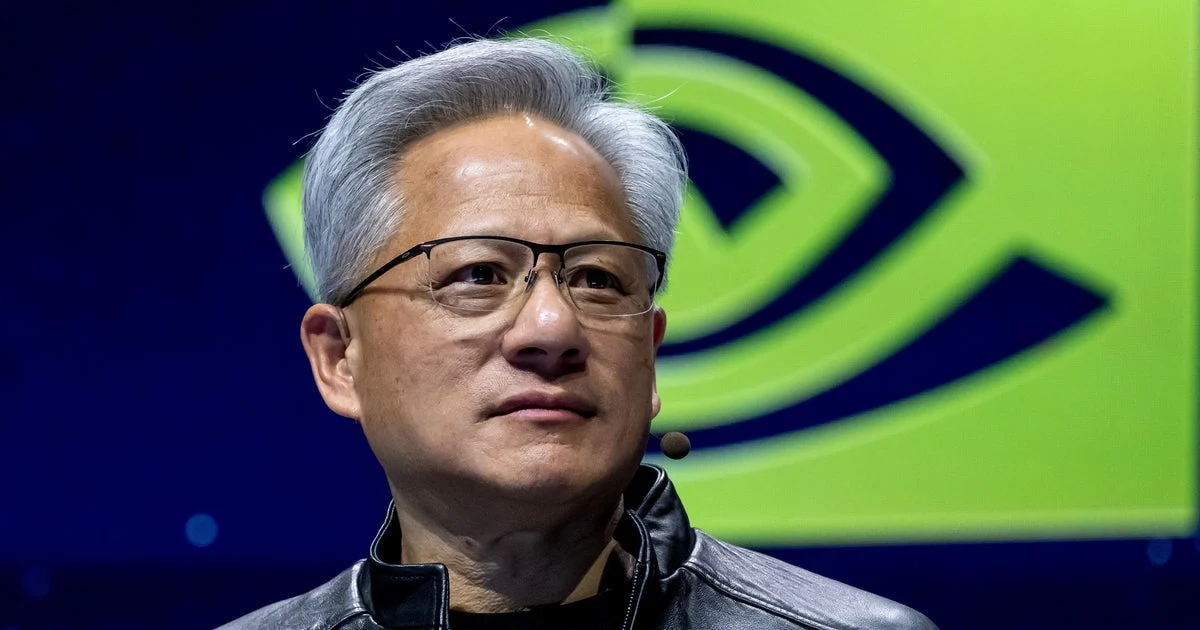
The technology sector was rocked on November 11, 2026, by reports that the board of directors at Nvidia is actively preparing to remove Chief Executive Officer Jensen Huang. According to individuals close to the deliberations, the board’s unexpected maneuvers come in the wake of mounting allegations regarding an extramarital relationship Huang allegedly maintained with an individual whom United States intelligence agencies have identified as a suspected Chinese intelligence asset.
The developments represent a staggering potential downfall for one of the most prominent and influential figures in the global technology landscape. Huang has spent more than three decades building Nvidia from a niche graphics card manufacturer into the world’s most valuable semiconductor titan, largely driven by the explosive worldwide demand for artificial intelligence hardware. As of late 2026, federal authorities in Washington, including the Trump administration, have been briefed on the situation, introducing profound geopolitical and regulatory stakes to an already volatile corporate crisis.
Chronology of Events and the Escalation of Scrutiny
The unfolding crisis began to take shape internally as national security and compliance concerns collided with corporate governance standards. While rumors regarding executive conduct occasionally ripple through Silicon Valley, the involvement of foreign intelligence apparatuses immediately elevated the matter from an internal human resources issue to a federal national security priority.
The Wall Street Journal first brought the board’s active preparations to oust Huang to light, noting that the directors had initiated emergency discussions over the weekend. Sources familiar with the internal deliberations indicate that the board views the allegations not merely as a private personal matter, but as a critical vulnerability concerning corporate integrity, sensitive technological intellectual property, and national security compliance.
U.S. intelligence agencies reportedly flagged the relationship after monitoring counterintelligence threats tied to foreign influence operations targeting American technology executives. While federal investigations remain ongoing and official indictments or formal charges have not been publicly disclosed by the Department of Justice, the mere existence of a counterintelligence nexus has forced Nvidia’s board to act swiftly to protect the company’s standing with the federal government.
Supporting Data and Nvidia’s Market Dominance
The potential departure of Jensen Huang strikes at the heart of Nvidia’s unprecedented financial and technological dominance. Over the preceding four years, Nvidia stock had experienced a meteoric rise, briefly making it the most valuable publicly traded company in the world as hyperscale cloud providers, enterprise software giants, and sovereign states vied for its Hopper and Blackwell generation graphics processing units (GPUs).
Following the initial reports of the board’s preparations to remove the longtime CEO, Nvidia shares experienced an immediate and sharp dive in after-hours trading, wiping out billions of dollars in market capitalization within minutes. Investors have long priced "Key Man Risk" into Nvidia’s valuation, given Huang’s iconic status, his signature leather jacket, and his visionary role in mapping out the company’s product roadmap.
Analysts note that Nvidia’s market share in the artificial intelligence accelerator market has hovered near 80 to 90 percent. The company’s CUDA software ecosystem and advanced silicon manufacturing partnerships have formed an impenetrable moat. However, that very dominance has made Nvidia a focal point of geopolitical tension between the United States and China, particularly concerning export controls on advanced semiconductors designed to curb Beijing’s military and artificial intelligence capabilities.
Corporate Governance and the Role of the Board
The decision by Nvidia’s board of directors to contemplate the ouster of a founder-CEO who holds immense equity and cultural capital within the firm highlights the severe fiduciary pressures facing modern corporate leadership. Directors have a legal obligation to protect the company from existential risks, including compliance failures, economic espionage, and regulatory penalties.
In corporate America, executive misconduct involving foreign actors triggers immediate red flags under federal export control laws, the Foreign Corrupt Practices Act, and general corporate fiduciary duties. If an executive with access to state-of-the-art semiconductor designs, trade secrets, and classified government briefings is compromised by foreign intelligence, the board faces immediate liability if it fails to take decisive corrective action.
Governance experts point out that while founder-CEOs often wield outordinate control over their boards, allegations touching upon national security leave directors with very little legal maneuvering room. Failure to act swiftly could result in regulatory crackdowns, the revocation of vital government export licenses, and institutional shareholder lawsuits.
Official Responses and Washington’s Stance
As of late Tuesday, neither Nvidia’s corporate communications team nor representatives for Jensen Huang had issued a formal, comprehensive statement addressing the specific allegations of the intelligence probe or the board’s reported ouster plans. Representatives for the White House and the Department of Justice declined to comment on ongoing intelligence matters, adhering to standard protocols regarding national security investigations.
However, lawmakers on both sides of the aisle in Washington have previously expressed heightened concern over the security of America’s semiconductor supply chain. With the U.S. government pouring billions of dollars into domestic chip manufacturing via the CHIPS and Science Act, any suggestion that top-tier executive leadership might be exposed to foreign intelligence recruitment is viewed as an acute threat to national infrastructure.
Broader Impact and Industry Implications
The potential removal of Jensen Huang carries profound implications that extend far beyond Nvidia’s corporate headquarters in Santa Clara, California.
First, the leadership vacuum at Nvidia could severely disrupt the company’s product roadmap at a time when competitors such as Advanced Micro Devices (AMD), Intel, and custom silicon initiatives by major tech monoliths like Google, Microsoft, and Amazon are aggressively attempting to chip away at Nvidia’s market share. Huang has personally quarterbacked every major architectural shift, and replacing him will require an extraordinary transition plan.
Second, the incident underscores the escalating intensity of the tech cold war between Washington and Beijing. Intelligence agencies have increasingly warned Silicon Valley executives that they are primary targets for foreign intelligence services seeking to acquire cutting-edge insights into artificial intelligence, quantum computing, and advanced materials science.
Finally, the situation serves as a watershed moment for corporate governance in the tech sector, illustrating that personal conduct and geopolitical security are now inextricably linked. As the story continues to develop, investors, regulators, and industry observers will be watching closely to see whether Nvidia’s board executes a permanent transition of power and how federal authorities choose to navigate the intersection of corporate leadership and national security.