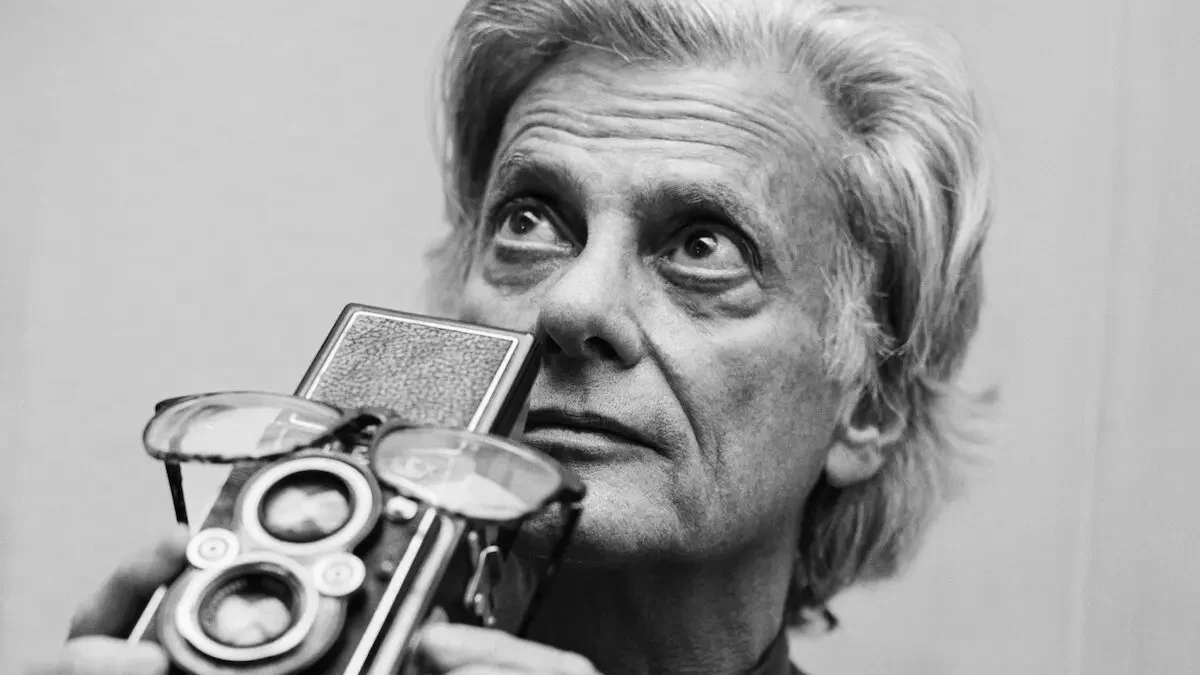
Academy Award-winning filmmaker Ron Howard has delivered what critics are calling his finest documentary achievement to date with Avedon, a meticulous and deeply moving exploration of the life and career of legendary American photographer Richard Avedon. Moving beyond a standard biographical retrospective, the film employs an innovative, rhythmically sophisticated editing style—spearheaded by editor Andrew Morreale—to weave hundreds of iconic photographs into a nearly musical narrative. The documentary examines how Avedon fundamentally transformed the metaphysics of photography, shifting global perspectives on portraiture, fashion, and the human condition.
The film premiered to widespread critical acclaim, cementing Howard’s reputation as a master documentarian following previous notable works such as The Beatles: Eight Days a Week. By blending archival footage, audio recordings, and contemporary expert commentary, Avedon constructs a comprehensive portrait of an artist whose career spanned six decades, capturing the complex intersection of high glamour and democratic humanism.
Chronology of a Visionary: From the Merchant Marines to Modern Mastery
Born in New York City in 1923, Richard Avedon’s fascination with visual storytelling began in his youth. He frequently recalled how he would momentarily close his eyes while walking down city streets to preserve mental snapshots before he ever held a camera. This early instinct for framing the world evolved significantly during World War II. At the age of 19, Avedon enlisted in the U.S. Merchant Marines, where he was assigned to the photographic department.
Tasked with producing approximately 100,000 identification portraits of enlisted men and defense workers, Avedon utilized a stark white paper background. This utilitarian assignment proved to be a profound turning point in his artistic development. Confronted with thousands of direct, unvarnished gazes against a neutral backdrop, he realized that every face possessed a distinct, singular identity that required no external theatricality to convey its depth. This military necessity ultimately birthed the signature minimalist aesthetic that would define his life’s work.
Following his military service, Avedon rapidly ascended in the commercial and fine art photography worlds. From his early sittings in 1944 until his passing in 2004, Avedon completed approximately 16,000 portrait sessions—averaging one shoot per working day for 60 years. His trajectory carried him from the elite pages of Harper’s Bazaar and Vogue to groundbreaking independent projects, cultural chronicling of the late 20th century, and revolutionary advertising campaigns.
Production Insights and Archival Depth
Avedon benefits immensely from privileged access to the vast archives of the Richard Avedon Foundation. James Martin, the foundation’s executive director, guides viewers through the labyrinthine collection, shedding light on the immense scale of Avedon’s output. The documentary delves into the mechanics of his portraiture, contrasting traditional photography methods with Avedon’s uniquely psychological approach.
As noted in interviews within the film by fashion icon and collaborator Isabella Rossellini, while conventional photographers often shot continuously to capture a moment, Avedon operated with deliberate economy. He frequently spent significant portions of an allotted hour in casual conversation, building rapport and lowering defenses, before capturing as few as ten frames in the final moments of a session.
This philosophy was rooted in his foundational belief that technical mastery of f-stops and equipment was secondary to human engagement. As Avedon himself states in archival footage featured in the documentary, "I can say very little about photography. I follow no rules, no laws, and no advice."
An All-Star Cast of Commentators and Cultural Luminaries
Ron Howard anchors the documentary with contextual analysis from a diverse roster of cultural critics, fashion icons, editors, and family members. Contributors include publishing executive Tina Brown, art dealer Larry Gagosian, literary critic John Lahr, fashion model and cultural figure Twiggy, writer Adam Gopnik, critic Hilton Als, designer Calvin Klein, and John Avedon, the photographer’s son, who offers intimate insights into his father’s personal life.
The film does not shy away from the complexities and tragedies of Avedon’s personal history, addressing his troubled marriages and his deep reverence for his mentally ill sister. These biographical elements ground the artistic achievements in a deeply human reality, illustrating how personal empathy informed his lens.
The Paradox of Glamour and Democratic Humanism
At the heart of Avedon is a striking paradox: he was simultaneously a paramount architect of high-fashion glamour and an uncompromising democratic humanist. Whether photographing cultural titans such as John Lennon, Orson Welles, Marilyn Monroe, James Baldwin, and J. Robert Oppenheimer, or anonymous laborers like the Oklahoma oil workers he documented in 1980, Avedon applied the same existential directness.
The documentary highlights several legendary encounters, such as a 1953 session where Charlie Chaplin spontaneously held devil horns over his head, and a grueling 1957 shoot with Marilyn Monroe. In the case of Monroe, Avedon contended with a subject who had meticulously perfected her public persona. Yet, as the documentary illustrates, the iconic image that emerged was captured at the very end of a tiring day when Monroe momentarily lowered her guard, revealing the vulnerable, authentic woman behind the global icon.
Avedon’s lens was equally unforgiving and empathetic when turned toward political and social upheaval. The film chronicles his seven-week assignment in Vietnam photographing American military generals, his documentation of the Chicago Seven trial, his time embedded with Andy Warhol’s Factory, and his controversial American West series—a raw, unromanticized depiction of ordinary citizens that initially faced institutional resistance from New York museums for being too far ahead of its time.
Broader Impact and Industry Implications
Avedon arrives at a time when biographical documentaries face increasing pressure to provide superficial entertainment rather than critical analysis. By treating its subject with intellectual rigor and artistic parity, Howard’s film sets a new benchmark for the genre.
Furthermore, the documentary bridges the perceived gap between high art and commercial work. Avedon seamlessly financed his artistic pursuits and lifestyle through commercial ventures, including the surrealist television advertisements for Calvin Klein’s "Obsession" fragrance. The film posits that these commercial endeavors were not artistic compromises, but rather extensions of a singular 60-year quest to awaken the viewer’s perception.
As film and photography historians evaluate the legacy of the 20th century, Avedon provides a definitive visual and narrative document of how one man’s gaze reshaped the way society perceives identity, celebrity, and truth. Through Howard’s lens and Morreale’s editing, Richard Avedon’s timeless photographs continue to challenge, question, and ultimately open the eyes of new generations.