The prospect of a catastrophic asteroid impact has long occupied the fringes of scientific inquiry, but recent advancements in computational physics are moving the conversation from theoretical modeling to actionable mission planning. A groundbreaking study published in the journal Icarus suggests that if Earth is ever threatened by a rogue near-Earth object (NEO), the success of a nuclear-based deflection mission may hinge on a single, critical variable: the precise angle of the explosive blast. Researchers at Sandia National Laboratories have demonstrated that the irregular, lumpy, and often jagged surfaces of real-world asteroids cause them to react to high-energy X-ray radiation in ways that vastly outperform the simplified, spherical models used in decades of previous research.
The Physics of Nuclear Deflection
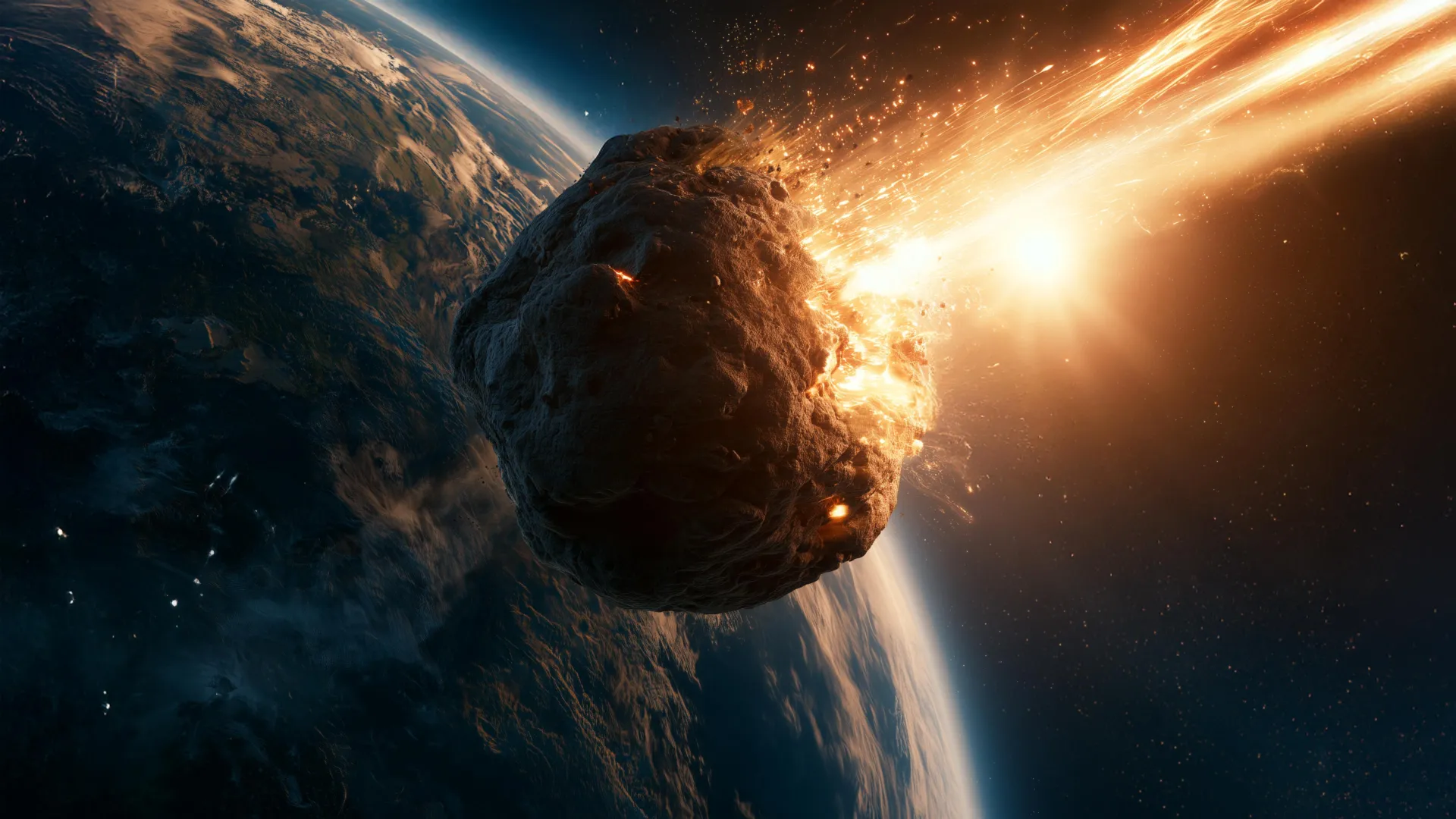
In the context of planetary defense, the "nuclear standoff" method involves detonating a nuclear device at a precise distance from an asteroid. The resulting blast releases a massive pulse of X-rays, which heats the asteroid’s surface instantaneously. This rapid heating causes the surface material to ablate—vaporize and expand away from the object—creating a powerful, recoil-like thrust that nudges the asteroid onto a safer orbital trajectory.
Historically, computational models relied on the assumption that asteroids are uniform, spherical bodies. While this simplified the math, it obscured the chaotic reality of space rocks, which are often "rubble piles" characterized by ridges, craters, and asymmetrical mass distributions. Nathan Moore, a lead physicist at Sandia, and his team have developed a new, high-fidelity simulation system that accounts for these irregularities, revealing that the "aim" of the blast is not merely a tactical preference, but a fundamental determinant of the mission’s outcome.
A Quantum Leap in Computational Modeling
The researchers achieved this breakthrough by bridging a gap between two distinct computational architectures. Traditionally, scientists faced a "binary choice" in simulation quality: they could model the high-energy physics of a nuclear explosion or the complex, irregular geometry of an asteroid, but the computing power required to do both simultaneously was prohibitive.
The Sandia team successfully integrated ALEGRA—a code typically used for modeling extreme, high-energy events like magnetically imploding wires on the Z machine—with SPARTA, a direct simulation Monte Carlo code used to track dilute, slowly evolving forces like solar wind drag. This fusion of systems allowed for a model that is over 1,600 times faster than its predecessors. By utilizing 3D data captured from spacecraft flybys, researchers can now map an asteroid’s specific topography and simulate how X-rays interact with its unique contours.
Empirical Findings and Deflection Variability
The results of these simulations have introduced a new layer of complexity to the field of planetary defense. In one specific simulation, the team targeted the same asteroid from two different directions. When irradiated from one side, the asteroid’s velocity shifted by 3.9 millimeters per second. When the blast was redirected to a different point on the same object, the deflection velocity dropped to just 0.8 millimeters per second.
This nearly fivefold difference in efficacy demonstrates that a poorly planned mission could leave an asteroid on its original, dangerous trajectory. Furthermore, the impact on the asteroid’s rotational state was even more pronounced, with rotation-speed variations differing by a factor of 17 depending on the blast orientation. Such variations could potentially cause an asteroid to tumble or shift its center of mass in ways that complicate further intervention efforts.
Historical Context and the Z Machine Foundation
The urgency of this research stems from a long-standing desire to move beyond kinetic impactors—the strategy employed by NASA’s DART (Double Asteroid Redirection Test) mission in 2022. While DART successfully altered the orbit of the moonlet Dimorphos, kinetic impactors have limitations regarding the mass and speed of the target object.
The Sandia research builds upon earlier experimental success using the Z machine, the world’s most powerful pulsed-power facility. In that experiment, scientists successfully deflected a tiny piece of asteroid-like material using X-rays, providing the first physical proof-of-concept for the radiation-ablation method. Moore’s recent work serves as the vital "scaling up" phase, moving the concept from a laboratory bench to a full-scale orbital defense strategy.
Challenges and the Path Forward
Despite the increased precision of the new models, the path to a deployable planetary defense system remains fraught with logistical and physical hurdles. The current iteration of the software is limited to surface-level ablation; it cannot yet predict whether a massive nuclear blast would cause the entire body of a porous, rubble-pile asteroid to disintegrate. Fragmentation is a major concern for mission planners: instead of a single threat, an improperly executed blast could create a "shotgun blast" effect, sending multiple dangerous fragments toward Earth rather than diverting the primary body.
Furthermore, the intelligence requirements for such a mission are extreme. To utilize this precision-targeting, mission planners would need detailed, 360-degree topographical maps of the incoming threat. If an asteroid is discovered with insufficient lead time, or if its rotation prevents accurate mapping, the ability to select the "optimal" blast point would be severely constrained. Delivering a nuclear device to a precise coordinate in deep space, relative to an object traveling at thousands of miles per hour, would also require a level of navigation and guidance technology that currently exceeds existing deep-space capabilities.
Broader Implications for Global Security
The implications of the Sandia study extend beyond asteroid defense; they provide a blueprint for how humanity can utilize its existing nuclear infrastructure to solve existential threats. The research has been supported by Sandia’s Laboratory Directed Research and Development program, signaling that the U.S. government views these simulations as a critical component of long-term national and global security.
As the scientific community continues to catalogue thousands of near-Earth objects, the "if" has long been replaced by "when." Experts in planetary science emphasize that while a high-consequence impact is statistically rare, the potential for global devastation necessitates a robust, multi-layered defense strategy. By eliminating the "guesswork" associated with asteroid deflection, the new simulations provide a critical tool in the planetary defense toolkit.
"Pick the right side and you win," Moore noted in his assessment of the findings. "Guess wrong and it could be a bad day." This stark reality underscores the necessity of continued investment in computational capacity and asteroid observation. As global space agencies look toward the next generation of deep-space exploration, the ability to predict the interaction between human technology and the celestial environment is becoming the most important asset in our collective survival.
Looking ahead, the next phase of research will likely focus on incorporating internal structural data into the simulations. Understanding whether an asteroid is a solid rock or a loose collection of boulders held together by weak gravity is essential for predicting how it will react to the shockwaves of a nuclear blast. While we are not yet ready to mount an active defense mission of this nature, the ability to simulate the outcome with such high fidelity marks a major transition from passive observation to active planetary guardianship. The research serves as a reminder that in the cold, silent vacuum of space, precision is the only currency that matters when the future of the planet is at stake.