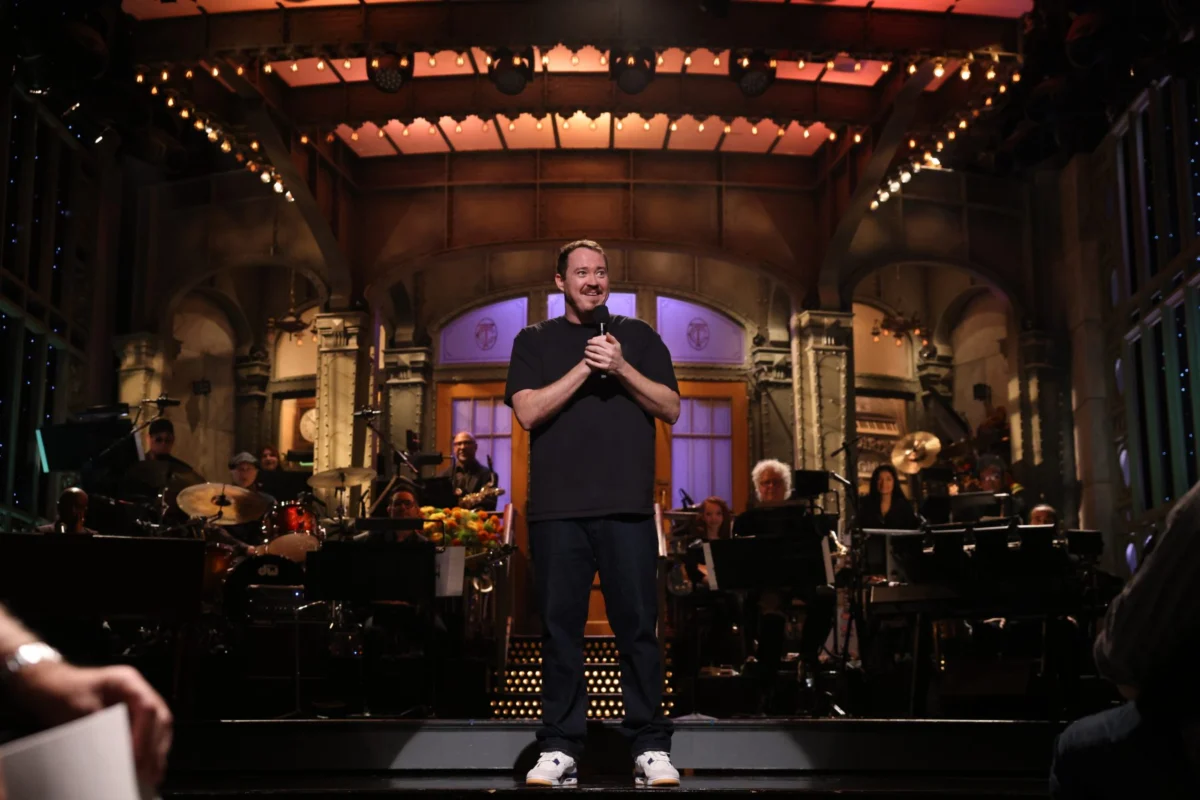
Comedian Shane Gillis has publicly addressed the intense scrutiny following his October 10, 2026, appearance as host of NBC’s long-running sketch comedy institution, Saturday Night Live. During a wide-ranging interview on the November 13 episode of The Joe Rogan Experience, the 38-year-old performer sought to clarify the intent behind his monologue, which drew sharp condemnation from high-profile figures in the entertainment industry, while simultaneously shedding light on the internal editorial processes of the legendary late-night program.
The controversy originated from a segment of Gillis’s opening monologue in which he offered commentary on modern gym culture. Specifically, he remarked, "I haven’t been to the gym in so long, I didn’t know women just dress like whores now? I’m sorry, there’s no other way to describe. Have you seen it? I’ve seen it. The shorts. Have you seen the shorts?" The quip, delivered before a live studio audience and a global broadcast viewership, ignited an immediate firestorm across social media platforms and drew swift rebukes from notable celebrities.
Editorial Control and the SNL Process
A primary point of discussion during the podcast appearance centered on the level of oversight NBC exercises regarding the material delivered by guest hosts. Addressing rumors that the monologue had been vetted or approved by network executives, Gillis provided a candid look at the autonomy afforded to stand-up comedians invited to headline the show.
"Not to defend SNL, they don’t approve it," Gillis explained. "I mean, they could shut it down. They could, but you don’t write your set and give it to them. Unless you’re not a comedian. I’m sure non-comics, they write the set for them. They have writers that write the monologue for them."
Gillis further revealed that the production staff had approached him regarding the content of his monologue prior to the live broadcast. He characterized his own assessment of the material as relatively benign, noting that he had informed staff that the set was "not great," but that he believed it to be free of any genuine controversy. "I’m calling myself fat for fucking 10 minutes. That’s it," he claimed, describing his performance as a "solid C minus of a monologue."
Chronology of the Controversy and Public Reaction
The backlash was swift, highlighting the heightened sensitivity surrounding gender discourse in contemporary media. The most prominent critique came from Schitt’s Creek creator and actor Dan Levy, who released an video via Instagram. In his rebuttal, Levy stated, "Women wearing short shorts at the gym does not make them whores; it makes the men calling them whores misogynists."
Levy’s condemnation acted as a focal point for a broader wave of criticism. Other public figures, including singers Jewel, Lisa Loeb, and Broadway star Kristin Chenoweth, signaled their support for Levy’s stance in the comments sections of social media posts. The sentiment was echoed by others in the industry; hip-hop pioneer Flavor Flav publicly aligned himself with the critique, while Maggie Baird, mother of musicians Billie Eilish and Finneas, labeled the rhetoric "actually dangerous for women." Country star Maren Morris also entered the fray, posting a video of herself exercising with the caption, "leave my gym short wedgie out of it."

Contextualizing the Gillis-SNL Relationship
To understand the intensity of the reaction, it is necessary to look back at the fraught history between Gillis and the program. In 2019, at the age of 31, Gillis was announced as a new cast member for Saturday Night Live. However, within days of the announcement, archival audio from a podcast surfaced in which Gillis had used racial and homophobic slurs. The ensuing public pressure led NBC to terminate his contract before he could make his debut on the show.
His return to the stage as a host in 2026 was seen by industry observers as a significant cultural milestone, marking a rare "redemption arc" in an era where public figures are often permanently ostracized for past comments. The fact that the monologue once again sparked a conversation about his perspective on women served as a reminder that the tensions regarding his public persona remain unresolved for a significant portion of his audience.
The Cultural Climate and Implications for Comedy
The discourse surrounding Gillis’s remarks touches on a larger, ongoing debate within the entertainment industry regarding the boundaries of stand-up comedy and the responsibility of public figures to adapt to shifting social norms. Media analysts point out that the incident reflects a widening gap between traditional "roast-style" comedy—which relies on provocation and caricature—and the expectations of modern digital audiences who prioritize inclusivity and social awareness.
The incident also highlights the influence of digital platforms in shaping the longevity of a controversy. While a joke delivered in a dark comedy club might have remained confined to a local audience a decade ago, the instantaneous nature of modern social media allows clips to be isolated, stripped of their broader context, and analyzed by millions of people within hours. For SNL, which exists at the intersection of traditional television and the digital content cycle, this presents a perpetual challenge: how to balance the edgy, unfiltered nature of stand-up comedy with the brand safety required of a global broadcast network.
Statistical and Industry Observations
In the context of late-night television viewership, controversy often functions as a double-edged sword. While social media backlash can harm the reputation of a guest or host, it often correlates with a temporary spike in engagement metrics. Following the October 10 episode, clips of the monologue and the subsequent responses from celebrities generated millions of views across platforms like Instagram, TikTok, and YouTube.
However, the risk for the network involves the potential alienation of specific demographics. The shift toward a more socially conscious audience has led advertisers and networks to adopt more rigorous vetting processes for content. While Gillis maintains that he does not hold a genuine problem with women’s gym attire, the public’s insistence that the language used is inherently misogynistic suggests that the "climate" he referenced on Rogan’s podcast is likely to remain a dominant factor in his future performances.
Analysis of the Discourse
The divide between Gillis’s defense—that the jokes were self-deprecating and intended as observational humor—and his critics—who argue that the terminology perpetuates harmful stereotypes—is emblematic of the current cultural divide. Supporters of the comedian often argue that the "sanitization" of comedy inhibits the art form, suggesting that comedians should be afforded the freedom to explore uncomfortable topics. Conversely, critics argue that the influence of a national platform like SNL necessitates a higher standard of decorum, particularly when the humor relies on demeaning specific groups of people.
Ultimately, the event underscores the precarious position of comedians in the digital age. As Shane Gillis continues his career, the reception of his work will likely continue to be framed by his history, his stylistic choices, and the evolving standards of the audience. The incident serves as a case study for both the resilience of the traditional stand-up format and the power of the audience to enforce new norms of discourse in the public sphere. As for SNL, the program remains the primary battleground for these cultural tensions, continuing to act as a bellwether for what the public considers acceptable, unacceptable, and the thin line that often exists between the two.