The Genesis of the Bodo Project
The development of the Brabus Bodo was not an overnight endeavor. According to company insiders, the project began in early 2025, driven by a desire to bridge the gap between track-focused performance and luxury grand touring. While Brabus is traditionally known for pushing the limits of Mercedes-AMG engines—often extracting upwards of 900 horsepower from V8 and V12 architectures—the Bodo project focuses on refinement, weight distribution, and a new aesthetic language that prioritizes aerodynamic efficiency over brute, muscular aggression.
The timeline of the project saw rigorous testing cycles at the Nürburgring Nordschleife, where engineers sought to refine the chassis dynamics to accommodate the increased power output. By late 2025, the prototype phase had concluded, with the design team finalizing the bespoke bodywork that now defines the vehicle. The name "Bodo" itself serves as a nod to Bodo Buschmann, the founder of Brabus, who passed away in 2018. This vehicle is widely considered by industry analysts to be a tribute to his legacy, balancing his love for high-speed performance with his eye for sophisticated, understated design.
Technical Specifications and Performance Data
At the heart of the Brabus Bodo lies a heavily modified powertrain that utilizes hybrid-assisted technology to deliver a level of responsiveness rarely seen in combustion-heavy platforms. The internal combustion engine, a twin-turbocharged unit, has been bored out to provide higher displacement, while the electrical component provides an "instant torque" fill-in during low-RPM acceleration.
The technical specifications are as follows:
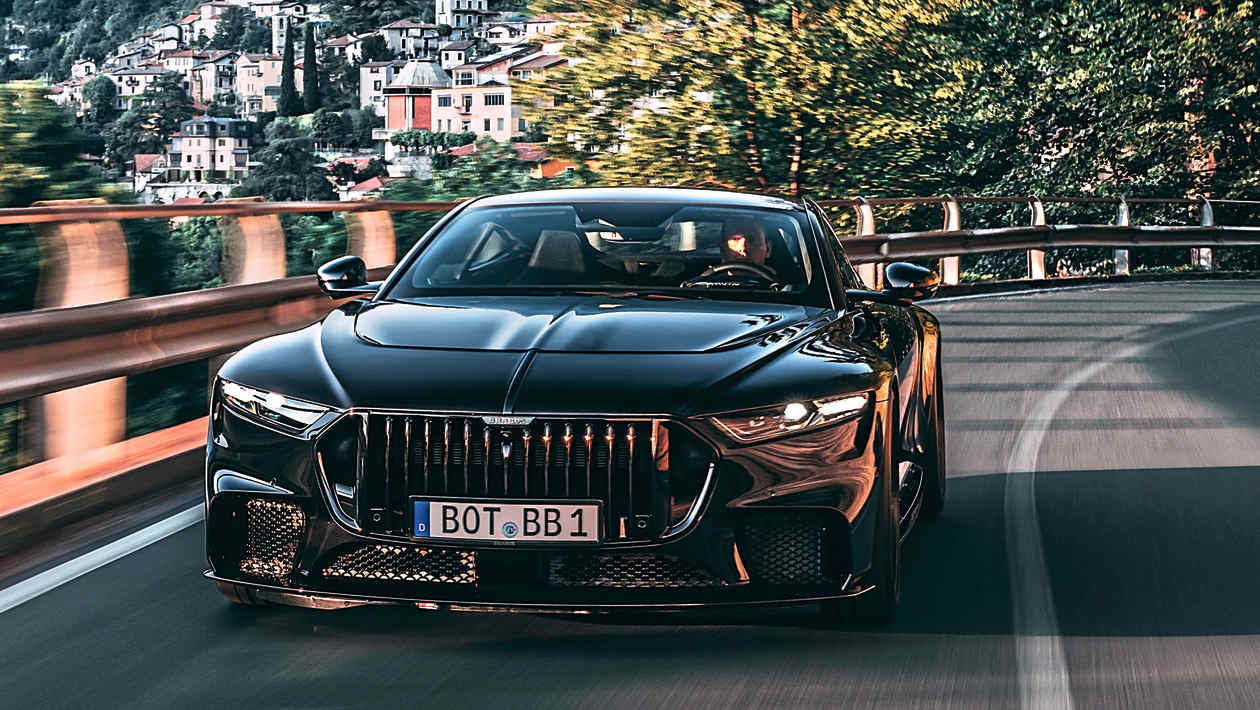
- Engine: 4.5-liter Twin-Turbo V8 with integrated mild-hybrid system.
- Power Output: 888 brake horsepower (bhp).
- Torque: 1,100 Newton-meters (Nm) available from 2,500 rpm.
- 0-62 mph Time: 2.6 seconds.
- Top Speed: Electronically limited to 205 mph.
The chassis has been lowered by 25 millimeters using a custom-tuned air suspension system, which allows the driver to adjust the ride height based on road conditions. The use of carbon-fiber-reinforced polymer (CFRP) in the body panels has reduced the overall curb weight by approximately 150 kilograms compared to the base model, significantly improving the power-to-weight ratio.
Design Philosophy: A New Aesthetic for Brabus
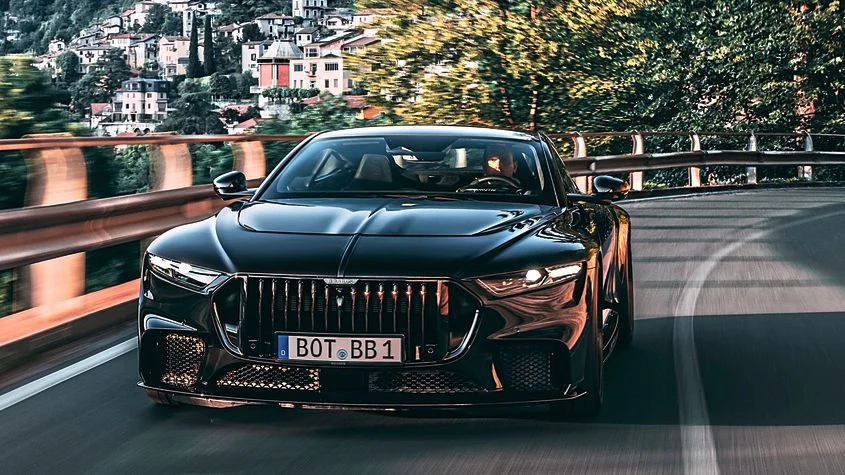
For decades, Brabus vehicles were easily identified by their "murdered-out" black-on-black aesthetic, aggressive flared arches, and gaping air intakes. The Bodo, however, adopts a more nuanced approach. The exterior features a "liquid silver" paint finish, accented by matte carbon fiber elements that are integrated into the body rather than bolted on as aftermarket add-ons.
The front fascia has been completely redesigned to optimize airflow through the radiator and brake cooling ducts, featuring a cleaner, more aerodynamic "shark-nose" profile. The rear of the car features an active diffuser that deploys at speeds above 75 mph, providing increased downforce without the need for a large, intrusive rear wing. Inside the cabin, the upholstery has been sourced from sustainable, high-grade vegan materials, marking a shift in the company’s supply chain practices as global luxury standards move toward more ethical manufacturing.
Industry Context and Competitive Landscape
The launch of the Brabus Bodo arrives at a time when the tuning industry is facing unprecedented pressure from tightening emissions regulations and the rapid electrification of the automotive sector. In Europe, the Euro 7 emissions standards are forcing traditional tuners to reconsider their business models. Many firms have pivoted toward electric vehicle (EV) performance packages, but Brabus has chosen a hybrid middle-ground for the Bodo.
By incorporating hybrid technology, Brabus is ensuring that its high-performance vehicles remain compliant with urban emission zones—a critical factor for owners in cities like London, Paris, and Berlin. This approach allows the Bodo to operate in a "silent mode" for short-distance urban commuting, while still offering the visceral experience of a high-performance V8 on open roads.

Market analysts suggest that the Bodo will be limited to a production run of just 50 units, making it an immediate collector’s item. The price, while not officially confirmed by the press office, is estimated to hover around the €650,000 mark. This positions the vehicle squarely against hyper-luxury offerings from the likes of Mansory, Singer, and the bespoke divisions of Ferrari and Lamborghini.
Official Reactions and Expert Commentary
Following the reveal, the reaction from the automotive press has been largely positive, with experts praising the company’s ability to evolve. "Brabus has successfully navigated the transition from being a simple engine tuner to a boutique manufacturer," says automotive journalist Hans-Dieter Schmidt. "The Bodo is a statement piece. It shows that internal combustion, when paired with the right electrical assistance, can still be relevant and exciting in the mid-2020s."
However, not all reactions have been without caution. Environmental advocates have noted that despite the hybrid assistance, the Bodo remains a high-consumption vehicle. In a climate where governments are actively incentivizing the shift to battery-electric vehicles, high-performance hybrid luxury cars exist in a contentious space. Nonetheless, the engineering prowess displayed in the Bodo is expected to influence the tuner’s future projects, particularly regarding the integration of software-defined vehicle (SDV) features that optimize engine mapping in real-time based on traffic and road conditions.
Broader Implications for the Tuning Industry
The Brabus Bodo serves as a bellwether for the future of the automotive aftermarket. As manufacturers increasingly lock down vehicle software to prevent unauthorized modifications, companies like Brabus must work more closely with original equipment manufacturers (OEMs). The development of the Bodo involved a level of technical cooperation with Mercedes-Benz that was unheard of twenty years ago.
This symbiotic relationship between the tuner and the automaker is expected to become the industry standard. Future tuning will likely move away from mechanical hardware changes and toward deep-level software tuning, where companies like Brabus provide performance "upgrades" via digital over-the-air updates. The Bodo stands at the threshold of this transition, offering both the tactile mechanical thrill of the past and the digital integration of the future.

Looking Ahead
With the first customer deliveries scheduled for the first quarter of 2027, the Brabus Bodo will soon hit the streets. The company has already confirmed that the development team is now shifting its focus to an all-electric performance platform, rumored to be based on a high-end luxury SUV.
As the industry grapples with the dual challenges of sustainability and the preservation of driving passion, the Brabus Bodo serves as a poignant reminder that performance and luxury are not necessarily at odds with innovation. By blending the heritage of the past with the technological imperatives of the future, Brabus has once again secured its place at the forefront of the automotive world. For enthusiasts and collectors alike, the Bodo is not just a car; it is a manifestation of an era that is rapidly evolving, proving that even in a changing world, there is still a place for the extraordinary.