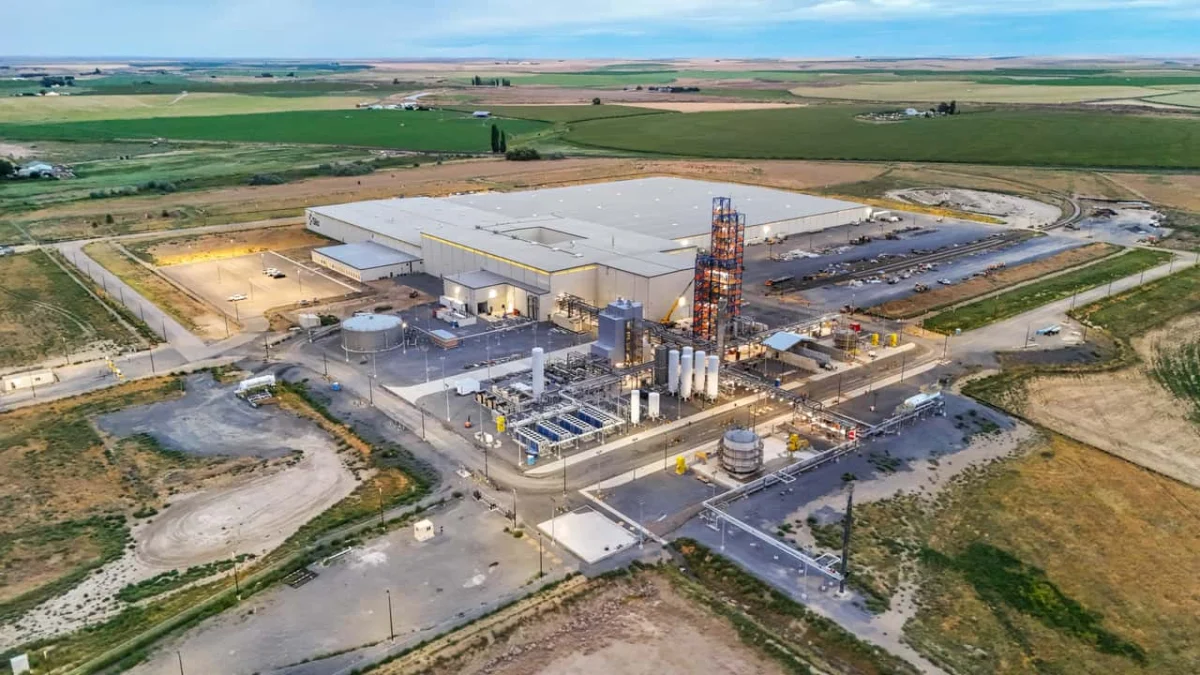
Sila Nanotechnologies, a prominent battery materials startup based in the United States, has announced the successful acquisition of $300 million in private funding to accelerate the commercialization of its next-generation battery technology. This capital infusion is specifically earmarked to scale production at its 160-acre manufacturing facility in Moses Lake, Washington, and to support the second phase of the site’s expansion. The company’s flagship product, Titan Silicon, is a high-performance silicon-carbon anode material that promises to redefine the capabilities of electric vehicle (EV) batteries. According to Sila, this technology could increase the range of electric vehicles by up to 20% without requiring larger or heavier battery packs, while simultaneously enabling significantly faster charging speeds.
The transition from traditional graphite anodes to silicon-dominant chemistries represents one of the most significant shifts in lithium-ion battery technology since its inception. While the industry has long sought to harness the energy-dense properties of silicon, physical limitations have historically relegated it to a minor additive. Sila’s breakthrough, which is the result of 15 years of research and development, aims to replace graphite entirely or substantially, offering a path to more efficient, lighter, and longer-range electric mobility.
The Technological Leap: From Graphite to Titan Silicon
At the heart of Sila’s value proposition is the replacement of the anode, one of the two electrodes in a lithium-ion battery. For decades, the industry has relied on graphite for battery anodes due to its stability and reliability. However, graphite has reached its theoretical limit in terms of energy density. Silicon, by contrast, can store significantly more lithium ions than graphite—up to ten times more by weight.
The primary challenge with silicon has always been its physical volatility. When a battery charges, silicon atoms absorb lithium ions and swell by as much as 300% in volume. When the battery discharges, the silicon contracts. This repeated "breathing" cycle leads to mechanical stress, causing the material to crack and pulverize, which rapidly degrades the battery’s lifespan.
Sila’s Titan Silicon addresses this through a proprietary nano-structured composite. By engineered a "cage" structure at the molecular level, Sila has managed to contain the expansion of silicon, preventing the structural failure of the anode while maintaining its high energy-storage capacity. The company claims that its material can boost a battery’s energy density by 20% to 40% compared to state-of-the-art graphite cells. For a consumer, this translates to an EV that can travel 500 miles on a single charge instead of 400, using the same physical space for the battery pack.
Manufacturing and the Moses Lake Expansion
The $300 million funding round is a critical milestone for Sila as it transitions from a research-intensive startup to a high-volume industrial manufacturer. The Moses Lake facility, which began operations in late 2024 and early 2025, is central to this strategy. The site is currently ramping up from an initial production capacity of 2 gigawatt-hours (GWh) per year.
However, the company’s long-term vision is far more ambitious. Sila plans to expand the facility to achieve an annual production capacity of 250 GWh within the next five years. If realized, this would make the Moses Lake site the largest anode production facility in the world. To put this into perspective, 250 GWh of anode material is sufficient to power approximately two million electric vehicles annually, depending on pack size.
The expansion is also a strategic move for the U.S. domestic supply chain. Currently, the majority of the world’s graphite and battery components are processed in Asia. By establishing a massive production hub in Washington State, Sila is helping to build a localized supply chain that aligns with federal incentives, such as those provided by the Inflation Reduction Act (IRA), which encourages domestic sourcing of critical battery materials.
A Chronology of Innovation
The path to commercializing Titan Silicon has been a multi-decade journey. Sila was co-founded in 2011 by Gene Berdichevsky, who was the seventh employee at Tesla and served as the principal engineer for the Roadster’s battery system. Alongside co-founders Gleb Yushin and Alex Jacobs, Berdichevsky sought to find a "drop-in" solution that could improve existing lithium-ion manufacturing lines without requiring a total overhaul of the industry’s infrastructure.
- 2011–2018: Sila focused on fundamental material science, testing over 70,000 different iterations of silicon-based materials to solve the expansion and degradation issues.
- 2019: The company secured its first major automotive partnership with Mercedes-Benz, which also led a $170 million funding round.
- 2021: Sila’s technology made its first commercial appearance in the WHOOP 4.0 fitness tracker, proving that the material could work in small-scale consumer electronics.
- 2022: The company announced its plans for the Moses Lake facility, supported by a $100 million grant from the U.S. Department of Energy.
- 2024–2025: Initial production at Moses Lake commenced, coinciding with the latest $300 million private investment to scale operations.
Strategic Partnerships: Mercedes-Benz and Panasonic
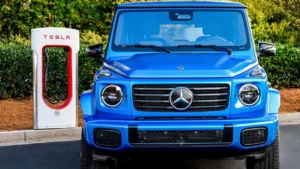
Sila’s commercial viability is bolstered by its high-profile partnerships with industry giants. Mercedes-Benz has been a vocal supporter of Sila’s technology, announcing that it will be the first automotive customer to incorporate Titan Silicon into its vehicles. Specifically, the luxury automaker plans to use the material in an upcoming electric version of the G-Class (often referred to as the EQG). The high-energy-density requirements of a heavy, off-road vehicle like the G-Class make it an ideal candidate for Sila’s range-boosting technology.
Beyond Mercedes, Sila has secured a supply contract with Panasonic Energy, one of the world’s largest battery manufacturers and a primary supplier to Tesla. Panasonic intends to integrate Sila’s material into its next-generation lithium-ion cells. This partnership is particularly significant because it suggests that Sila’s material is compatible with the high-volume, "2170" and "4680" cylindrical cell formats used in millions of EVs.
The involvement of Panasonic indicates that silicon-rich anodes are not just a niche luxury feature but are being prepared for mass-market adoption. By improving the performance of standard cells, Panasonic can offer its automotive clients—ranging from Toyota to Lucid—batteries that charge faster and last longer.
Broader Industry Implications and Analysis
The move toward silicon-rich anodes is part of a broader industry trend toward "advanced chemistry" as a bridge to solid-state batteries. While solid-state technology is often touted as the "holy grail" of battery science, it remains years away from cost-effective mass production. Silicon anodes, by contrast, are a "here and now" solution that works within the existing liquid-electrolyte framework of lithium-ion batteries.
Industry analysts suggest that the benefits of silicon extend beyond just range. General Motors (GM) executives have recently stated that increasing silicon content is a key pillar of their battery roadmap. By increasing energy density, automakers can choose one of two paths: they can either offer vehicles with unprecedented range, or they can opt for smaller, lighter battery packs that deliver "standard" range (e.g., 300 miles).
The latter option is particularly attractive for reducing the overall cost of EVs. A smaller battery pack requires less lithium, cobalt, and nickel—materials that are subject to price volatility and supply chain constraints. Reducing the weight of the battery also improves vehicle dynamics and reduces wear on tires and suspension components.
Furthermore, the charging benefits mentioned by Sila are corroborated by recent developments in the field. The Mercedes-AMG GT 4-Door EV, for instance, utilizes silicon-containing anodes to achieve a peak charging power of 600 kW, allowing a 10% to 80% charge in just 11 minutes. While Sila has not explicitly claimed these specific figures for all Titan Silicon applications, the physical properties of silicon allow for faster lithium-ion transport, which inherently supports higher charging currents without the risk of "lithium plating," a common cause of battery fires and failure during rapid charging.
Conclusion: The Road Ahead for Sila
With $300 million in new funding and a clear path toward massive industrial scale, Sila Nanotechnologies is no longer just a laboratory success story. The company is now a central figure in the race to optimize the lithium-ion battery. As the Moses Lake facility expands, the primary challenge for Sila will be maintaining quality control and cost-competitiveness as it scales from 2 GWh to 250 GWh.
The success of Titan Silicon could signal the beginning of the end for the graphite-dominated era of battery production. If Sila can deliver on its promise of 20% more range and faster charging, it will provide automakers with the tools necessary to overcome "range anxiety"—one of the final major hurdles to the global mass adoption of electric vehicles. As the first Mercedes-Benz vehicles equipped with Sila technology hit the roads in the coming years, the automotive world will be watching closely to see if silicon is indeed the key to the next generation of mobility.