The automotive industry has reached a pivotal junction in 2025 as the psychological and technical barrier of "range anxiety" is systematically dismantled by a new generation of electric vehicles (EVs). Less than a decade ago, a 300-mile driving range was considered the "holy grail" of the industry—a milestone first achieved by the Tesla Model S in 2016. Today, that figure has transitioned from an aspirational peak to a baseline expectation. As charging infrastructure continues to expand across the United States, manufacturers are no longer merely aiming for the 300-mile mark; they are pushing toward 400 and even 500 miles on a single charge. This shift represents a fundamental evolution in battery chemistry, aerodynamic design, and vehicle software management.
The current market landscape for 2025 reflects a dual-track strategy among automakers. While some focus on increasing battery density to provide massive range for heavy-duty trucks and luxury sedans, others are refining efficiency to offer respectable range at lower price points. The median range for the U.S. EV market, which stood at 270 miles in 2023, is rapidly approaching the 300-mile threshold as standard. However, for those willing to pay the premium, the "long-range" category now exclusively refers to vehicles capable of traveling 350 to over 500 miles between plug-ins.
The Evolution of the Range Benchmark
The trajectory of EV range development has been fueled by two primary pressures: the lagging pace of fast-charging infrastructure and the expansion of EV sales into regions with extreme climates. While early adoption was concentrated in "smile states" like California and Florida, where temperate weather preserves battery life, the expansion into the Midwest and Northeast has forced engineers to account for significant range degradation in sub-zero temperatures. To ensure a vehicle remains practical during a Minnesota winter, manufacturers have found that a higher nominal EPA range is the most effective buffer against cold-weather performance drops.
Chronologically, the industry moved from the "compliance car" era (roughly 2010–2015), where ranges often hovered around 80 to 100 miles, to the "Tesla era" (2016–2021), which established 250–300 miles as the premium standard. The current "Ultium and Efficiency" era (2022–2025) is characterized by the emergence of massive 200-kWh battery packs and highly optimized silicon carbide inverters that extract more miles per kilowatt-hour.
The Cost and Weight of Distance
The pursuit of extreme range is not without its trade-offs. A significant portion of the 2025 range leaders achieve their numbers through "brute force"—installing battery packs that are heavy and expensive. In many cases, these batteries store enough energy to power an average American household for several days. For instance, the GMC Hummer EV Pickup utilizes a 205-kWh battery pack that alone weighs as much as a compact gasoline car.
This weight has led to a new classification challenge. Some of the longest-range vehicles on the market, such as the Hummer EV and the Cadillac Escalade IQ, have curb weights exceeding 8,500 pounds. This pushes them into the medium-duty truck category, exempting them from certain light-duty EPA labeling requirements, though manufacturers still provide "GM-estimated" ratings based on EPA cycles to assist consumers in comparisons.
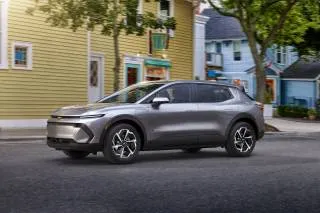
Financially, the "range premium" remains high. While the 2025 Chevrolet Equinox EV has broken ground by offering 319 miles of range for a starting price of $34,995, most vehicles in the 400-mile club require a six-figure investment. For example, GMC’s "Max Range" battery is often a nearly $10,000 option on top of an already premium base price.

Top Performers: The 2025 Range Leaders
As of late 2024 and heading into the 2025 model year, the following vehicles represent the pinnacle of official EPA-rated (or currently delivered) range. This list prioritizes the highest-range configuration for each nameplate to provide a clear view of the industry’s technical ceiling.
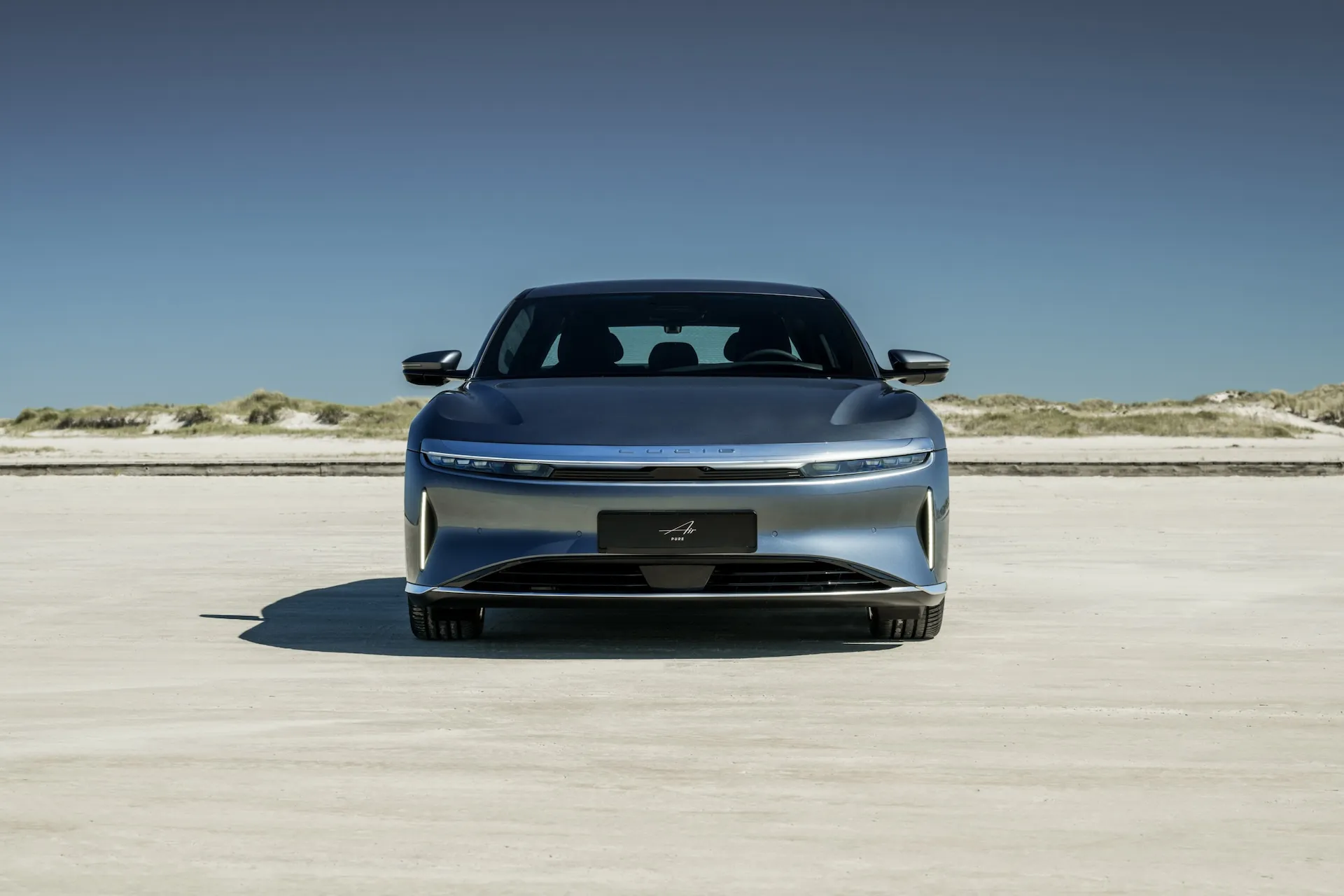
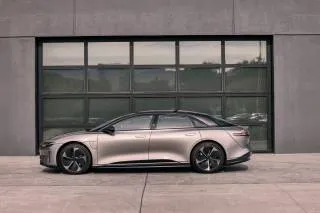
1. 2025 Lucid Air Grand Touring
- EPA Range: 512 miles
- Efficiency: 3.8 mi/kWh
- Price: $112,400
The Lucid Air remains the undisputed king of range and efficiency. Unlike its competitors who use massive batteries to achieve long distances, Lucid relies on a 900-volt architecture and ultra-efficient in-house developed motors. The Grand Touring trim, when equipped with 19-inch wheels, is the only production vehicle in the U.S. to currently exceed the 500-mile barrier.
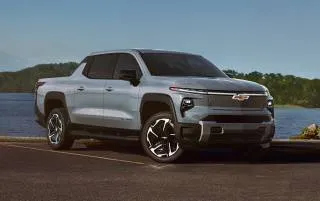
2. 2025 Chevrolet Silverado EV RST / GMC Sierra EV Denali
- EPA Range: 460 miles
- Curb Weight: ~8,800 lbs
- Price: ~$97,000 – $98,000
General Motors has utilized its Ultium platform to create a powerhouse in the truck segment. By stacking battery modules in a double-layer configuration, the Silverado and Sierra EVs offer nearly 100 miles more range than the longest-range Ford F-150 Lightning. This is aimed specifically at towing, where range typically drops by 50%.
3. 2025 Cadillac Escalade IQ
- EPA Range: 460 miles
- Curb Weight: ~9,100 lbs
- Price: $129,990
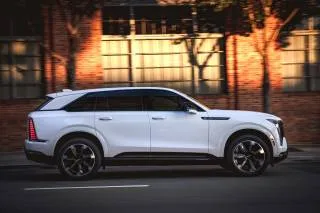
The Escalade IQ brings luxury to the high-range segment. Sharing the Ultium bones of the Silverado, it achieves 460 miles despite its massive frontal area and opulent interior. Its aerodynamic "slippery" shape is a significant departure from the boxy gasoline-powered Escalade, proving that even icons must adapt for efficiency.
4. 2025 Lucid Gravity Grand Touring
- EPA Range: 450 miles
- Curb Weight: 5,919 lbs
- Price: $96,625
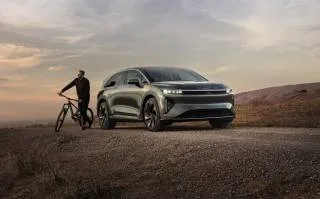
Lucid’s first SUV entry aims to do for the family hauler what the Air did for the sedan. At 450 miles, it significantly outpaces the Tesla Model X and the Mercedes-Benz EQS SUV, further cementing Lucid’s position as the efficiency leader.
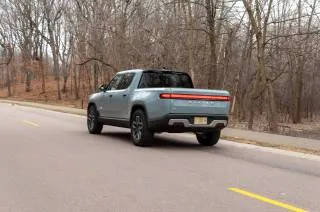
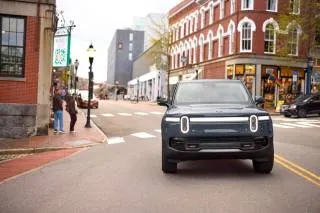
5. 2025 Rivian R1T & R1S Dual Max
- R1T Range: 420 miles / R1S Range: 410 miles
- Price: $85,700 – $91,700
Rivian’s "Max Pack" has been a long-awaited addition for adventure seekers. The 2025 refresh includes a move to a more efficient heat pump and updated motor configurations, allowing these rugged vehicles to comfortably clear the 400-mile mark, even with all-terrain capabilities.
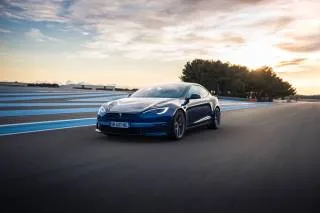
6. 2025 Tesla Model S
- EPA Range: 410 miles
- Efficiency: 3.6 mi/kWh
- Price: $81,630
The veteran of the group, the Model S, continues to be a top contender. While it no longer holds the absolute crown, its balance of 410 miles of range and access to the Supercharger network remains a benchmark for the industry.
7. 2025 GMC Hummer EV Pickup 3X
- EPA Range: 381 miles (Est.)
- Efficiency: 1.6 mi/kWh
- Price: $116,940
The Hummer EV is the least efficient vehicle on this list, but its massive 205-kWh battery allows it to travel 381 miles. It serves as a showcase for GM’s battery scale, though it represents the "heavy battery" approach that environmental critics often question.
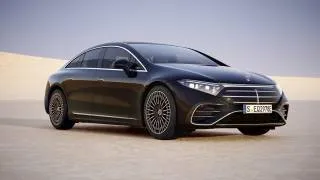
8. 2025 Mercedes-Benz EQS 580 4Matic
- EPA Range: 371 miles
- Price: $128,500
Mercedes-Benz has focused on aerodynamics (the "One-Bow" design) to maximize the range of its flagship electric sedan. A recent battery chemistry update for the 2025 model year has pushed its range deeper into the 300s.
9. 2025 Tesla Model 3 Long Range RWD
- EPA Range: 363 miles
- Efficiency: 4.1 mi/kWh
- Price: $44,130
The updated "Highland" Model 3 in its Long Range Rear-Wheel Drive configuration is arguably the efficiency champion of the affordable segment. It achieves over 360 miles with a relatively small battery, making it one of the most sustainable choices on the list.
10. 2025 Hyundai Ioniq 6 SE
- EPA Range: 342 miles
- Efficiency: 3.9 mi/kWh
- Price: $43,850
Hyundai’s E-GMP platform continues to impress with its 800-volt charging and high efficiency. The Ioniq 6’s streamliner shape is specifically designed to cut through the air, allowing it to compete with much more expensive vehicles in terms of usable range.
Infrastructure and the "Effective Range" Reality
While the 500-mile headline is impressive, industry analysts suggest that the importance of raw range may diminish as the National Electric Vehicle Infrastructure (NEVI) formula program gains momentum. With federally funded fast chargers being installed every 50 miles along major corridors, the need to carry 9,000 pounds of vehicle and battery may become harder to justify for the average commuter.
However, for the "one-car household," high-range EVs remain the primary solution for long-distance road trips and towing. Statements from automakers like Rivian and General Motors indicate that their customers prioritize "peace of mind" over absolute efficiency. This consumer sentiment is driving a "range war" similar to the horsepower wars of the 1960s, where the number on the sticker is as much about marketing and status as it is about daily utility.

Implications for the Future
The 2025 model year proves that the technical limits of lithium-ion technology are being pushed to their absolute edge. The next leap in range—potentially moving the median to 400 miles and the peak to 600 miles—is expected to come from solid-state batteries, which promise higher energy density with lower weight.
For now, the 2025 crop of EVs offers a diverse array of choices. Whether through the surgical efficiency of the Lucid Air or the massive energy reserves of the Chevrolet Silverado EV, the 300-mile barrier is firmly in the rearview mirror. As these technologies trickle down to more affordable models like the Equinox EV and the Model 3, the transition to electric mobility appears increasingly inevitable, supported by the simple fact that for many drivers, an EV can now go further on a "full tank" than many of its gasoline counterparts.