The Philosophy of Minimalism
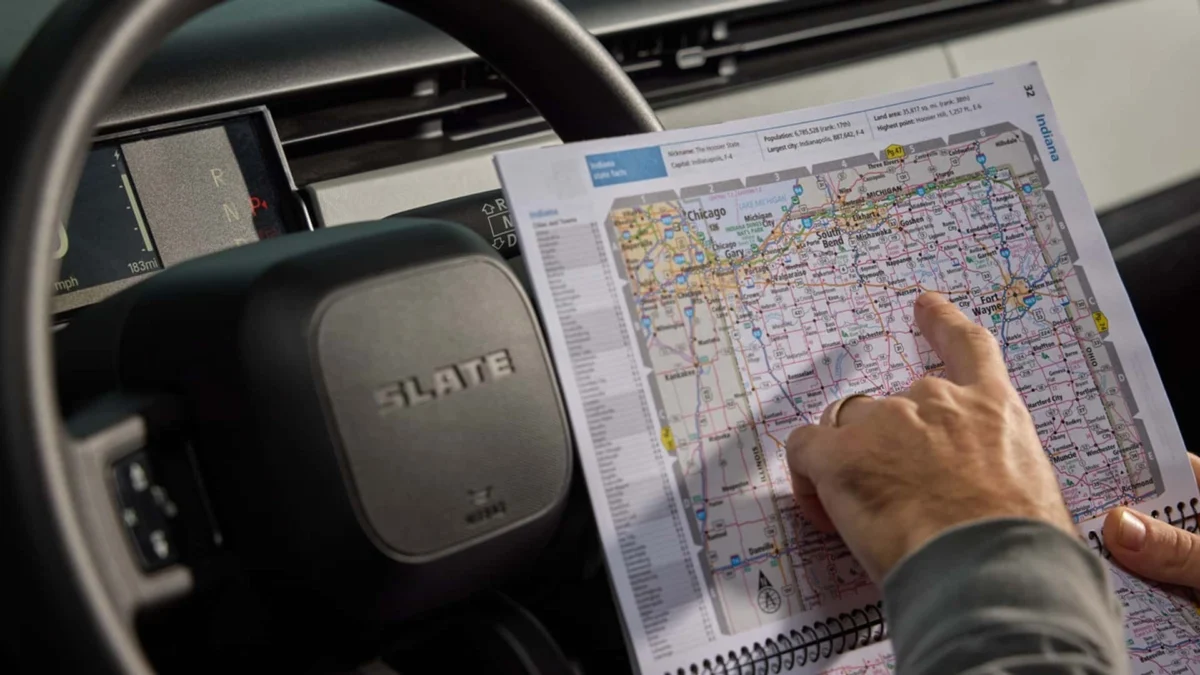
The automotive industry has spent the last decade engaged in an arms race regarding infotainment systems. From massive, multi-screen cockpits to subscription-based services for features like heated seats or real-time traffic data, the modern driving experience has become increasingly digitized. Slate is positioning itself as the antithesis to this trend. By offering a vehicle that lacks a large, integrated infotainment screen, the company is effectively forcing a return to a more analog driving experience.
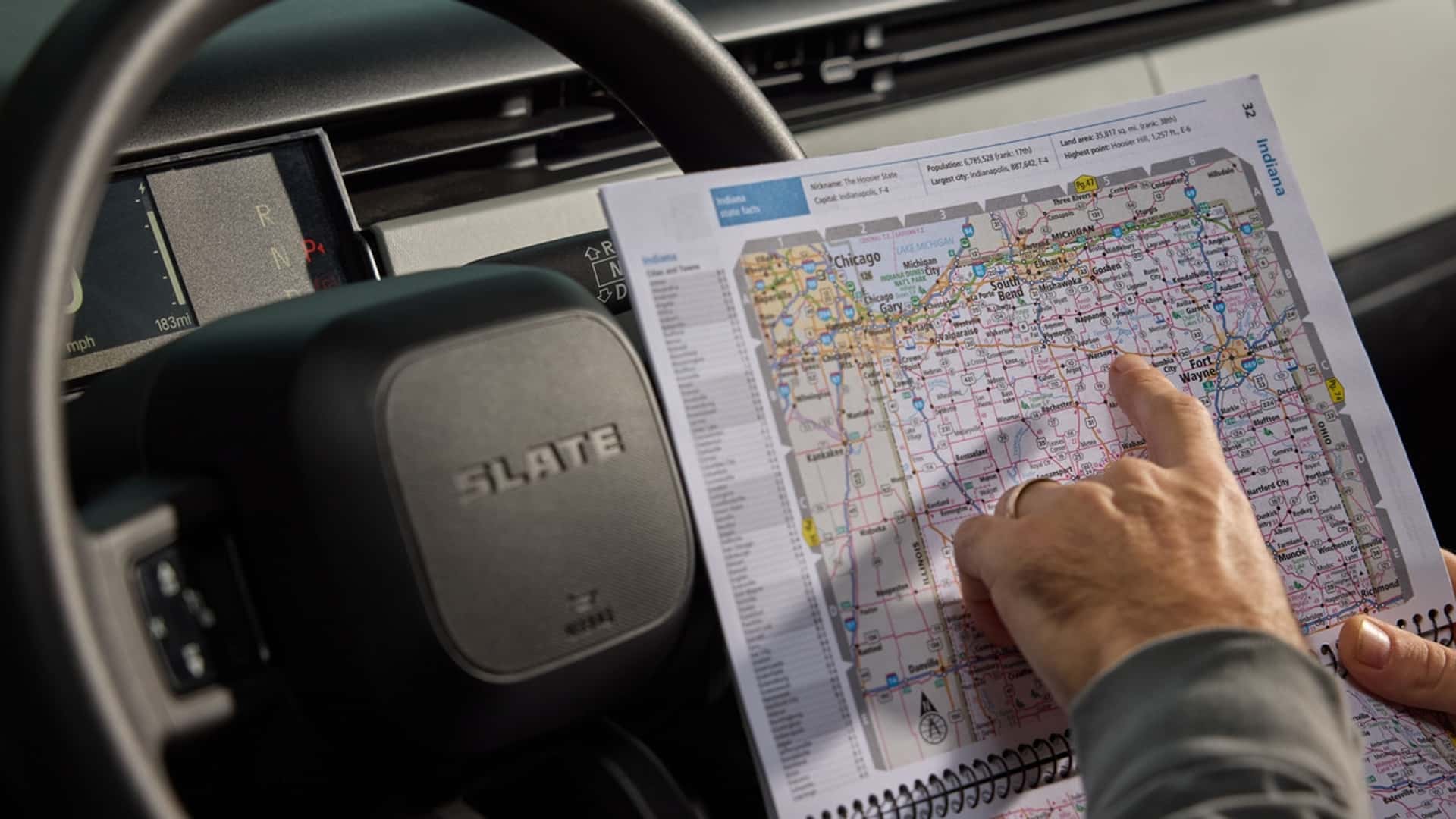
The inclusion of a physical road atlas is a symbolic gesture aimed at a specific demographic: drivers who are fatigued by the complexity of modern vehicles and the privacy concerns associated with "always-connected" navigation systems. By billing the atlas as the "original navigation system," Slate is emphasizing that the utility of a vehicle should not be tethered to a server, a software update, or a subscription fee.
Chronology of the Slate EV Project
The path to this unconventional marketing campaign began with the announcement of the Slate truck’s core value proposition: a functional, affordable, and durable electric vehicle for the utility-focused consumer.
- Mid-2025: Slate begins initial testing and prototype reveals, showcasing a modular design featuring unpainted composite body panels and a stripped-back cabin.
- Late 2025: Official pricing for the base model is confirmed to be under $25,000, a significant milestone for an electric truck in a market where the average price of an EV has historically remained much higher.
- Early 2026: The company launches its first "Experience Centers," such as the one in Chicago, allowing potential customers to test drive the vehicle and experience its manual controls firsthand.
- Mid-2026: High-profile reviews, including those by automotive journalists like James May, highlight the "unburdensome" nature of the vehicle, praising its departure from the standard "gadget-heavy" EV design language.
- Thursday, 2027: The official launch of the "Screenless GPS" campaign occurs, marking the latest step in the company’s branding efforts ahead of initial consumer deliveries.
Industry Context and Economic Factors
The affordability of the Slate truck is largely achieved through the elimination of non-essential electronic components. By relying on a simpler electrical architecture, the company reduces both production costs and the weight of the vehicle, which in turn benefits the efficiency of the LFP (Lithium Iron Phosphate) battery pack.
The choice of LFP chemistry is critical here. LFP batteries are known for their longer cycle life and improved thermal stability compared to traditional nickel-manganese-cobalt (NMC) cells. While they may offer slightly lower energy density, their cost-effectiveness and safety profile align perfectly with a vehicle intended for utility and longevity rather than high-performance drag racing or luxury-segment status.
Furthermore, by avoiding a proprietary infotainment system, Slate removes the need for long-term software support and hardware maintenance of high-resolution touchscreens. In an era where "bricked" screens can render a vehicle difficult to operate, Slate’s decision to rely on a standardized phone mount allows the driver to choose their preferred interface—whether that is a smartphone running Google Maps or a physical map—placing the control firmly back in the hands of the owner.
Technical Implications and User Experience
The decision to market a paper map as a "navigation system" highlights a growing divide in the automotive sector between tech-integrated vehicles and mechanical-focused machines. While the market has largely moved toward integrated systems, the maintenance of physical maps provides a level of reliability that digital systems cannot guarantee.
Digital navigation systems rely on GPS signal availability, software stability, and, in many cases, cellular data connectivity. In rural areas or during network outages, these systems can fail or become inaccurate. A paper map requires no boot time, is immune to software bugs, and has effectively "unlimited battery life." While the company acknowledges that the product is a stunt, the underlying technical implication is clear: technology should facilitate the driving experience, not dictate it.
Official Statements and Market Positioning
In its announcement on Thursday, the company stated, "When it comes to tech, we believe you should use the devices and solutions you already know and love. Not because we don’t like tech, but because we believe you already have everything you need to get where you’re going."
This statement resonates with a segment of the automotive consumer base that has grown tired of "subscription-ification." With many manufacturers moving toward paid tiers for basic features, Slate’s commitment to an open, hardware-neutral approach—where the user brings their own device—is a calculated move to lower the barrier to entry and maintain a long-term, low-maintenance ownership model.
Broader Impact on the EV Sector
The success of the Slate truck will be a bellwether for the "minimalist" EV movement. As legacy automakers continue to pack vehicles with sensors, cameras, and AI-driven interfaces, the cost of repair and the complexity of these vehicles have surged. Slate is testing a hypothesis: that a significant portion of the market is willing to trade these high-tech amenities for a lower price point and a more durable, simpler, and "analog" ownership experience.
The implications for the industry are twofold. First, it demonstrates that there is still a market for vehicles that function as tools rather than "smartphones on wheels." Second, it highlights the potential for modular vehicle design. By allowing users to add accessories like the proposed SUV kit or simply rely on their own personal electronics, the vehicle becomes a blank slate—living up to the company’s name.
Analyzing the Gamble
The company’s decision to start delivering trucks later this year will be the ultimate test of this business model. The manufacturing process for the Slate is reportedly less complex than that of its competitors, potentially allowing for a more agile production ramp-up. However, the startup faces the same hurdles as any new automaker: establishing a reliable supply chain, building a service network, and proving the long-term reliability of its drivetrain.
By leaning into the "no-frills" aesthetic, Slate is essentially betting that the average consumer is ready to simplify their relationship with their car. Whether this translates into sustained sales volume remains to be seen. However, the brand’s ability to turn a $30 map into a viral marketing moment suggests they have a strong grasp of their target audience—people who value utility, autonomy, and the freedom of a road trip, with or without a software update.
Looking Toward the Future
As the automotive industry continues its transition toward electrification, the conversation is shifting from "range anxiety" to "tech fatigue." The Slate truck, with its LFP batteries, manual windows, and now, its physical road atlas, represents a deliberate step backward in order to move forward. By removing the digital barriers between the driver and the road, the company hopes to build a brand that is defined by its reliability and its honesty.
The 2027 Road Atlas is, in many ways, the perfect accessory for the Slate. It serves as a reminder that the most essential navigation tool is still the one that requires nothing more than a clear view of the road and a sense of direction. For a company that promises to deliver the "freedom from the complexities of the modern automobile," this move is not just a joke—it is a mission statement.
As production begins in the coming months, observers will be watching closely to see if this minimalist approach can achieve the scale necessary to disrupt the established automotive order. If the early interest is any indication, there is a substantial number of drivers who are ready to put down the screen and pick up the wheel.