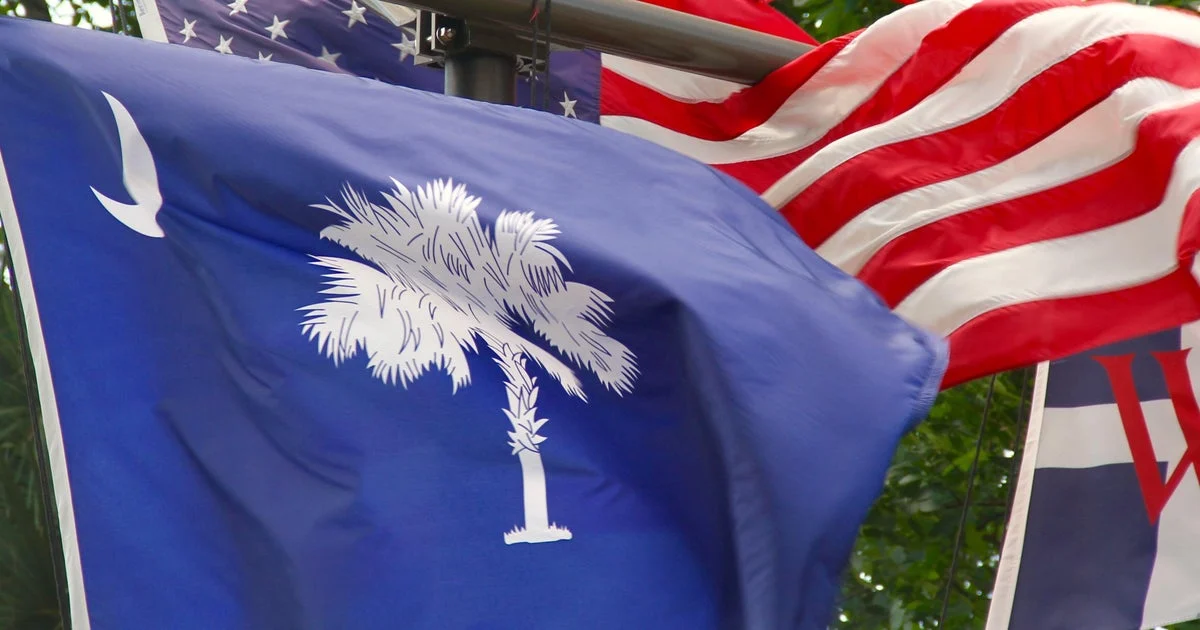
South Carolina stands on the brink of securing its position as the first-in-the-nation Democratic presidential primary state for the 2028 election cycle, following a pivotal recommendation by the Democratic National Committee’s (DNC) Rules and Bylaws Committee. This significant endorsement, made during a meeting on Friday, July 24, 2026, propels the Palmetto State to the forefront of the upcoming nomination process, pending final approval from the full DNC membership at its summer meeting slated for next month in Austin, Texas. The decision marks a critical juncture for the party, reflecting a complex balancing act between rewarding loyal constituencies, addressing demographic shifts, and learning from past primary calendar controversies.
Background and the 2024 Precedent
The DNC’s deliberation over the 2028 primary calendar is deeply informed by the contentious process that shaped the 2024 cycle. In 2022, then-President Joe Biden, seeking re-election, exerted significant influence by sending a letter to DNC leaders advocating for South Carolina to lead off the 2024 nominating contests. This direct intervention effectively bypassed the ongoing debates within the Rules and Bylaws Committee, which had been considering a broader range of states. Ultimately, the DNC complied with Biden’s request, fundamentally reshaping the traditional early primary lineup that had long featured Iowa, New Hampshire, and Nevada.
Biden’s rationale was rooted in his own political history. His 2020 presidential campaign, after disappointing finishes in the predominantly white early contests of Iowa (where he placed fourth), New Hampshire (fifth), and Nevada (second), was resuscitated by an overwhelming victory in the South Carolina primary. This win, largely attributed to his strong support among Black voters, provided the crucial momentum that propelled him to the nomination and eventually the presidency. The party’s decision to elevate South Carolina in 2024 was thus seen by many as a strategic move to acknowledge and empower its most consistent and loyal voting bloc, particularly in a state where African Americans constitute a significant portion of the Democratic electorate.
However, the manner of the 2024 calendar selection drew criticism from various quarters, including from within the DNC itself. DNC Chairman Ken Martin, in remarks delivered on Thursday, July 23, 2026, openly criticized the 2024 process, describing it as an "unfortunate ending" where the outcome was "dictated to us." Martin emphasized the committee’s commitment to ensuring the 2028 selection process was as democratic and transparent as possible, seeking to avoid a repeat of presidential influence overshadowing internal party deliberations. This stance underscores a desire within the DNC to assert its institutional authority and establish a calendar that genuinely reflects the party’s strategic priorities, rather than merely accommodating an incumbent’s preference.
The 2028 Contention: South Carolina vs. Nevada
The debate for the 2028 lead-off position primarily centered on South Carolina and Nevada, each presenting compelling arguments rooted in different strategic visions for the Democratic Party. The core tension revolved around whether the party should prioritize its most consistent and historically loyal voting bloc—African American voters, heavily represented in South Carolina—or the nation’s fastest-growing and increasingly diverse demographic groups, which Nevada’s coalition better embodies.
Arguments for South Carolina’s Primacy
Advocates for South Carolina’s continued first-in-the-nation status underscored the indispensable role of Black voters within the Democratic Party. In their presentation before the bylaws committee in May 2026, South Carolina representatives made a powerful case linking their state’s primary position to ongoing struggles for voting rights and representation. They specifically cited recent Supreme Court decisions concerning the Voting Rights Act and their implications for Black representation in the South, arguing that maintaining South Carolina’s lead-off role was a direct affirmation of these communities. The argument posited that removing South Carolina’s status now would be perceived as a "slap in the face" to the Democratic Party’s Black voter base, a constituency that consistently delivers overwhelming support for Democratic candidates.
Christale Spain, Chair of the South Carolina Democratic Party, articulated this sentiment forcefully in May 2026: "This decision is bigger than South Carolina. It’s about whether the Democratic Party will stand with the voters who have stood with the party through everything. Will Democrats meet this moment by supporting the communities on the front lines of defending democracy, or will the Democratic Party tell their most faithful voters they no longer deserve to lead the primary process?" Spain’s statement highlighted the perceived moral and strategic imperative for the party to empower its most loyal demographic, particularly in a region historically central to civil rights struggles and ongoing battles over electoral fairness. In South Carolina, African Americans comprise approximately 27% of the state’s population but often represent a significantly higher proportion of the Democratic primary electorate, frequently exceeding 60% of voters. Their consistent turnout and near-unanimous support for Democratic candidates (often upwards of 90%) make them a foundational pillar of the party’s success, particularly in statewide and national elections.
Arguments for Nevada’s Diversity
On the other side of the debate, advocates for Nevada argued that their state offered a more accurate reflection of the national Democratic coalition needed to win future elections. Nevada’s population is characterized by its significant demographic diversity, including a large Latino population (approximately 30% of the state), a growing Asian American Pacific Islander (AAPI) community, and a substantial working-class electorate. Proponents argued that these groups—working-class voters, Latinos, AAPI individuals, men, and low-propensity voters—represent segments whose support for Democrats has shown signs of erosion in recent election cycles. By placing Nevada first, the party could engage with these crucial demographics early, test messages, and build a coalition that is truly representative of the nation’s evolving electorate.
Daniele Monroe-Moreno, Chair of the Nevada Democratic Party, echoed this sentiment during the calendar debate on Friday. She highlighted the growing phenomenon of nonpartisan voter registration, which she noted is now the largest voter registration bloc in America, reflecting widespread disillusionment with both major parties. Monroe-Moreno asserted, "My state, the state of Nevada, is that coalition that we need to win back." Nevada, as a swing state with a highly transient population and a diverse economic base, offers a unique laboratory for candidates to connect with a broad spectrum of voters often considered bellwethers for national trends. The state’s political landscape, where organized labor also plays a significant role, presents a different set of challenges and opportunities compared to South Carolina, compelling candidates to craft messages that resonate across multiple demographic and economic divides.
The Proposed 2028 Calendar and Broader Implications
While the primary focus was on the lead-off state, the Rules and Bylaws Committee also voted on the other states designated to hold the earliest presidential nomination contests in 2028. Although the specific full list and dates were not detailed in the immediate reporting, one notable addition was highlighted: New Mexico. Christale Spain, in an interview after Friday’s meeting, specifically pointed to New Mexico’s inclusion as a strategic expansion of the party’s reach, particularly within the Latino community. She stated that adding New Mexico "adds a plethora of opportunities to engage with the Latino community," signifying a deliberate effort to strengthen ties with this critical demographic early in the primary process. This strategic move aims to address concerns about Latino voter engagement and support, which have fluctuated in recent elections.
The DNC’s stated objectives for the 2028 calendar extend beyond merely selecting a lead-off state. Chairman Ken Martin emphasized the committee’s commitment to designing a calendar that ensures a rigorous process, capable of "battle-testing" presidential candidates. This means creating a sequence of contests that challenges candidates on diverse issues, forces them to build broad coalitions, and proves their viability across different electoral landscapes. Furthermore, the committee aims to minimize the financial burden of early primary campaigning, ensuring that the process does not become prohibitively costly for candidates before the general election truly begins. The goal is to identify a nominee who is not only broadly appealing but also robustly prepared for the rigors of a national campaign.
Analysis of Implications
The DNC’s recommendation for South Carolina to lead the 2028 primary calendar carries several significant implications for the Democratic Party and future presidential contests.
1. Reinforcing the "Loyalty First" Strategy: The decision reaffirms the party’s commitment to its most steadfast voters, particularly African Americans, who have consistently formed the backbone of the Democratic coalition. By prioritizing South Carolina, the DNC sends a clear message that the loyalty and political power of this demographic are paramount, especially in an era where voting rights and representation remain contested. This could strengthen party unity among core constituencies and potentially enhance turnout in future elections.
2. Balancing Representation and Electability: The choice highlights the ongoing tension within the Democratic Party between rewarding its loyal base and adapting to new demographic realities for national electability. While Nevada’s advocates emphasized its role as a microcosm of the future national electorate, the committee ultimately leaned towards the established loyalty model. This could be interpreted as a cautious approach, prioritizing a known and reliable path over a more experimental one, especially after a period of relative success under the 2024 calendar.
3. Impact on Candidate Strategies: Presidential hopefuls for 2028 will now likely tailor their early campaign strategies to resonate deeply with South Carolina’s Black electorate. This will involve significant investment in grassroots organizing, community engagement, and policy platforms that address issues central to these communities. Candidates will need to demonstrate authentic connections and a deep understanding of the challenges and aspirations of South Carolina voters, rather than simply parachuting in for campaign stops.
4. The Role of Southern States: The continued prominence of South Carolina reinforces the importance of Southern states in the Democratic primary process, particularly in shaping narratives around race, justice, and economic opportunity. It positions the South as an early crucible for candidates to prove their ability to connect with diverse communities, potentially shifting campaign focus away from traditionally dominant Midwestern or Northeastern narratives.
5. Evolution of Primary Reform: This decision represents another step in the DNC’s ongoing efforts to reform its primary calendar, which has historically been criticized for its lack of diversity and its reliance on states that do not reflect the national party’s base. While the 2024 process was seen as dictated, the 2028 recommendation, emerging from a more deliberative committee process, suggests a more institutionalized approach to these reforms. The inclusion of New Mexico further indicates a strategic expansion to engage other vital demographic groups.
6. Financial and Logistical Considerations: The choice of early states also has practical implications. Running a campaign in South Carolina, while requiring significant ground game, may offer a different logistical challenge than, say, a sprawling caucus state. The DNC’s stated aim to prevent an overly costly primary season suggests a calendar designed to allow candidates to build momentum without exhausting resources too early.
As the full DNC prepares for its summer meeting in Austin, Texas, the recommendation to place South Carolina at the forefront of the 2028 primary calendar signals a strategic direction for the Democratic Party. It is a decision that aims to honor its most loyal voters, learn from past electoral successes, and adapt to the evolving political landscape, all while striving for a more democratic and rigorous vetting process for its next presidential nominee. The eyes of the political world will now turn to Austin, where the final vote will cement the path forward for the 2028 Democratic primary season.
Zak Hudak contributed to this report.