The latest iteration of SpaceX’s gargantuan Starship megarocket, designated Version 3 (V3), has successfully completed a critical full-duration static fire test, marking a significant advancement towards its maiden voyage. This milestone propels the ambitious Starship program closer to its ultimate goal: enabling human and robotic exploration of the Moon and beyond. The upcoming launch, tentatively scheduled for early to mid-May, will represent the twelfth overall test flight for Starship, but it holds particular significance as the first for the V3 variant, which boasts enhanced size and power over its predecessors.
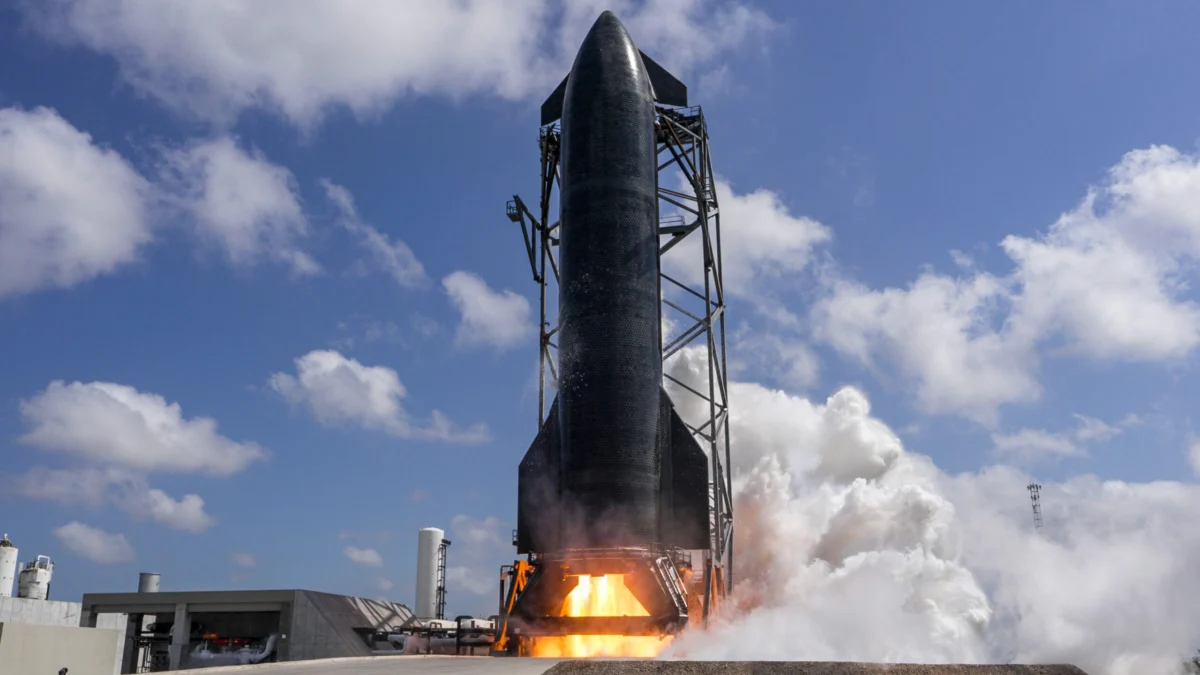
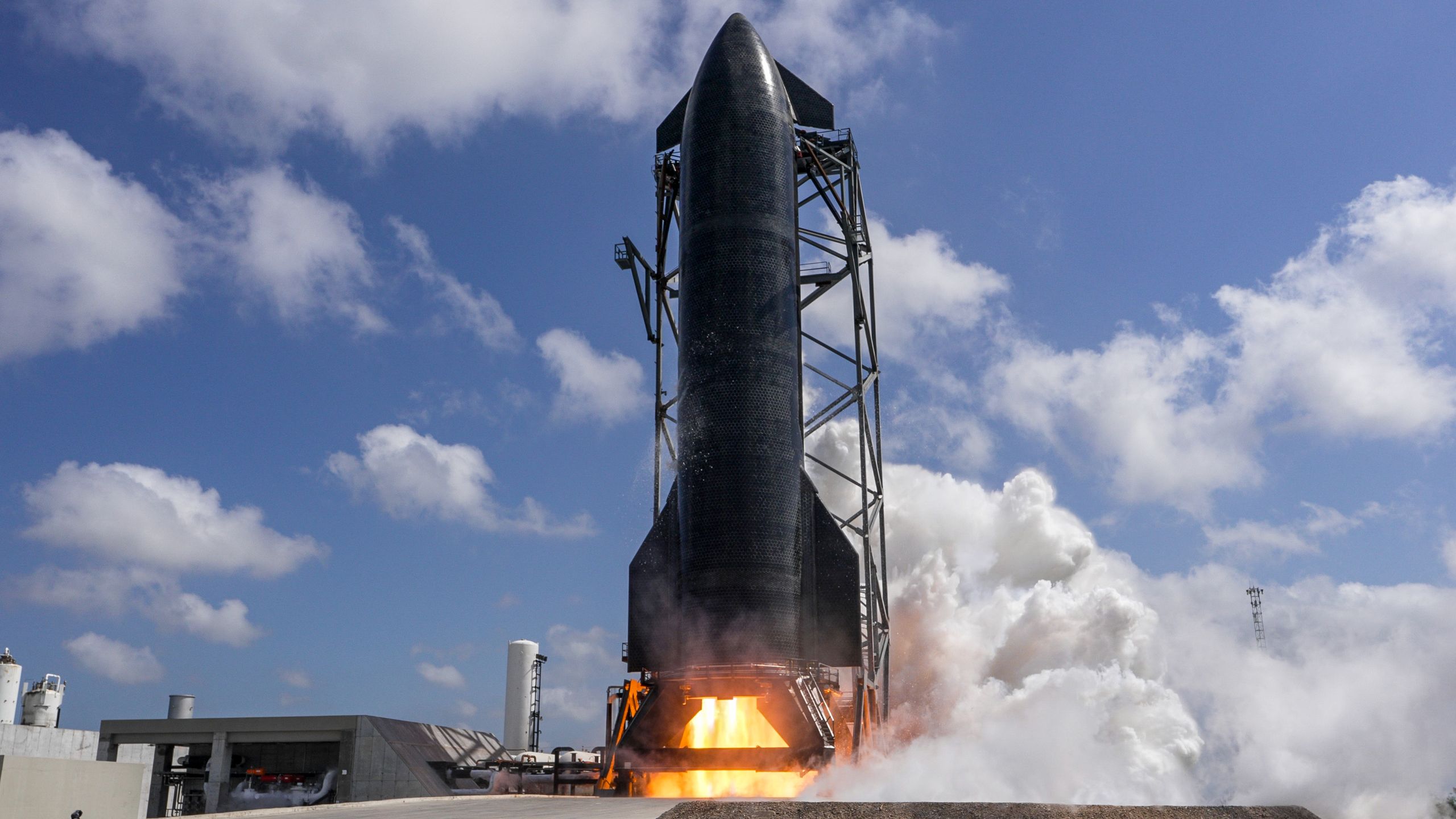
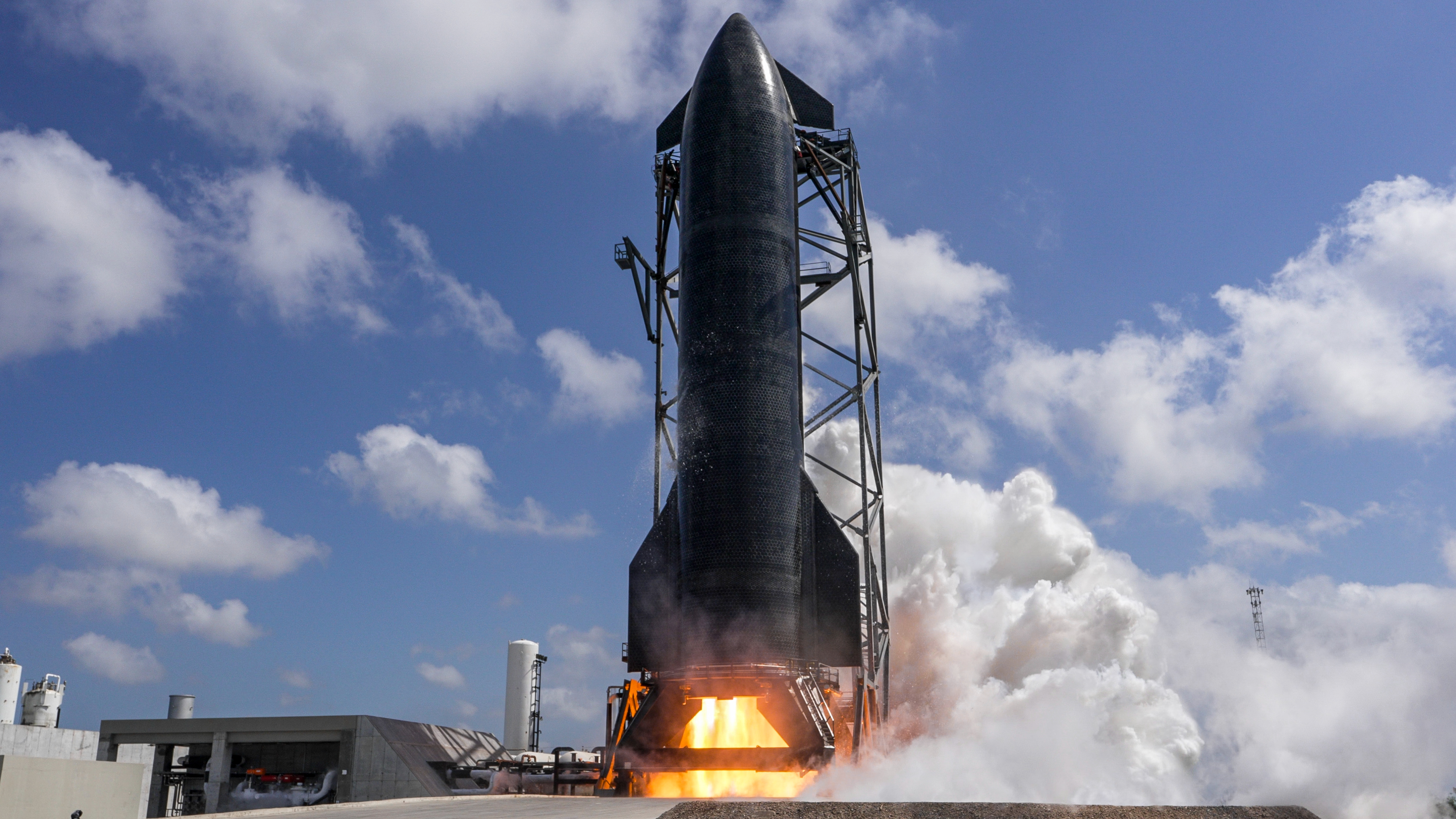
The successful test, confirmed by SpaceX through an announcement on X (formerly Twitter) on April 14, 2026, involved the upper stage of the Starship V3 vehicle. The image accompanying the announcement showcased the sleek, conical spacecraft mounted on a test stand, its engines igniting beneath a sky that was a blend of blue and clouds. This full-duration static fire, a crucial procedural step before any launch, signifies that the vehicle’s propulsion system has undergone a comprehensive and extended operational check, demonstrating its readiness for the rigors of ascent.
A New Era of Starship Power
Starship V3 represents a substantial leap forward in SpaceX’s development of its fully reusable launch system. When fully assembled, the Starship V3 stands at an impressive 408.1 feet (124.4 meters), a slight increase of approximately 4 feet (1.2 meters) compared to its immediate predecessor, the V2. This enhanced stature is not merely for show; it underpins a significant increase in payload capacity. According to SpaceX founder and CEO Elon Musk, the V3 variant is capable of delivering over 100 tons of cargo to low Earth orbit. This is a dramatic improvement from the approximately 35 tons that the V2 model could accommodate, signaling a new era of capability for interplanetary and lunar missions.
The increased power of Starship V3 is attributed to its newly developed V3 Raptor engines. These advanced engines are the driving force behind the rocket’s augmented performance, enabling it to lift heavier payloads and potentially reach higher orbits or travel further into the solar system. The V3 Raptor engines are part of SpaceX’s ongoing innovation in rocket propulsion, focusing on efficiency, thrust, and reliability.
Chronology of Starship Development and Testing
The journey to this successful static fire test has been a meticulously planned and executed progression of suborbital and orbital test flights. To date, Starship has undergone eleven suborbital test missions, with the most recent occurring in October 2025. The five preceding launches were conducted using the V2 configuration of the Starship vehicle, each providing invaluable data and insights for refining the design and operational procedures.
The path to the V3’s full-duration static fire was not without its challenges. Just four weeks prior to this success, a static fire test of the Starship V3 first stage took place. This earlier test, while a vital step in validating the booster’s engines, was a partial ignition, utilizing only 10 of the booster’s 33 Raptor engines. Furthermore, it was cut short due to an issue with ground support equipment, underscoring the complexity of testing such a powerful and integrated system. The successful completion of the full-duration static fire for the upper stage demonstrates that these earlier hurdles have been overcome and that the V3 propulsion system is now performing as intended for extended periods.
The Significance of Static Fire Tests
A static fire test is a fundamental procedure in rocket development and launch preparation. It involves igniting the rocket’s engines for a specified duration while the vehicle remains firmly secured to the launchpad. This allows engineers to monitor engine performance, fuel flow, thrust levels, temperatures, and vibrations under operational conditions. It is a critical diagnostic tool that helps identify any potential anomalies or issues before the immense stresses of a launch attempt. For a vehicle as complex and powerful as Starship, a full-duration static fire is a definitive indicator of readiness, confirming that all engine components, fuel systems, and control mechanisms are functioning in concert.
Starship’s Pivotal Role in NASA’s Artemis Program
The development of Starship is inextricably linked to NASA’s ambitious Artemis program, which aims to return humans to the Moon and establish a sustainable lunar presence. SpaceX’s Starship has been selected by NASA to serve as the first crewed lunar lander for the Artemis missions. This designation highlights the critical role Starship is expected to play in enabling lunar exploration.
The Artemis program is progressing through a series of missions designed to incrementally build capabilities for lunar surface operations. The Artemis 2 mission, which recently concluded, successfully sent four astronauts on a journey around the Moon and back, a vital step in testing the Orion spacecraft and its life support systems. NASA is now gearing up for Artemis 3, the mission that is intended to land astronauts on the lunar surface for the first time since the Apollo era.
Artemis 3 will involve a complex orbital rendezvous and docking maneuver in Earth orbit. The Orion capsule will dock with one or both of the contracted lunar landers: SpaceX’s Starship and Blue Origin’s Blue Moon lander. This dual-lander approach provides NASA with redundancy and flexibility in its lunar landing strategy. The successful completion of the Starship V3 static fire is thus directly relevant to the timeline and success of Artemis 3, which is currently targeted for a mid-2027 launch.
Following Artemis 3, the Artemis 4 mission is slated for a late 2028 launch. This mission aims to land astronauts near the lunar south pole, a region of significant scientific interest due to the potential presence of water ice. Similar to Artemis 3, Artemis 4 will utilize either Starship or Blue Moon as its lunar lander. The continued development and successful testing of Starship are therefore paramount to achieving these long-term lunar exploration objectives.
Broader Implications and Future Prospects
The successful full-duration static fire of Starship V3 is more than just a technical achievement; it is a beacon of progress in humanity’s quest to become a multi-planetary species. The enhanced capabilities of Starship, particularly its massive payload capacity and potential for full reusability, open up unprecedented opportunities for space exploration and commerce.
Beyond lunar missions, Starship is envisioned to play a crucial role in future endeavors, including the establishment of a permanent human presence on Mars. Its ability to transport large quantities of cargo and personnel makes it an ideal vehicle for the initial phases of Mars colonization. The development of such a powerful and versatile launch system could dramatically reduce the cost of space access, paving the way for a new era of space-based industries, scientific research, and potentially even tourism.
The ongoing development of Starship also underscores the dynamic and rapidly evolving landscape of the commercial space sector. Companies like SpaceX are pushing the boundaries of what is technologically feasible, driving innovation and fostering competition. The success of Starship V3 not only benefits NASA’s Artemis program but also signals a significant advancement in private spaceflight capabilities, with implications that could extend far beyond Earth’s orbit. As SpaceX continues to refine its Starship program, the prospect of regular, robust lunar missions and eventual journeys to Mars moves from the realm of science fiction closer to tangible reality. The coming months will be crucial as SpaceX prepares for the maiden launch of this next-generation megarocket, a flight that promises to be a landmark event in the history of space exploration.