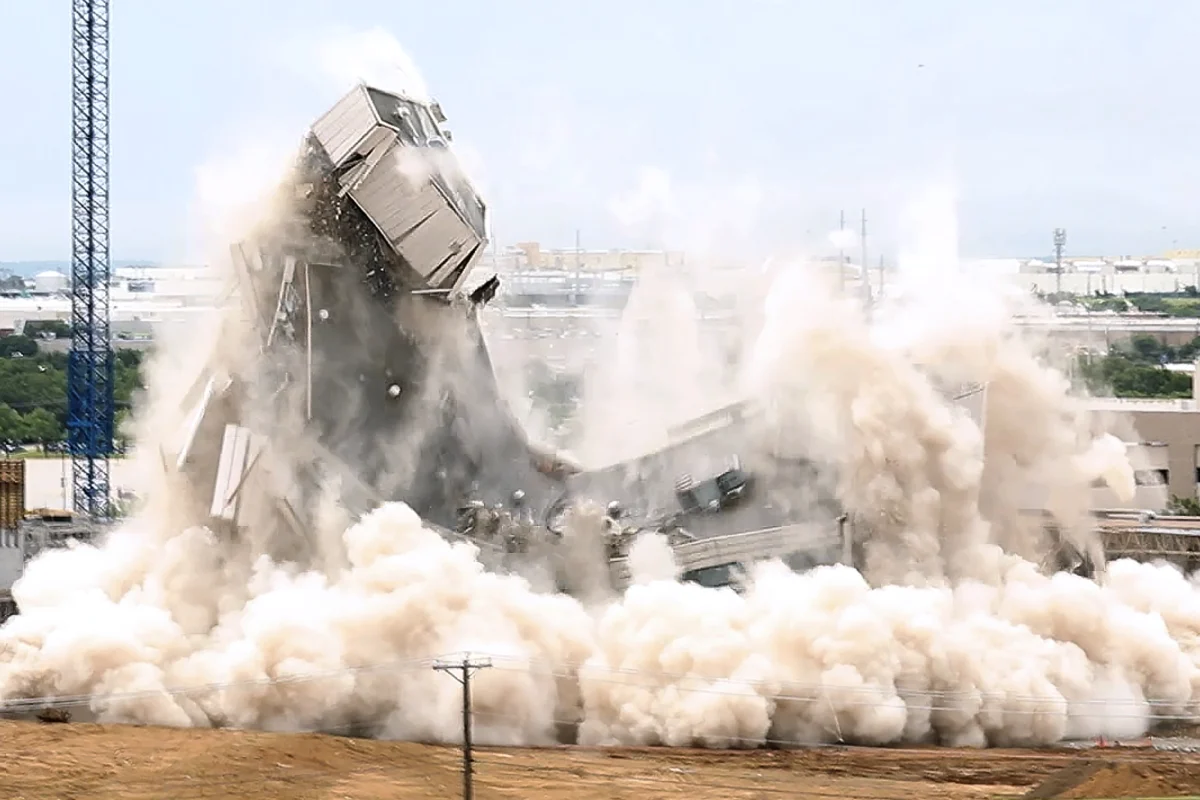
The euphoria that greeted the Democratic sweep in Tuesday’s midterm elections proved to be remarkably short-lived, replaced by a wave of intense market volatility on Thursday that saw technology stocks plummet across the board. The sudden reversal highlights a growing investor anxiety: the realization that the political mandate delivered by voters this week includes a direct mandate to throttle the rapid, energy-intensive buildout of Artificial Intelligence infrastructure across the United States. As the dust settles on the election results, the Nasdaq Composite has entered a period of sharp contraction, shedding over $3 trillion in market capitalization in a single session—a decline of 5.2% that marks the index’s most severe single-day downturn since the tariff-induced panic of April 2025.
A Market in Retreat: The Scale of the Selloff
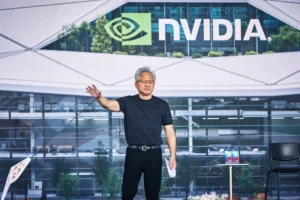
The carnage was widespread, sparing few sectors within the technology ecosystem. The Philadelphia Semiconductor Sector index, long considered the bellwether for the AI gold rush, suffered a catastrophic decline of more than 1,000 points. This represents the index’s most significant daily loss since the initial market lockdowns of March 2020. Among the hardest hit were the foundational players of the AI revolution: Nvidia fell 8%, while memory chip giant Micron Technology and rival Advanced Micro Devices (AMD) both saw their valuations crater by approximately 14%.
Large-cap tech, which had spent the last 24 months acting as the primary engine for broader market growth, also felt the pressure. Microsoft, a primary investor in the infrastructure layer of AI, saw its shares dip 2.8%, while Meta Platforms dropped 3.4%. Even the neocloud providers—firms that have relied heavily on debt to construct competitive data centers—faced a brutal day. Coreweave, a high-profile player in this space, saw its valuation drop 9% on Thursday alone, bringing its two-day decline to 18%. Google, benefiting from the stability of its search advertising revenue, fared slightly better with a 1.6% decline, illustrating a flight to quality as investors attempt to identify which firms are most insulated from the tightening regulatory environment.
The Political Pivot: A Mandate Against Expansion
The sudden market shift stems from the specific legislative and ballot-measure outcomes of the Tuesday midterms. Across key states, voters approved a series of referendums aimed at curtailing the environmental and utility-grid demands of hyperscale data centers. For years, the "Big Tech" triumvirate of Amazon, Microsoft, and Alphabet, alongside Oracle and newer neocloud entrants, have poured hundreds of billions of dollars into capital expenditure (capex) to secure land, electricity, and hardware.
This expenditure has served as a macroeconomic stimulus, driving demand for cooling systems, specialized networking gear, and advanced semiconductors. However, the political landscape has shifted abruptly. Voters in regions previously eager for the tax revenue associated with tech development have pivoted toward a "slow-growth" stance, prioritizing local power grid stability and water conservation over the promise of AI-driven economic development. The political map, particularly in states like Texas—which has served as a primary hub for this infrastructure—has become a significant regulatory hurdle, transforming what was once a green-light environment into one of intense scrutiny and potential litigation.
Analytical Perspective: The Capex Peak
Dan Ives, a senior analyst at Yorkville Ives, provided a somber outlook for investors in a note released Thursday morning. Long a proponent of the AI boom, Ives suggested that the era of exponential growth in tech capex is nearing an inflection point much sooner than previously anticipated.
"While Big Tech and hyperscaler capex should still easily exceed $1 trillion in 2027, the growth rate into 2028 will clearly moderate significantly," Ives noted. "The data center buildout is coming at a much slower pace given the political map, especially in the state of Texas. We estimate that on the low end, 10% of the planned 800 to 1,000 AI-focused data centers in the U.S. will now be wiped off the roadmap, with potentially up to 20% facing a much longer regulatory road."
This reassessment forces a recalibration of revenue expectations for the entire supply chain. If the physical infrastructure required to deploy AI models cannot be built, the demand for high-end GPUs and memory chips will inevitably soften. This realization is what fueled Thursday’s aggressive selloff, as institutional investors moved to discount the future earnings of companies that rely on an unrestricted domestic buildout.
Industry Response and the "Exodus" Strategy
The industry is already beginning to adjust to the new reality. During a conference organized by the Wall Street Journal on Wednesday, Meta President Dina Powell McCormick addressed the shifting landscape with candid concern. When asked about the challenges of domestic infrastructure expansion, McCormick acknowledged that the regulatory environment had reached a point of diminishing returns.
"Building data centers in the U.S. is going to be harder," McCormick stated. "I can also tell you that every hyperscaler is now thinking about: ‘Do we need to build outside the United States?’ Because they are enormous investments, hedging those investments is a wise thing to do."
This "offshoring" of digital infrastructure represents a significant policy failure for those hoping to keep the "AI engine" centralized in America. If hyperscalers begin to shift their data center operations to regions with more permissive energy and land-use regulations—such as parts of Canada, Northern Europe, or select markets in Southeast Asia—the U.S. risks losing the localized economic benefits of the AI era. Such a transition would also create a ripple effect, potentially leading to a long-term decline in domestic construction and engineering services associated with the tech boom.
Chronology of the Shift
- April 2025: The "Liberation Day" tariff announcement leads to a significant market correction, setting a benchmark for recent volatility.
- Tuesday, November 2026: Midterm elections result in a Democratic retake of the Senate and House. Voters pass multiple state-level measures intended to restrict the rapid growth of energy-intensive AI facilities.
- Wednesday, November 2026: Initial post-election trading shows a rally as investors digest the results, failing to account for the secondary implications of the ballot measures.
- Thursday, November 2026: Market sentiment shifts to panic as the logistical and regulatory hurdles of the new political environment become clear. The Nasdaq drops 5.2% and the Philadelphia Semiconductor Index experiences its worst day since 2020.
Broader Economic Implications
The cooling of the data center boom has implications that extend far beyond the stock tickers of Silicon Valley. For the past two years, the aggressive spending by tech giants has acted as a stabilizer for the U.S. economy, compensating for lethargy in other sectors. The construction, energy, and real estate industries have all been massive beneficiaries of this capital inflow.
If, as analysts suggest, 10% to 20% of planned data centers are either canceled or delayed, the secondary impacts on the labor market could be substantial. Thousands of jobs in specialized construction and facility management may be at risk. Furthermore, the electricity grid, which has been undergoing massive upgrades to accommodate these facilities, may face a period of uncertainty regarding future load demands.
For the investor, the current environment necessitates a move away from the "growth at all costs" mentality that defined the 2024–2025 cycle. Attention is now turning to companies that can optimize their existing infrastructure or those that provide software solutions that do not require massive hardware footprint increases. As the regulatory climate settles, the tech sector will be forced to transition from a period of "hyper-scale" growth to one of "efficient-scale" operation, a transition that is historically painful for equity markets.
While the long-term potential of Artificial Intelligence remains undisputed among researchers and developers, the path to implementation has hit a structural wall. The political mandate of the 2026 midterms has signaled that the public is no longer willing to trade grid stability and environmental standards for the rapid deployment of AI hardware. For Wall Street, the realization that the era of unchecked infrastructure expansion is coming to a close has turned a week of optimism into a period of profound market soul-searching.